
On 5th February 2024, the House of Lords debated the Victims and Prisoners Bill in Committee. The Bishop of Manchester spoke on two amendments he had tabled, aimed at enabling increased collaboration between statutory and community bodies in the victim support sector:
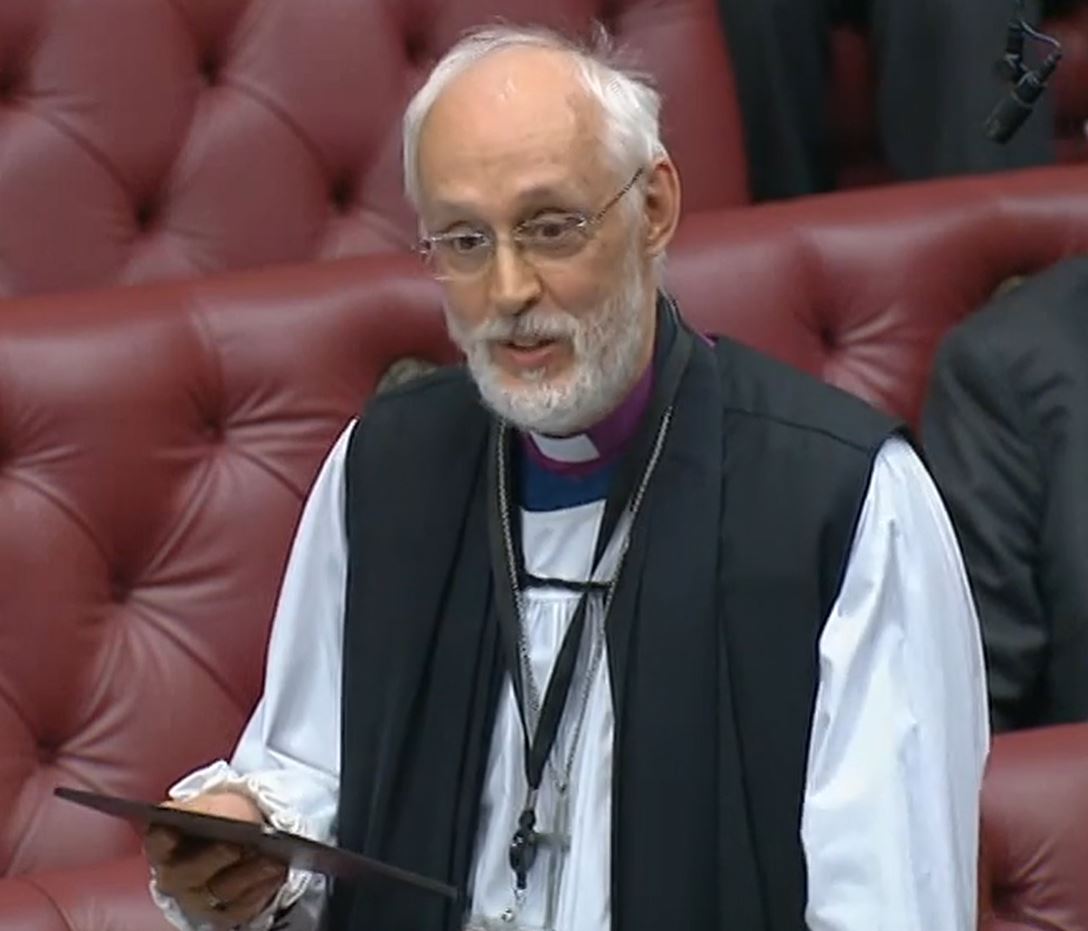
The Lord Bishop of Manchester: My Lords, I rise to speak to Amendments 56 and 59 in my name; I also support the other amendments in this group. These amendments would all help to firm up the very good intentions set out in Clauses 12 and 13.
In an earlier group, I tabled an amendment to ensure that victim support services were properly signposted; it is no use a service existing if the people it is meant to serve are not able to access it. But now we come to, if anything, a more fundamental point: how do we ensure that the right services exist for victims, and in each and every part of the country?
The Bill as drafted gets much right: it requires policing bodies, integrated care boards and local authorities to collaborate in assessing the needs of victims, producing a published strategy and, indeed, revising that strategy as occasion requires—so far, so good. But, as things stand, and as the noble Lord, Lord Russell of Liverpool, has indicated, that assessment and strategy could be little more than a combination of the unaffordable and the non-existent—a bit like an overambitious child’s Christmas wish list.
My two amendments seek to plug those gaps. The first simply requires the Secretary of State to ensure that the relevant authorities have the wherewithal to carry out their strategy. As the noble Lord has just reminded us, Women’s Aid estimates the funds required to provide that at £238 million per year. It does sound a lot, but not only would this funding save lives, it would make even greater savings for society.
Sustainably funding specialist support services reduces the need for survivors to use statutory services. It saves money, helping to reduce the staggering economic and social costs of domestic abuse. I have seen Home Office estimates of £78 billion a year. Economic analysis published by Women’s Aid found that every £1 invested in domestic abuse support is estimated to make at least £9 of savings to the public purse. Until recently, I was chair of a large charitable endowment fund, and I can assure noble Lords that an investment return at that level makes sound financial sense even before we account for its impact for good on the lives of victims.
My second amendment gets to the heart of how, in a local area, the commissioning bodies can ensure that a sufficient range and quality of services for victims can be provided in a sustainable way. In 2022, the domestic abuse commissioner found that fewer than half of survivors who want to access community-based services are able to. For minoritised women—those seeking support from specialist by-and-for organisations—the barriers are even greater. Some 85% of front-line workers surveyed for Refuge’s local lifeline support said that their services were impacted by insufficient funding; 76% of front-line workers said that their case load had increased in the last year. There is a real risk of services, even where they exist, collapsing under the weight of demand and the shortage of funds.
Stability is vital for the long-term sustainability of the victim support sector. Community organisations build up levels of trust over time. This allows them to support victims who have often had their ability to trust damaged very severely by the abuse and criminality they have suffered. Again, Refuge produced figures showing that some 95% of survivors it supports rely on just such community-based organisations. The problem is that those organisations are often dependent on short-term grants, and they like long-term stability.
My amendment seeks to ensure that services commissioned under this clause will be able to have sustainable funding models, allowing for long-term planning and stability, except where that is not necessary. I have seen too many charitable bodies spending half their time fighting to win the grants and support for the next year’s budget—time taken away from providing front-line services. That would make it easier for organisations to recruit and retain quality staff. It takes pretty high motivation to stay working for an organisation that constantly has only a few months of its budget left. The amendment would enable them to develop new resources and, to go back to my earlier point, to build up the levels of trust that then ensures that their work reaches those who really need it and impacts their lives for the better.
If we can establish this collaboration between statutory and community bodies, supported by government, for the well-being of victims of crime and abuse, we may be going some way to resurrect what a few years ago the then Prime Minister, now a Member of your Lordships’ House, so powerfully encouraged us to think of as the big society.
Extracts from the speeches that followed:
Earl Howe (Con, Deputy Leader of the House): My Lords, this group of amendments brings together a very important set of issues, as we have heard. I am most grateful to the right reverend Prelate the Bishop of Manchester and the noble Lord, Lord Russell of Liverpool, for their amendments on the funding and provision of victim support services, where I will start.
The right reverend Prelate’s Amendment 56 seeks to require the Secretary of State to have regard to the needs assessments identified under the duty to collaborate and use these to ensure that local commissioners effectively commission relevant support services. I hope I can be helpful in providing some reassurance on that topic. Under the duty to collaborate, local commissioners must have regard to their joint needs assessments when producing their local strategies. The strategies should include evidence of how relevant authorities have carried out the needs assessments, as well as how the assessments have informed their commissioning decisions. A ministerially led national oversight forum will be set up to scrutinise the local strategies; that is how we can join up the process. For that reason, I respectfully suggest that the amendment the right reverend Prelate has tabled is unnecessary.
The oversight forum will have the relevant insights and information and undertake appropriate scrutiny of the published strategies to assess whether and how relevant support services are commissioned in individual local areas. The insights will also be used to inform national funding decisions made through the spending review process; again, that is another element in the join-up process. That is the right approach to setting government budgets. Looking at everything in the round, the measures will achieve the objective the right reverend Prelate’s amendment also seeks to achieve.
Baroness Newlove (Con): We need long-term, sustainable funding for victims’ services. Importantly, these contracts should be for no less than three years. I feel that I am on a carousel, because I have been arguing for that since day one as Victims’ Commissioner. This would give these organisations the stability they need to be able to recruit, train, and, most importantly, maintain staff. Staff are given notices three months before this funding is even being put into accounts. Nobody in any job can absolutely go through that, when they have mortgages, children to feed and everything else. It is not acceptable.
In the victims’ funding strategy, the Ministry of Justice is committed to the principle of multiyear funding for core victim support services, and I welcome this. However, the short-term nature of contracts and the competitive tendering process really do have a damaging impact on organisations’ ability to deliver services—especially the smaller organisations, many of whom deliver by-and-for services. By-and-for services are extremely valuable in the support landscape, because these are organisations that are run and staffed by the marginalised communities they support. It is vital that victims feel supported and, more importantly, build relationships to feel they are being understood by getting support in an environment that is comfortable to them. For many, this means being supported by people who understand their culture or have similar life experiences. Again, in my recent survey, only 29% of victims told me they were able to easily find suitable services for their specific issues.
 The Church of England in Parliament
You must be logged in to post a comment.