
During the King’s Speech debate on 23rd July, 2024, the Archbishop of York gave a speech on the topic of the constitution, devolution and trust in democracy, raising the importance of faith in public life and the potential for other faith communities to be better represented in the House of Lords:
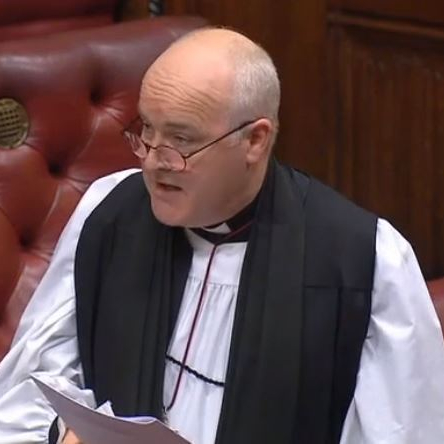
The Lord Archbishop of York: My Lords, it is an honour to respond to the gracious Speech. I, along with others on these Benches, welcome the noble and learned Lord, Lord Hermer, the Attorney-General, and thank him for a really moving maiden speech—not least his desire that we listen to and respect one another and work consensually.
Like others, I want to focus on one thing, which is rebuilding trust in democracy itself. The turnout on 4 July was shockingly low. Research also shows a 13% gap in turnout between constituencies with the highest and lowest proportions of home ownership. Furthermore, an estimated 400,000 people were turned away at the polling station because they did not have the right ID. These are alarming statistics, and I look forward to the changes outlined in the Government’s manifesto that could start to address them, including reducing the voting age to 16.
It is the link to poverty that causes me the gravest concern. It shows that a large proportion of our population do not feel they have a stake in our national life, nor much of a future to look forward to, and therefore for them, voting just is not worth it. There are measures on poverty in the King’s Speech that I welcome, particularly the children’s well-being Bill and the plans for free breakfast clubs, but I must take this opportunity to join others in calling for the removal of the two-child limit to universal credit, because it is the biggest driver of rising child poverty and has a big impact on trust in our democracy.
I have often spoken about the power of devolution, not just to shift power away from the centre. Devolution shifts perspective, enables consensual politics to thrive and enables us to take a longer view. The recently established York and North Yorkshire Combined Authority, where I live and serve, is already starting to demonstrate the difference this can make for rural as well as urban communities. I therefore wholeheartedly welcome the establishment of a council of the nations and regions. Moreover, noble Lords will not be surprised to hear that we on these Benches also welcome the extension of the Lords Spiritual (Women) Act 2015.
The tone of the Government’s manifesto and what we heard from the noble and learned Lord today speaks about governance as service. This is so important for building trust in our democracy. No one meant it to happen, but there has been an erosion of respect for the rule of law, convention and the weighty responsibility to tell the truth. However, the nature of our uncodified constitution is that it relies as much on conventions that are derived from tradition as anything else. Therefore, it is up to us to respect each other, listen to each other, build consensus and work together. I want to take a lead from the noble and learned Lord and say that we can be part of this in the way we conduct our business in this House.
Yes, there are legitimate questions about the House itself. First, we are a scrutinising Chamber, offering wisdom and a balance of power. It is for this incoming Government and the Ministers appointed to this House to ensure that this role is properly understood. Secondly, we ought better to represent the breadth of the nation we serve: 24% of our membership have links to London and 22% to the south-east, but only 3% to the north-east. Thirdly—I do not know what we do about this, but perhaps the noble Lord, Lord Burns, will tell us in a moment—there are just too many of us, and that is not good for us. Fourthly, while we on these Benches value our particular role as Lords Spiritual, we think that other faith communities could be better represented as well. We believe that there needs to be a wide debate about the reform of this House, and we are confident that when this happens, the place of faith in public life will be seen to matter. We look forward very much to working with other Members across this House in addressing these issues.
Finally, I want to pay tribute to something it would be so easy to take for granted and that shows the underlying strength of our democracy, which needs to be rebuilt and renewed: the respectful and peaceful transition of power from one Government to another that we witnessed a couple of weeks ago. For me, that is a great sign of hope for what we can be at our best, working together for the common good.
Extracts from other speeches:
Lord Elie (Con): The very term “hereditary Peers” is now quite misleading. As Lord Steel pointed out when he published his own Bill in 2007, they are now “de facto life Peers”. Why, when the expressed intention is supposed to be the fundamental reform of the upper House, are de facto life Peers to be treated as the exceptional Members of this House? Are they the exceptional Members of this House? What of the Lords spiritual, our Lords of Parliament, once some of the great landowners of England?
The Lords spiritual were removed from this House in 1642 but returned following the Restoration in 1660. Even then their place was precarious, as exemplified by the trial of the seven bishops before the King’s Bench Division in June 1688, on charges of seditious libel because of the petition they presented to the sovereign. Why are they now secure? Today the diocese of Durham is guaranteed a seat in the House of Lords but Scotland is not, despite article 21 of the treaty of union purporting to guarantee Scotland 16 seats. Today the diocese of York is guaranteed a seat in the House of Lords but Northern Ireland is not—not since the disestablishment of the Church of Ireland in 1871. Today the diocese of Winchester is guaranteed a seat in the House of Lords but Wales is not—not since the independence of the Church in Wales in 1920. How does this come about?
Upon appointment to the see of Durham, the bishop inherits a seat in this House from his or her predecessor, without any further requirement. Upon retirement, the seat in this House is automatically passed on to his or her successor, without any further requirement. You might contrast that with the position of the 92 Peers referred to in the Government’s Bill as “hereditary Peers”. They cannot inherit a seat from a predecessor in title and, when they leave, ambulant or otherwise, their successor in title does not inherit their seat.
The situation for the Lords spiritual appears more anomalous, and perhaps more in need of reform, than the situation for de facto life Peers, many of whom have occupied the highest offices of state and served as Ministers of the Crown. [Interruption.] I am not sure whether that was approbation or otherwise, but many have occupied the highest offices of state, served as Ministers of the Crown and generally contributed mightily to the work of this House.
Lord Falconer of Thoroton (Lab): The Bills affecting the constitution in this King’s Speech are very well judged. This is not a King’s Speech for massive reform, and rightly so. It is one to consolidate the basic principles of our constitution. I strongly welcome the electoral reform Bill to try to improve inclusion and the Hillsborough Bill that imposes a duty of candour on civil servants, which is incredibly important, particularly to victims of injustice, such as the Hillsborough victims. I also strongly welcome the repeal of the safety of Rwanda Act and the Northern Ireland legacy Act. I join the noble Lord, Lord Dodds, in saying that the latter was an outrage to the rule of law. One of the first things that should be done is to repeal it.
I will mention just two particular points in relation to the King’s Speech. The first is on Lords reform. I, like everybody else, greatly admire the contribution made by hereditary Peers, but this King’s Speech promises two things: more women bishops and no hereditary Peers. Broadly, that is a sensible proposal for incremental change. The idea that we should engage in massive Lords reform at this particular moment in our history is a bad idea.
Viscount Hailsham (Con): I will make two further comments. On the hereditary peerage. I agree with much of what my noble friend Lord Strathclyde and my noble and learned friend Lord Keen said. However, I do not think that hereditary Peers should sit in the House beyond the conclusion of this Parliament. I would not make a differential between them and other Peers during the lifetime of this Parliament, save this: I would abolish the by-elections. I have come to those general conclusions because I admire the contributions that hereditary Peers have made. Also, what is the difference, in principle, in a democratic society between unaccountable appointments —for example, by the Prime Minister—and an election from a hereditary pool? I suggest that they are not very different.
Finally, and notwithstanding the distinguished speech from the most reverend Primate the Archbishop of York, I do think there is scope for reducing the size of the episcopal Bench. There are now 26 bishops capable of sitting on the episcopal Bench. Why not reduce them to five: the most reverend Primates the Archbishops of Canterbury and York and the right reverend Prelates the Bishops of Durham, Winchester and London? That would be quite sufficient.
So I suggest pausing and further reflection—and I hope that, as a result of such reflection and indeed consultation, we might have serious proposals for an elected second Chamber or, at the very least, for the appointment and limitation of life Peers.
Lord Scriven (LD): The new Labour Government’s word is “change”, but what kind of change will we see? With the majority that they have in the House of Commons, will it be bold, radical change or some tinkering at the edges? On the two issues in the gracious Speech that I am going to speak about, I feel it is more tinkering than the bold change that is needed. My view on this House is based on a matter of principle, which is that it should be elected, not appointed. That is not to deflect from the great work that many, if not all, noble Lords do around this House, but as a matter of principle, I believe that this House should have legitimacy based on a democratic process. However, I realise that that is not going to happen under the new Labour Government, at least not in this Parliament, so what we are left with is not a wholesale reform but a piecemeal approach.
In that piecemeal approach, one group in your Lordships’ House seemed to be immune from questioning until the noble and learned Lord, Lord Keen, and the noble Viscount, Lord Hailsham, spoke earlier. It is the 26 Church of England Bishops who are guaranteed a place in Parliament. In fact, the Church of England is only institution in the whole country that is by law guaranteed seats in the UK Parliament. In a modern democracy, no religious organisation should be guaranteed seats in a parliament, particularly when less than 1% of the population regularly attends a Church of England service and consistently only 15% to 16% of the population say that bishops should have an automatic place. I believe that in 2024 it is time to end the automatic rights of a particular church to have seats in this Parliament, and I would welcome the Minister’s views on this issue and on why the Government are silent on that.
Lord Warner (CB): I am not going because of the Labour Party’s commitment to downsizing the House of Lords. I am going because I support that, but it is too timid and not strong enough. What I would like to see is a statutory cap, as others have said, of 500 or 600 Peers with fixed terms of 10 to 15 years, alongside retirement at 80 and together with restrictions on prime ministerial appointments. If we have the courage to do that, we will seriously get to grips with a permanent control over the volume of people in this House.
I also want to emphasise my commitment to the idea of removing the Bishops. They are as much an anomaly as hereditary Peers, and the noble and learned Lord, Lord Keen, has done us a service in seeming to support that view that they should join the hereditary Peers at the exit. We are a secular society, as censuses and the British Social Attitudes surveys have shown for some time. Anglican Church attendance is shrinking faster than the volume of letters delivered by the Royal Mail, while its congregations largely consist of people over 60. Apart from theocracies such as Iran, there are no other Parliaments where clerics have a right of representation, so that is my starter for 10.
Lord Khan of Burnley (Lab, Housing Communities & Local Government): The noble and learned Lord, Lord Keen, and the noble Viscount, Lord Hailsham, talked about our approach to the Lords Spiritual. Some Peers, including the noble and learned Lord, asked why the Government were not planning to remove the Lords Spiritual from this House. The legislation announced in the King’s Speech is a focused Bill to bring about immediate modernisation by removing the rights of hereditary Peers to sit and vote. In contrast to bishops, hereditary Peers gain their position as a birthright. As I said, we are committed to an alternative second Chamber that will be more representative of the regions and nations.
(…)
The most reverend Primate the Archbishop of York talked about people being turned away at polling stations. We will conduct a thorough evaluation of the voter ID rules and evaluate how citizens during the general election were affected by the acceptance, or non-acceptance in some examples, of ID. Consideration of the evaluation will be given by the Electoral Commission before bringing forward firm proposals in due course.
 The Church of England in Parliament
You must be logged in to post a comment.