
On 16th October 2024, the Bishop of Oxford took part in a debate on a report from the Environment and Climate Change Committee EV strategy: rapid recharge needed, urging the government to work to accelerate the transition to electric vehicles and to ensure parity and fairness in the emerging sector:
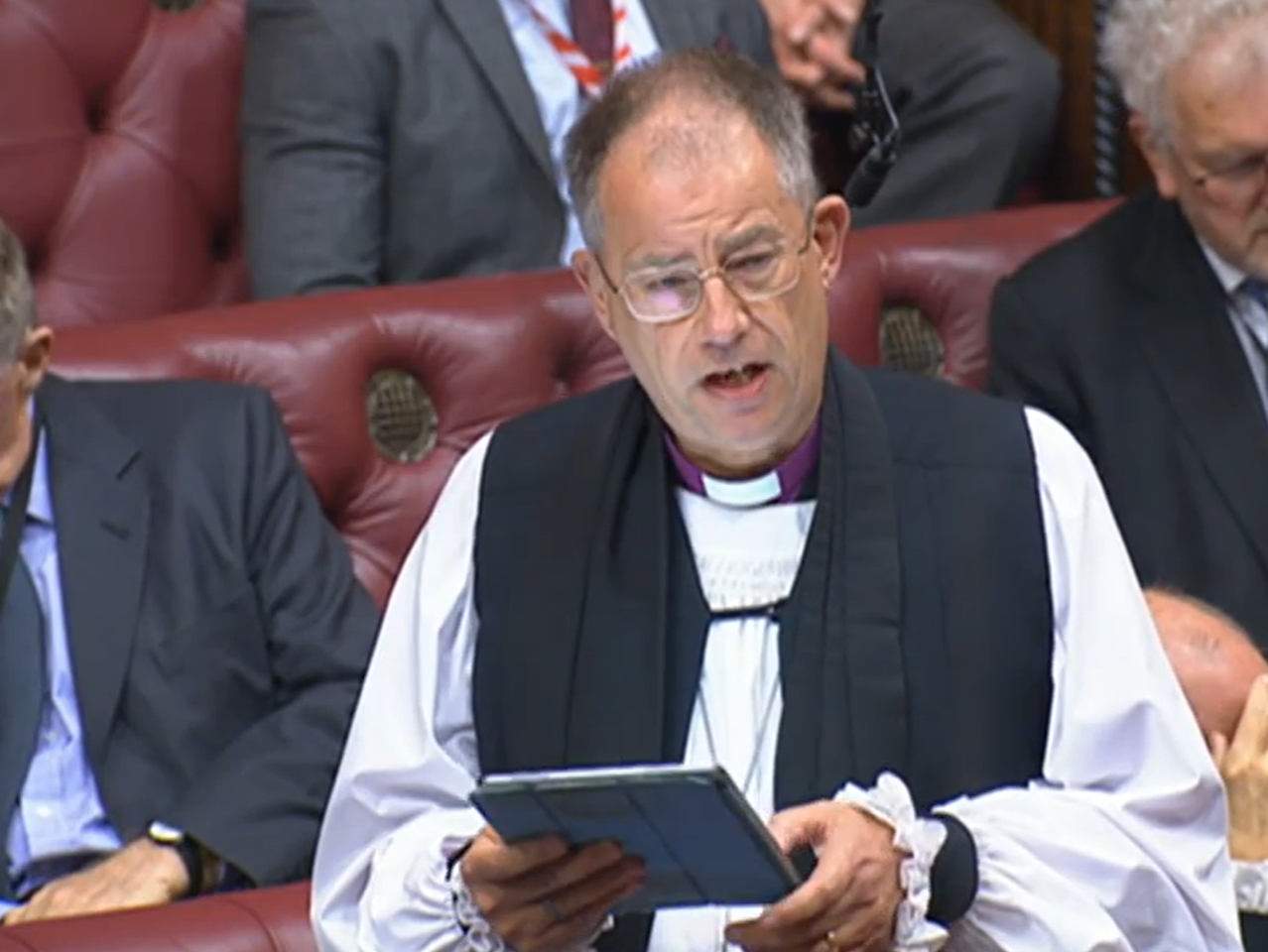
The Lord Bishop of Oxford: My Lords, I too warmly welcome this debate as a member of the committee that produced the report. I pay tribute to the noble Baroness, Lady Parminter, for her introduction to the debate and her very careful, wise and gracious—and patient—leadership of the committee in its first three years.
My experience of serving on the ECC Committee across the three years was that each of the challenges we addressed proved to be both more significant and more complex than we first appreciated. It was a tremendous learning curve. Each issue had multiple questions and problems associated with it and needed complex solutions. That was clearly the case with the EV report before the House today.
Some very good work has been done by the previous Government, manufacturers and local authorities, but much more needs to be done—and urgently—to keep this transition on track. I would highlight that need for urgency in the transition. As the noble Baroness, Lady Jones, has just said, the effects of climate change across the world are accelerating, as all of us in this Chamber recognise, often affecting those who have least, who are least resilient and whose emissions in the present and in the past have been lowest across the world.
Surface transport is the UK’s highest emitting sector, with passenger cars responsible for over half the sector’s emissions. The new Government surely need to do all they can to accelerate the transition, alongside the vital transition to renewable energy, so what do they intend to do? The Labour manifesto for the general election mentions three key steps: accelerating the rollout of charge points; restoring the phase-out date of 2030 for new cars with internal combustion engines; and supporting buyers of second-hand electric cars by standardising information—the second-hand car market is key and complex. These are welcome steps and I ask the Minister, as others have done, to say when we will see action on each of those points. However, as I am sure the Minister will recognise, and as the report makes clear, the steps are not enough by themselves, so I ask for a response and for action on two further areas.
The first, echoing other noble Lords, is to ask what the Government will do to ensure that the transition to EVs as part of the transition to net zero is a fair transition. I commend that word “fair” to the Government: it does not feature in this part of the manifesto. In particular, how will the Government ensure parity of pricing and taxation between those able to charge their EVs at home and those who need to use a commercial charging service? As has been said, 40% of the country will not have access to a home charging point. There is, at present, no viable solution to ensure parity, and I agree that our committee was not able to offer one, but it will need some radical and imaginative thinking. How will the Government address this key question of fairness?
Secondly, how will the Government lead and encourage the transition to EVs through better communication and co-ordination across government? The committee conducted its inquiry through a period when the Government were rowing back from previous commitments and sending very mixed messages to the markets, to manufacturers and to consumers. We are still waiting for a sense of how the new Government will respond in terms of encouragement, incentivisation, accurate information and co-ordination of policy goals and delivery. What task force or structures will the Government put in place to ensure this for the future?
The transition to EVs is a potential revolution in our road transport, our economy and public health over the next decade. How will the Government rapidly recharge this sector into the future?
Extracts from the speeches that followed:
Baroness Young of Old Scone (Lab): I want to deal with four of the issues that have been raised already by noble Lords but perhaps focus on aspects that have not yet been covered. The whole charging infrastructure is the first. There are now 70,000 public charging points and 850,000 domestic and workplace points, and that is still substantial growth. Some 80% of current electric vehicle owners have their own off-street parking, so we must make sure that we do not end up with a situation of haves and have-nots. Equalising tax on charging is really important.
The mixed signals that we got from the previous Government about whether it was going to be a 2030 or 2035 phase-out date did not help the charge point operators—it undermined their prospects of investment. We need to make sure that the clarity around the date of the phase-out—which was in the manifesto, as the right reverend Prelate the Bishop of Oxford mentioned—is honoured and sustained, so that everybody is very clear about the trajectory to which we are working.
There are considerable incentives in place at the moment for charge point installation—such as the rapid charging fund and LEVI, which is a local authority scheme—but they have not accelerated charge point rollout to quite the rate that we wanted. For example, the LEVI rules keep changing, making it very difficult for folk to deal with. There are a number of laggard local authorities that have done nothing since the scheme was opened, and that needs to be subject to government action. Local authorities are key in making charge points available for people who have not got access to driveway parking, and collaboration between charge point operators and local authorities is fundamental. The LEVI scheme and some of the initiatives put in place by the last Government to make it successful need to be continued and looked at, to make sure that they have not been lost sight of in the transition.
Lord Hunt of Kings Heath (Lab): The noble Lord, Lord Birt, referred generally to the need for a reliable charging network. The Public Charge Point Regulations were introduced in November last year, meaning, in effect, that charge point operators will be required to offer 24/7 access to a free helpline, share open data, increase the provision of contactless payment options and be 99% reliable across each rapid charging network. We are definitely not complacent on this; we know that more needs to be done. We also recognise the importance of what the right reverend Prelate the Bishop of Oxford said very well in relation to fairness.
(…)
I ought to turn to the issue of communication, because this is such an important area. A number of noble Lords—the noble Lords, Lord Lucas and Lord Whitty, the right reverend Prelate and my noble friend Lady Young—particularly raised the problem of misinformation about electric vehicles. This is something we need to be concerned about and not be complacent. I recognise that we as the Government have a clear duty and responsibility in terms of giving clear information to consumers on the benefits and use of electric vehicles. We need to work closely with industry in terms of correcting this misleading coverage and delivering factual communications to consumers on the many benefits that electric vehicles provide. We are already taking proactive action to counter inaccurate information presented by the media on the subject of EVs when this arises. Today’s debate has reinforced my view of the importance of doing this and I know that my colleagues in the Department for Transport will be listening very carefully to what has been said in relation to the role of government here.
To summarise the Government’s view, we welcome this report. I know that it was published in February and here we are in October, but none the less I can reassure members of the Select Committee that the report has informed, and is informing, the Government’s policy now about the way we need to go forward. I have said already that there are a lot of areas where I cannot give precise answers in terms of what we will do and what the dates are, because it is very much dependent on the spending review and budgetary discussions. Let us be frank: the public finances are particularly challenging and I will not hesitate to remind the party opposite of the public expenditure hole that they left us in. Clearly, that is a factor as well. But this is an important policy area; electric vehicles play a major role in the journey towards net zero and we know that it is important that we come back with some of the answers to the questions noble Lords have raised today.
 The Church of England in Parliament
You must be logged in to post a comment.