
The Bishop of Leicester took part in a debate on global conflict and the UN sustainable development goals on 17th October 2024, raising the need for increased understanding and cooperation across faith groups and communities:
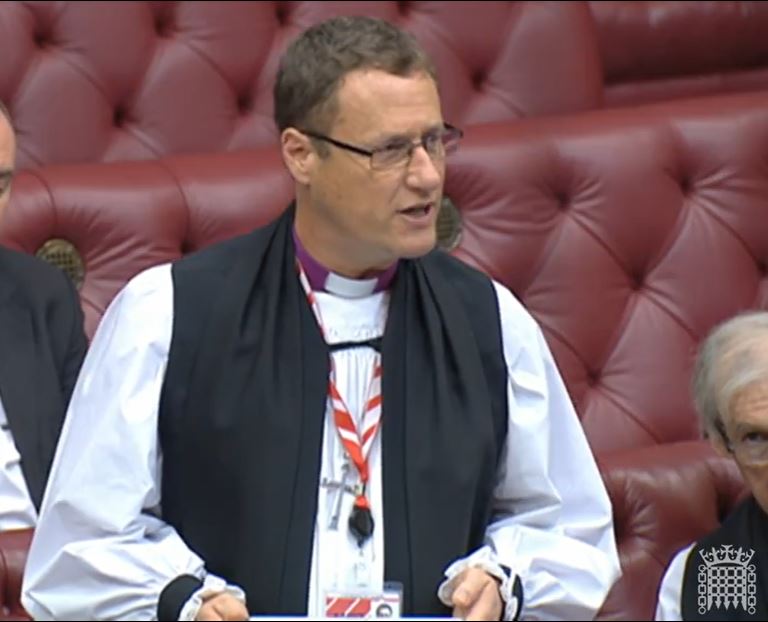
The Lord Bishop of Leicester: My Lords, I too am grateful to the noble Lord, Lord McConnell, for securing this debate in advance of the Budget, which is due to be delivered in a fortnight’s time. Undoubtedly, that Budget will involve difficult decisions and sacrifices. It is easy to lose sight of how very fortunate we are as a nation when compared with many others around the world.
As noble Lords have mentioned, the UN has warned that progress towards the sustainable development goals has ground to a halt and in some cases been reversed. Over the last year, the prospect of achieving the 16th sustainable development goal of
“peaceful and inclusive societies”
for sustainable development, and
“access to justice for all”
has seemed even further out of reach as war in the Middle East has become broader and deeper, and multiple conflicts in Africa have also worsened.
With religious differences front and centre of the conflict in the Middle East, as with many others around the world, it may seem at first glance that religion is an obstacle to achieving the sustainable development goals. I have been told this quite often by those who work in development and peacekeeping. However, because of the potential for faith to divide, it is especially important for us to support the efforts of faith groups around the world who seek peace and reconciliation, in order truly to see sustainable development.
There are examples of such initiatives all around the world, from Northern Ireland to Nigeria, advocating for peace, de-escalating tensions and healing the wounds left by conflict, so that communities can experience lasting peace. For instance, the South Sudan Council of Churches has played a crucial role in peacebuilding efforts since the outbreak of civil war, serving as a mediator, brokering ceasefires and peace agreements, and providing humanitarian aid and many other things, leading to reconciliation at high level and at grass roots, although there is a long way still to go. In countries such as Nigeria, Bosnia and Herzegovina, interfaith networks help foster understanding between different religious groups, bringing people of different faiths together to work for a common understanding and to stop conflicts spiralling out of control.
As anyone who has been involved in conflict resolution and reconciliation work will know, these efforts, as valuable and precious as they are, are not always popular and their fruits can be fragile. The new Government have outlined their commitment to reconnecting Britain, strengthening our reputation on the international stage and our moral leadership in humanitarian crises. I would be interested to hear what they are planning from the White Paper that was published last year. As they develop their own foreign policy, I urge them to champion and invest in locally led interfaith and reconciliation programmes at home and abroad. This is because, quite simply, Britain is connected. As we saw so clearly in the summer, our communities are not insulated from the impact of conflicts elsewhere in the world. Promoting peace and reconciliation across religious difference in other countries can help to make the UK a safer and more cohesive society, just as supporting interfaith efforts here in Britain can in turn serve as a model and inspiration for others.
This I know is an ambitious project, but one that would be markedly more feasible with proper use of our overseas development aid budget, as I think every speaker has mentioned so far. So, like many other noble Lords, I would like to see it restored to 0.7% of gross national income. The Government have suggested that they will do so when fiscal circumstances allow. That is to miss the point of setting the budget as a percentage of GNI—which means that we spend more when our economy is doing better and less when it is under greater strain. Nevertheless, in the meantime I urge the Government to commit to moving their spending on housing asylum seekers and refugees from the overseas development aid budget to the Home Office, and spending ODA where it is most needed, which is overseas, as the name implies.
I conclude with the thought that conflict has the potential to reverse the progress made across all the sustainable development goals. So I urge this Government to be courageous in standing with and resourcing those seeking peace and reconciliation, even where it seems most hopeless.
Extracts from the speeches that followed:
Lord Collins of Highbury (Lab): The Foreign Secretary and the Prime Minister have set out some clear priorities for the FCDO, tackling the issues that all noble Lords have raised today. The focus is on delivering the Government’s five missions: delivering growth, enhancing security, tackling the climate and nature crises, rebuilding our relationship with Europe and, as we are discussing today, modernising our approach to international development. This Government’s mission is to help to create a world free from poverty on a liveable planet. Inevitably, this requires holding on to the hope that we can get the SDGs back on track through clear, effective and modern development policy, placing climate and nature at the heart of everything we do. There is no pathway to development without increasing climate resilience, tackling the nature crisis and improving access to green energy, and no pathway to a sustainable future without development that leaves no one behind.
My noble friend is absolutely right about the importance of businesses and the private sector. The SDGs cannot be delivered by Governments alone and cannot be delivered even with the private sector alone. It is a joint enterprise. As my noble friend Lady Armstrong has also highlighted, this is about how we generate civil society to support the SDGs. I pick up the point by the right reverend Prelate the Bishop of Leicester that mobilising civil society includes faith groups and other organisations. Even though I am a committed humanist, I have seen incredible work by faith groups in this country to deliver support for people—and I have seen that in other countries too. Mobilising that is incredibly important.
(…)
Sadly, I am running out of time—now I know the difficulty the noble Lord, Lord Ahmad, used to have. Security, which was raised by every noble Lord, and in particular by the right reverend Prelate the Bishop of Leicester and my noble friend Lord McConnell, is an important area. Prevention of conflict and peacebuilding is essential. The review of the noble Lord, Lord Robertson, looking at that peacebuilding element, will of course be part of that. It is about a resource.
There is no sustainable development without peace, and there is no peace without sustainable development. I focused on that last week at the UN, and I met all the people concerned, who were absolutely committed to ensuring that we can deliver more. In the current climate, it is even more essential that we focus on that. I caught the point of the noble Baroness, Lady Sugg, about women’s participation, which we are absolutely committed to.
 The Church of England in Parliament
You must be logged in to post a comment.