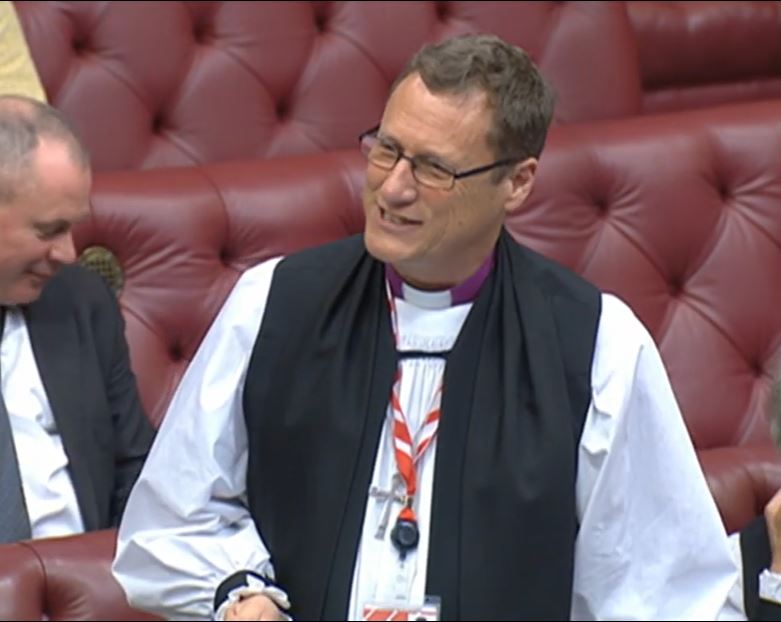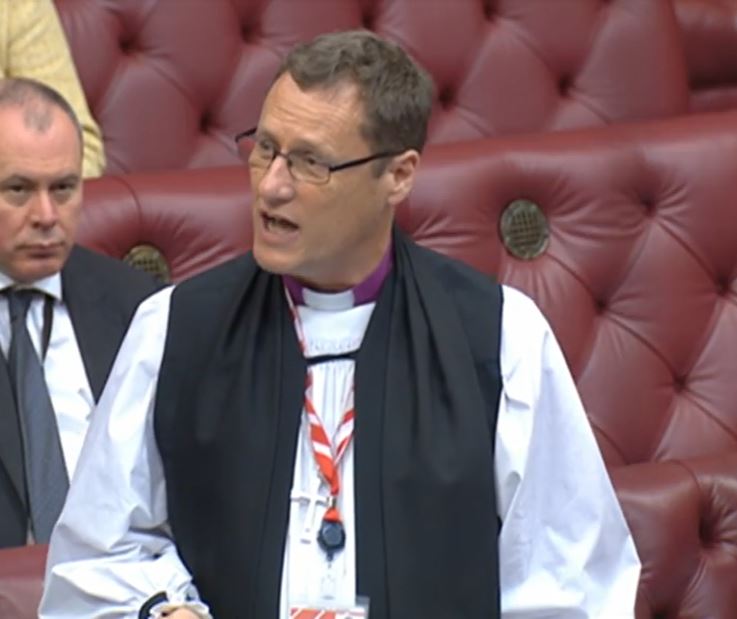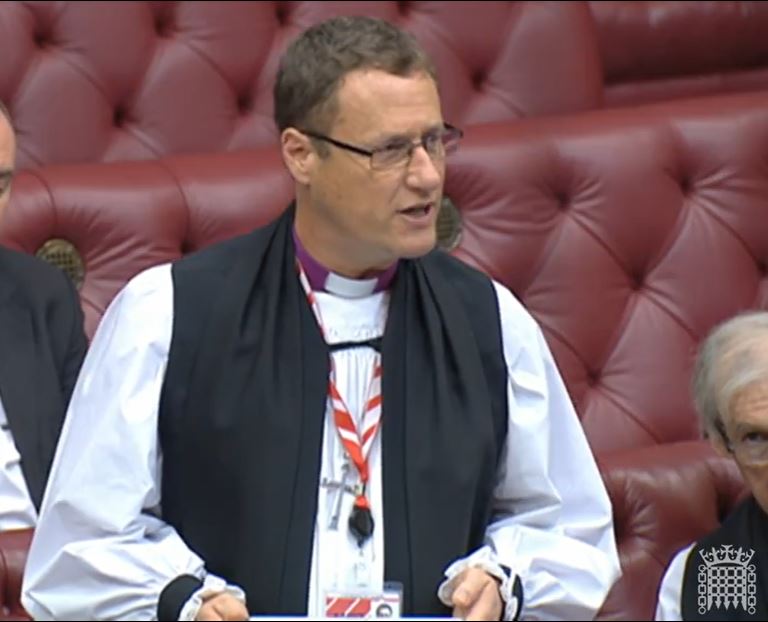
Bishop of Leicester asks about free school meals

The Bishop of Leicester asked a question on automatic enrolment for free school meals during a discussion on funding for post-16 education and skills on 2nd July 2026:

The Lord Bishop of Leicester: My Lords, one way for schools and colleges to get the funding they need is through the pupil premium, and one way to ensure that they get the pupil premium funding to which they are entitled is through automatic enrolment for free school meals. Can the Minister confirm that local authorities wishing to run automatic enrolment schemes in their area would be acting in line with their duties to support the most disadvantaged children?

Continue reading “Bishop of Leicester asks about free school meals”

Bishop of Leicester takes part in debate on affordability and quality of higher education

The Bishop of Leicester spoke in a debate on the future affordability and quality of higher education on 2nd July 2026, stressing the need for joined up approaches to encouraging higher and further education:

The Lord Bishop of Leicester: My Lords, I too am grateful to the noble Baroness, Lady Deech, for initiating this debate. It is good to have the opportunity to contribute to thinking about the future affordability and quality of higher education. I do so as the Bishop of Leicester, but also with a close interest in the Cathedrals Group of Universities—14 universities whose distinctive history and mission speak directly to the themes before us: public service, social inclusion and the flourishing of local communities.

Continue reading “Bishop of Leicester takes part in debate on affordability and quality of higher education”

Bishop of Leicester asks about consultations with religious groups on impact of Draft Conversion Practices Bill

The Bishop of Leicester asked a question on the draft Conversion Practices Bill on 1st July 2026, querying whether there had been consultations with religious groups regarding the potential impact of the legislation on pastoral care and prayer:

The Lord Bishop of Leicester: My Lords, I welcome the intentions behind the draft Bill. Indeed, in 2017, the General Synod of the Church of England passed a Motion, in fact by a large majority, which called on the Government to outlaw conversion therapy. However, I want to mention today that I have a number of concerns about the drafting of the Bill, and indeed particular concerns about the lack of clarity on the difference between harmful conversion practices and perfectly acceptable practices of pastoral care and indeed prayer, which is much needed for those who are in difficulty. If this difference is not crystal-clear within the legislation, it will potentially have a very significant negative impact on what I believe is legitimate spiritual care offered by faith groups. So, alongside the vital importance of consulting with LGBT+ people, can the Minister tell me what consultations have taken place with religious groups, and is he open to further conversations about how appropriate spiritual care can be guarded within this legislation?

Continue reading “Bishop of Leicester asks about consultations with religious groups on impact of Draft Conversion Practices Bill”

Bishop of Leicester emphasises importance of trust in communities during debate on threats to democratic institutions

The Bishop of Leicester spoke in a debate on threats to democratic institutions in the UK on 25th June 2026, stressing the importance of local communities and pluralism in combatting extremist rhetoric:

The Lord Bishop of Leicester: My Lords, I too am hugely grateful to the noble Lord, Lord Wallace, for securing this debate, and it is a pleasure to follow the noble Baroness, Lady Falkner. Our belief systems may differ, but we share much in common still.

I speak as chair of a new Church of England working group on promoting unity in our nation, a role that has made me think hard about the three threats before us today and what they mean for our common life, indeed for the Church and for other faith groups. I believe that the three threats that the noble Lord has highlighted—our susceptibility to disinformation, foreign interference and falling trust in our democratic institutions—share a primary underlying cause: the slow loss of the institutions in which people once learned to trust one another and act together.

Continue reading “Bishop of Leicester emphasises importance of trust in communities during debate on threats to democratic institutions”

Bishop of Leicester speaks in debate on Places of Worship Renewal Fund

The Bishop of Leicester spoke in a debate on the Places of Worship Renewal Fund on 25th June 2026, highlighting several shortcomings in the new fund and urging the government to look at long term planning for support of this kind of funding:

The Lord Bishop of Leicester: My Lords, I am extremely grateful to the noble and learned Baroness, Lady Prentis, for securing this debate and, indeed, for her wider service to the Church. I congratulate her daughter and son-in-law as well. I thank the many thousands of people across our country who play a part in caring for our wonderful churches and churchyards.

My fellow Lords spiritual regret that they are not able to join this debate; many are with their candidates for ordination services taking place this weekend. I know, however, that they share my support for the places of worship renewal fund and the recognition from the Secretary of State for Culture, Media and Sport that places of worship are

“part of who we are as a nation”.

Continue reading “Bishop of Leicester speaks in debate on Places of Worship Renewal Fund”

Bishop of Leicester asks about combatting AI deepfakes

The Bishop of Leicester asked a question on common standards on content provenance to prevent AI generated deepfakes on 23rd June 2026, during a discussion on global governance of artificial intelligence:

The Lord Bishop of Leicester: My Lords, a deepfake or AI-generated social media post manufactured in one country can inflame communities in another country within hours. Ahead of the UN global dialogue in Geneva next month, can the Minister give us a reassurance that the Government are pressing international partners for common standards on content provenance and authentication, so that citizens can tell what is real from what is synthetic and deliberately sown to divide communities?

Continue reading “Bishop of Leicester asks about combatting AI deepfakes”

Bishop of Leicester asks about freedom of religion for refugees in the UK

The Bishop of Leicester asked a question on the importance of freedom of religion and belief for incoming refugees in the UK on 22nd June 2026, during a discussion on security and safety concerns around the protection of Hong Kongers:

The Lord Bishop of Leicester: My Lords, while I am not aware that there was any religious element to the incidents referred to, we know that many Hong Kongers have come to this country seeking religious freedom and, indeed, many thousands have joined our churches. Can the Minister give reassurance to those people that the freedom of religion and belief will be honoured here?

Continue reading “Bishop of Leicester asks about freedom of religion for refugees in the UK”

Bishop of Leicester speaks in debate on child poverty with focus on benefits of free school meals

The Bishop of Leicester spoke in a debate on child poverty on 18th June 2026, raising the potential benefits of automatic entitlement to free school meals:

The Lord Bishop of Leicester: My Lords, I congratulate the noble Baroness, Lady Lister, on securing the debate and thank her for her tireless work in addressing child poverty. Like many others, I welcomed the publication of the Government’s child poverty strategy and was delighted by the Government’s decision to abolish the two-child limit on universal credit. Like others, I felt that the Government missed the opportunity to deliver some quick wins—measures that would not require legislation yet would make a tangible difference to children’s lives.

The noble Baroness, Lady Lister, already mentioned a number of these measures, but I wish to focus on just one: auto-enrolment for free school meals. On the face of it, it is a very modest proposal, yet it would have profound positive consequences for some of the disadvantaged children in the country. Around 250,000 children in England who are eligible for free school meals are not enrolled to receive it. That is approximately one in 10 of all those who should be benefiting from this scheme; in the north-east, it is one in five.

Continue reading “Bishop of Leicester speaks in debate on child poverty with focus on benefits of free school meals”

Bishop of Leicester takes part in debate on youth unemployment and welfare reform

The Bishop of Leicester spoke in a debate on welfare reform and youth unemployment on 11th June 2026, raising the importance of a supportive community for young people seeking work:

The Lord Bishop of Leicester: My Lords, I am grateful to the noble Lord, Lord Evans of Rainow, for securing this debate and to all taking part. Noble Lords may differ on the diagnosis but I think the whole House shares the same concern for the young people behind these figures.

I begin by noting that none of us likes to be labelled, and the use of acronyms to refer to people is even more disconcerting. Each young person is unique and precious, whatever their circumstances, and their dignity must be at the heart of our concerns. I also want to push back on the narrative which we often see in the media—that the rise in young people who are not in education, employment or training reflects a generation that has no appetite for work. The evidence simply does not bear that out.

Continue reading “Bishop of Leicester takes part in debate on youth unemployment and welfare reform”

Bishop of Leicester highlights importance of trust in communities during debate on AI

The Bishop of Leicester took part in the Archbishop of Canterbury’s debate on AI and society on 5th June 2026, highlighting the importance of trust in communities and the pitfalls of algorithmic content

The Lord Bishop of Leicester: My Lords, in the past, if you wanted to persuade people to think badly of others, you were limited by two things: the number of people you personally knew and the number of conversations you could physically have. Social media removed the second of those limits, letting one person reach millions at once. Artificial intelligence is now loosening the first. It allows one person to produce vast quantities of content of increasingly high quality. The frictions that once limited the spread of contempt have disappeared. We should not, then, be surprised that the fabric of our society is being torn.

For society to function, we need a broadly common understanding of the world and what is happening in it. Democracy is about disagreements over what to do about the opportunities and challenges we face, but for that disagreement to be constructive, we must all be able to access the bare facts: what is happening, who is involved and who is affected? Generative AI throws all this into question. Anyone, anywhere can now produce an image of an event that has never occurred or a video of a public figure saying something they never said. I really do mean anyone, anywhere. The BBC recently reported that accounts producing AI-generated anti-immigration content that appeared to be British were in fact run from east Asia, the Gulf and the United States.

Continue reading “Bishop of Leicester highlights importance of trust in communities during debate on AI”