
On 25th October 2024, the Bishop of Leicester took part in a debate on the situation in Ukraine, promoting the use of the Ukraine scheme as a model to foster a sustainable way of welcoming all refugees and compassionately supporting their integration in the wider community:
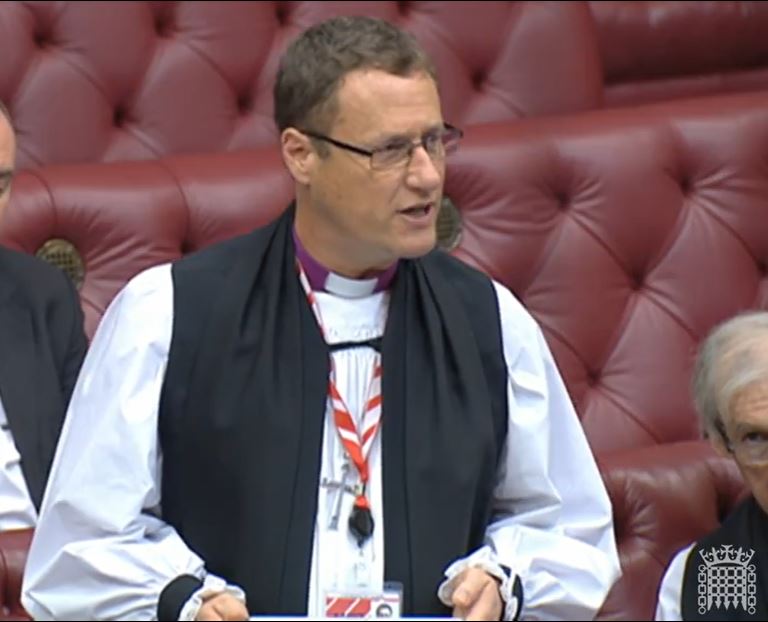
The Lord Bishop of Leicester: My Lords, it is a sad truth that as wars go on, public attention often dissipates. I am grateful to the noble Lord, Lord Coaker, and other noble Lords for reminding us that while coverage of the war in Ukraine has waned, daily suffering there has not, so our moral responsibility continues.
While others have focused on this responsibility in terms of military support, I would like to take the opportunity to reflect on another very important and positive aspect of our response to the war, in the hope that the new Government will build on its successes. As noble Lords will be aware, the Ukraine family scheme and the Ukraine sponsorship scheme, set up in March 2022, were two of the only legal routes for people seeking asylum in the UK. More than 200,000 visas were issued to Ukrainians, and thousands of families from across the political spectrum offered their homes to those fleeing the war.
So heated and polarised has the debate around asylum become in the intervening years that it is worth remembering how generously the public responded to the Homes for Ukraine scheme. Polling from March 2023 found that 71% of Britons believed that it was a good thing that the UK had taken in more than 150,000 Ukrainian refugees by that time. Only 16% disagreed. In research by More in Common, the majority of host families also reported positive experiences: nearly nine in 10 said that they were glad that they took part in the scheme. Not only did most hosts say that they were willing to continue accommodating refugees from Ukraine, but many said that they would be happy to host an Afghan refugee who would otherwise be living in a hotel.
As a result of this hospitality, many Ukrainians successfully integrated into British society. By April this year, for example, around 70% of working-age Ukrainian refugees were in employment—a higher rate than typically seen in other refugee groups—and two-thirds are fluent or can speak a good amount of English. Integration in this case did not mean assimilation. Ukrainian churches and cultural organisations held events and celebrations enabling refugees to maintain a connection to their homeland, as well as build friendships across social supports.
For example, Sofia, a young ambassador for the Children’s Commissioner, who was 15 when the war broke out, said:
“I felt the incredible support from the British people when I arrived, and I am very grateful for it. I was very pleasantly surprised because the caring British people were able to unite the Ukrainians into one big local community who also came to England as refugees. Thanks to the British people, we were able to find both English and Ukrainian friends”.
This is an example of interculturalism, which is, in my view, the most promising way forward for a diverse Britain, recognising and giving space for different cultural expressions such that we can learn from one another and live well together, rather than in homogeneous silos.
This kind of integration does not happen by accident. Funding from local authorities, and support from schools, universities and community groups played a role. So did political rhetoric and editorial angles. Choosing to speak compassionately about Ukrainian refugees and focusing on the kindness of families hosting them created the opportunity for refugees to discover how to be both Ukrainian and British—to begin healing from the trauma of war and displacement, and to start building a new life that honours the old.
None of this is to imply that the Ukraine scheme has been without challenges, but those are for another debate. Rather, it is to pose the question of why this is not the norm. If the major political parties and the general public see this as the right response to an outbreak of war, and if we are able both to give people in desperate need a new start and to benefit from their skills, why only Ukraine? Why not make this the model for a sustainable way of welcoming all refugees seeking sanctuary in the UK?
Extracts from the speeches that followed:
Baroness Harris of Richmond (Lib Dem): Finally, I want to mention visas. The temporary visas given to Ukrainians when they first came here will run out soon. What are the Government doing to extend these? Will the Minister ensure that, at least here, Ukrainians can build new lives and contribute fully to our society, by giving them the right to remain and work here? Many of them have professional qualifications and want to earn their own living. The right reverend Prelate the Bishop of Leicester spoke about this. Giving them skilled visa status would be the best way to recognise them. Does the Minister agree, and will the Government provide them that status? To all our new friends who have made their lives here now, who mourn for their broken homeland and their families who could not escape the Russians’ barbarity—those who have to live with the reality of terror every day—we owe our loyalty and assistance.
(…)
Baroness Chapman of Darlington (Lab, Foreign, Commonwealth and Development Office): The noble Lord, Lord Callanan, the right reverend Prelate the Bishop of Leicester and the noble Baroness, Lady Harris, spoke of the welcome that Ukrainian refugees have received and the extensive contributions that they have made to our communities. I was asked about visas and our plans for the Homes for Ukraine scheme. I assure noble Lords that there will be an opportunity for Ukrainians here to extend their visa if they want to, starting after Christmas. They will be able to extend on the same terms they have now for another 18 months.
 The Church of England in Parliament
You must be logged in to post a comment.