
The Bishop of Newcastle spoke in a debate on the autumn budget on 11th November 2024, urging the government to carefully consider the impact of the budget on vulnerable groups:
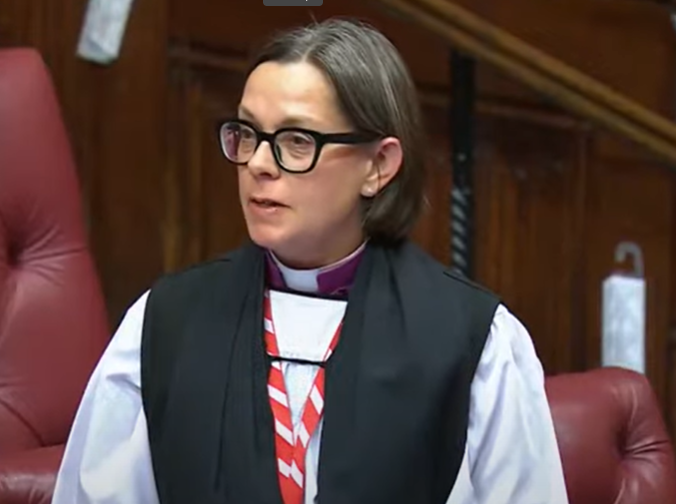
The Lord Bishop of Newcastle: My Lords, I feel my B in GCSE maths is challenging my ability to speak with any fiscal authority in this debate, but I am glad of the opportunity to do so. I offer my congratulations to the noble Lord, Lord Booth-Smith, on his excellent maiden speech and I welcome him to your Lordships’ House.
I recognise that the decisions the Chancellor has made have not been easy, but balanced alongside the Government’s long-term priorities we must consider how this Budget will serve the needs of people who are struggling today, and affect what surely must be a significant long-term ambition—perhaps I can use the word “mission”—to improve social cohesion.
As I listened to the Chancellor’s Budget speech, I was struck by two things: first, the determination to grasp nettles; and, secondly, the resolute focus on investment. Increasing fiscal confidence creates the right conditions for growth. This has short, medium and long-term objectives and outcomes. People, communities, organisations, businesses and even this Chamber represent complex ecosystems. The granularity on the ground makes it harder to see this complexity, yet its effect locally can be keenly felt. For example, the decision not to proceed with dualling the section of the A1 that lies in the north of my diocese arguably makes that area and its connectivity routes less attractive to potential investors. The 50% increase in the bus fare cap will impact people who can least afford it, further disconnecting people from places and opportunities. The flipside is welcoming the alignment of Budget priorities with regional devolution. This is having a positive impact on the north-east region; increased voice, agency and confidence have the potential to raise aspirations.
Last week, I attended the Northern Farming Conference in Hexham. I commend attempts to address anomalies in the tax system, but I echo the apprehensions I heard at that conference and in this Chamber that this was not a Budget that really understands the needs of those in rural communities who have this year already faced huge challenges from the weather and flooding. I therefore add my voice to those of others urging the Government to rethink the APR decision. Farmers have a key role to play in assuring food security in an increasingly volatile global context. Can the Minister please assure me that the impact of the APR and BPS measures on farming will be assessed and reviewed?
I welcome the extension of the household support fund and the steps taken to reduce the impact of universal credit debt deductions, but we must address why these measures are necessary in the first place. With a disproportionately high number of children living in poverty in the north-east, I believe this Budget missed a crucial opportunity to lift children out of poverty by removing the two-child limit and benefit cap. Child poverty is a stain on our society and I urge the Government to take bolder action in addressing its causes and consequences.
There is much that I welcome in this Budget, but the decisions I have mentioned have consequences that must not be overlooked. I urge the Government to consider the impact of these decisions carefully, making sure that they truly uplift the most vulnerable to ensure the flourishing of all.
Extracts from the speeches that followed:
Baroness Kramer (LD): I think more people in this debate spoke on the future of family farms than on any other issue. We join in those deep concerns that many families will be forced to sell. Those families are the backbone of our rural communities and our agriculture industry. The noble Earl, Lord Devon, made a tour de force speech in describing the issue, and he was joined by many others including the noble Lords, Lord de Clifford, Lord Berkeley of Knighton, Lord Shinkwin and Lord Empey, the noble Duke, the Duke of Wellington, my noble friend Lady Humphreys, who spoke clearly from these Benches about the problem in Wales, and the right reverend Prelate the Bishop of Newcastle. They were the kind of speeches that we have to ask the Government to take notice of. Again, let us remember that our party has offered a different tax route that could enable the Government to have the flexibility to make a change.
Lord Livermore (Lab, Treasury): We will shortly publish the “Get Britain Working” White Paper to tackle inactivity, and the Chancellor will set out pension reforms—which the noble Lord, Lord Howell of Guildford, asked about, and the noble Lord, Lord Gadhia, commented on—in her Mansion House speech later this week. All of these things will significantly boost growth, and none of them, as the noble Lord, Lord Gadhia, observed, are yet included in the OBR’s forecast.
The right reverend Prelate the Bishop of Newcastle and my noble friend Lord Sahota spoke about the importance of regional growth. In the Budget we set out the first steps in our approach to spreading growth across the country through devolution, investment and reform. We gave mayors greater control of their budgets by announcing the first integrated settlements for the West Midlands and Greater Manchester from 2025-26. We invested in major railway projects, and we confirmed funding for investment zones and freeports.
(…)
Many noble Lords mentioned agricultural property relief. They included the noble Lords, Lord Fox, Lord Forsyth, Lord Bilimoria, Lord Dobbs, Lord de Clifford, Lord Young of Cookham, Lord Empey, Lord Berkeley of Knighton, Lord Northbrook and Lord Shipley, the noble Earl, Lord Devon, the noble Duke, the Duke of Wellington, the noble Baronesses, Lady Mallalieu and Lady Humphreys, and the right reverend Prelate the Bishop of Newcastle. In terms of inheritance tax, currently the largest estates pay a lower effective tax rate than smaller estates. That cannot be right, so we are reforming agricultural property relief and business property relief to reduce this unfairness, while protecting small family farms. Almost three-quarters of estates claiming the relief will be unaffected. It is expected to affect around 500 claims next year.
We should be clear that agricultural property relief is given on top of the normal inheritance tax thresholds. Individuals can pass up to £500,000 to a direct descendant, and then agricultural property relief will provide another £1 million tax-free allowance. This means a couple can pass up to £3 million tax free. Above that, there is a 50% discount on inheritance tax, so it is a rate of only 20% and any liability can be paid in 10 yearly instalments which, to answer the noble Earl, Lord Devon, will be interest free.
 The Church of England in Parliament
You must be logged in to post a comment.