
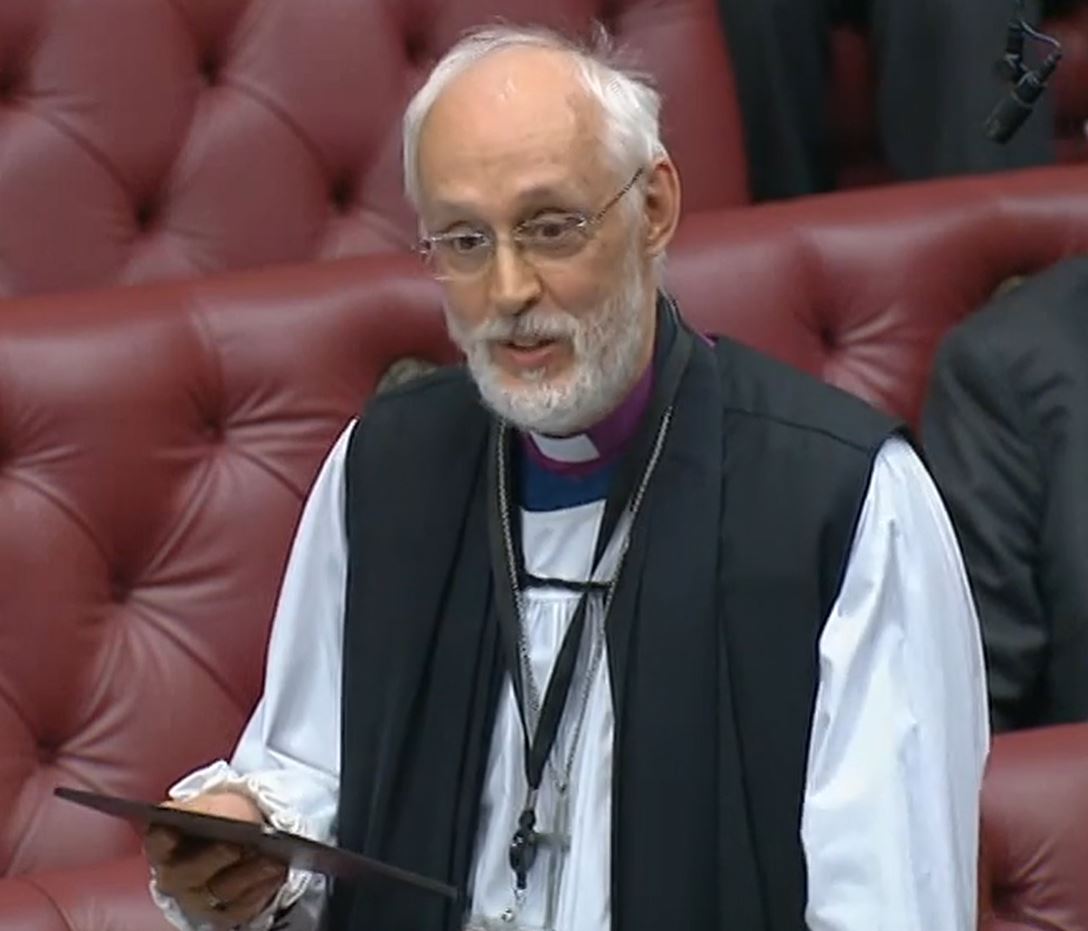
On 14th May 2025, the Bishop of Manchester tabled two amendments to the Renters Rights Bill in committee:
The Lord Bishop of Manchester: 249: Clause 101, page 129, line 2, leave out from “(homelessness)” to end of line 4
Member’s explanatory statement:
This amendment would make the Decent homes standard apply to all homeless temporary accommodation provided under the Housing Act 1996.
I thought that my amendment was never going to come. Amendment 249 stands in my name, and I am glad to support Amendment 252, to which I have added my name, and Amendments 250 and 251 in this group. I declare my interest as co-owner, with my wife, of one rather modest apartment in the West Midlands, which we let out.
As someone who has chaired a wide range of housing associations, including a large local authority transfer and an arm’s-length management company, I have seen the huge positive impact that the decent homes standard has had since one was first applied to social housing. Not least, it has forced landlords to pay proper attention to their existing stock, rather than focusing all their energies and resources on new developments. Hence, I am delighted that this Bill will, for the first time, extend the standard to much of the private rented stock; it is a sector desperately plagued by underinvestment in repairs, maintenance and stock improvement. One in five privately rented homes does not currently meet the decent homes standard compared to 10% for social housing. More than one in 10 has a category 1 hazard, which is two and a half times the figure for social housing.
My amendment, along with those in the names of other noble Lords that I wish to support in this group, seeks to test whether there is appetite in your Lordships’ House to extend the application of the standard to others whose homes will not be covered as the Bill stands. Amendment 249 would make the decent homes standard apply to all homeless temporary accommodation provided under the Housing Act 1996. Record numbers of individuals, families and children are currently housed in temporary accommodation. Some 117,450 households were in temporary accommodation in March 2024, which was a rise of 12.3%, almost an extra one in eight, from the previous year. Extending the decent homes standard to this large group of people would enable those living in temporary accommodation to expect basic standards from their accommodation.
The very phrase temporary accommodation is something of a misnomer. Many of those who live in such properties are housed there for years at a time. Moreover, the same property may then be used for further so-called temporary tenancies. While I understand that sometimes it may appear better to allow a family to live for a short while in a property that is awaiting imminent major refurbishment or even demolition rather than leave the building empty, this is not what is happening in the vast majority of cases.
I have previously raised in your Lordships’ House the particular plight of children in temporary accommodation. I remember a very good conversation with the noble Baroness, Lady Scott of Bybrook, a year or two ago. The figure was then more than 130,000, and it is still rising. They are often housed many miles away from their schools and play friends. Managing an education in such a context is desperately difficult. Some schools in Manchester are already having to put on special provision for children living in temporary accommodation, so imagine what it means to have to do that in a home that does not meet a basic standard of decency. We are failing such children utterly. Alongside families with children, many residents in temporary accommodation have particular vulnerabilities in terms of health and are often not well equipped to advocate for themselves. A national standard will make a huge difference.
My amendment would close a glaring loophole in the current Bill whereby private landlords could escape the decent homes standard by switching to providing temporary accommodation. Allowing the poorest quality homes in our nation simply to move to another form of tenure without doing anything to tackle their condition defeats the whole object of extending the standard at all.
I shall not steal the thunder of the noble Baroness, Lady Grender, whose Amendment 250 would extend the standard to accommodation used by HM Armed Forces families, save to remind us that these households, containing those on whom we rely for our nation’s defence, deserve the very best from us.
Amendment 251 in the names of the noble Lord, Lord Tope, the noble Baronesses, Lady Lister of Burtersett and Lady Janke, and my right reverend friend the Bishop of Chelmsford, who cannot be in her place tonight, would extend the standard to accommodation provided for those who have fled war, terror and persecution and are now seeking, lawfully, to rebuild their lives here.
Amendment 252 in the names of the noble Baronesses, Lady Whitaker and Lady Bakewell of Hardington Mandeville, and the noble Lord, Lord Bourne of Aberystwyth, to which I have added my name, would extend the application of the decent homes standard to mobile homes that are rented for residential purposes. I have been a long-term advocate for the rights of Gypsy, Roma, and Traveller households, which often experience levels of prejudice beyond that of almost any other ethnic group in our society. They simply seek live a way of life that they have followed for centuries and have long been a vital part of the workforce, especially in rural areas where short-term temporary agricultural workers with high mobility are required at particular points in the seasonal cycle.
These amendments seek to extend to some of our most vulnerable or deserving households a standard that the Bill already agrees is the proper one for most of our citizens. I hope that in responding to the debate the Minister will be able to indicate some movement or at least offer scope for further discussions with us on these important issues ahead of Report.
Extracts from the speeches that followed:
Baroness Whittaker (Lab): My Lords, I support all the amendments in this group and will speak to Amendment 252 in my name and those from the noble Lord, Lord Bourne of Aberystwyth, the noble Baroness, Lady Bakewell of Hardington Mandeville, and the right reverend Prelate the Bishop of Manchester, for whose support I am most grateful. The right reverend Prelate’s observations, drawn from experience, were extremely valuable. I also thank my noble friend Lady Warwick of Undercliffe for her earlier support for this amendment.
Baroness Coffey (Con): Going back to thinking about the challenges, I appreciate that the right reverend Prelate the Bishop of Manchester understandably talks about temporary accommodation. He and I both know that we need to focus on getting those 700,000 empty homes back into being used as homes. I could be a little bit cheeky here: the Church of England is, I think, the third largest landowner in the country and one of the wealthiest institutions. I would love to see all the empty rectories being opened up or, indeed, potentially sold and the money reused to extend in that way. I appreciate that the Church Commissioners have to balance the books like everybody else, but I did go into some detail looking at this.
Baroness Taylor of Stevenage (Lab): My Lords, I thank the right reverend Prelate the Bishop of Manchester, the noble Lord, Lord Tope, and the noble Baronesses, Lady Grender, Lady Whitaker and Lady Coffey, for their amendments on the decent homes standard and standards within the private rented sector. I also thank the noble Earl, Lord Leicester, the noble Lord, Lord Cromwell, and the noble Baronesses, Lady Janke and Lady Scott, for their comments in this group. Let me say how much I agree with the right reverend Prelate’s words about the decent homes standard and how dramatically that has improved homes in the social rented sector.
Amendment 249, tabled by the right reverend Prelate, would remove the power that allows Ministers to specify in regulations what types of temporary homelessness accommodation the decent homes standard will apply to. People living in temporary accommodation deserve a safe and decent home. I therefore agree with the right reverend Prelate’s aim of ensuring that such accommodation meets minimum decency standards. I can confirm that it is the Government’s intention that as much of this sector as possible is covered by the decent homes standard—I feel really strongly about this. I was told by the Mayor of London last week that one in 21 children in London are currently in temporary accommodation; that is probably more than one in each classroom of children. It is absolutely shocking that this is the case. Of course, the long-term answer is our commitment to the biggest increase in social and affordable housing in a generation. We have already invested £2 billion in making a start to help towards that situation.
However, it is important that I say that the pressures on the supply of temporary accommodation mean it is important that we carefully consider how we apply the standard to this sector. Having this power allows us fully to examine these issues and to consult. That will make sure that we strike the right balance between improving standards and avoiding risks to supply. I am of course very happy to meet the right reverend Prelate on this issue, because we all want the same outcome. For now, however, I ask that he withdraw his amendment.
The Lord Bishop of Manchester: I thank all noble Lords who have taken part in this debate. It has been characteristically good natured and very well informed, and I am very grateful in particular for the way the Minister has responded to the various amendments in this group.
Because we are going to have a rather late night tonight, I will not say too much at this stage. I wish to respond to some of the comments made by the noble Baroness, Lady Coffey. I did not speak to her amendment in my introduction because I did not understand it in the form in which it appeared on the Marshalled List; I am very grateful to her now.
I guess I should declare an interest: my daughter lives in a pre-1800 former gamekeeper’s cottage in a very rural part of Devon. She is not a tenant because she managed somehow to negotiate a very favourable mortgage rate with “the bank of mum and dad”, with which I think many of your Lordships will be very familiar—all too familiar, I fear. I understand the complexities of trying to get that cottage up to anything like a decent environmental standard, so I have great sympathy.
The noble Baroness mentioned in particular the Church of England’s land. The Church Commissioners, which I chaired in succession to the noble and right reverend Lord, Lord Chartres, until about 15 months ago, currently has a development land portfolio sufficient for about 30,000 homes, and we would like to develop that out to make more homes for people to live in. We recently set up a group that I am now the chair of, the Church Housing Association, which was registered with the regulator about six weeks ago. It is looking to utilise more Church land, particularly land owned by parishes and dioceses, in order to produce more social housing, particularly housing at social rent level, across the country. I am hoping to meet with Homes England
and others in the near future to progress that. My own diocese is going through a very determined process of evaluating all parsonages, selling the ones we do not need and investing the money in improving the ones we are going to keep. So I hope the noble Baroness will agree that this is the right way to take these matters forward.
I am very grateful for all that has been said tonight and I look forward to meeting the Minister to further some of the conversations we have had. For the time being, I beg leave to withdraw the amendment.
Amendment 249 withdrawn.
The Lord Bishop of Manchester: 260: Clause 135, page 156, line 30, after “entry),”, insert—
“(a) in subsection (5)(a), omit “known), and” and insert “unoccupied), or;””Member’s explanatory statement
This amendment seeks to allow the 24 hours’ notice requirement for an inspection under Section 239 of the Housing Act 2004 to be served solely on the property’s occupier.
My Lords, in moving this amendment, I am grateful for the help of the Greater Manchester Combined Authority, which has worked with local enforcement teams in my diocese to help us get to this amendment.
Local enforcement will be vital to making the intention of the Renters’ Rights Bill a reality, including the extension of the decent homes standard. However, an amendment to the power of entry that councils are going to use to enforce that standard is needed so that negligent or criminal landlords do not get a tip-off of inspections in advance, which would allow them to frustrate that process or to put pressure on the tenant. Enforcement officers would never tip off the proprietor of an off-licence in advance of an under-age mystery shopper trying to buy alcohol or cigarettes but, as currently drafted, this Bill will require enforcement officers to give landlords a 24-hour tip-off for any formal inspection of compliance with the decent homes standard.
The power of entry under the Bill comes from Section 239 of the Housing Act 2004. It is completely appropriate to give notice to the occupier—I mean, it is their home; they are probably the one who made the complaint that led to environmental health officers or enforcement officers wanting to come round to have a look at it—but why on earth do we give the landlord that 24 hours’ notice? Indeed, we know already from what enforcement officers tell us that, where there is a requirement to tip off landlords, it allows criminal landlords to take lawful countermeasures. These include things such as forcibly removing tenants from an overcrowded property, pressuring tenants not to let enforcement officers into their home or taking retaliatory action, which can dissuade tenants from pursuing complaints. They can also prompt them to withdraw complaints; indeed, there is every reason why a tenant may not want the landlord to know that they have made a complaint at this early stage of the process.
Finally, I would urge that focusing the notice requirement on the occupier is consistent with equivalent enforcement legislation. For example, council enforcement officers’ powers of entry under the Environmental Protection Act 1990 include no requirement to give notice to a property’s owner.
Unlike the noble Baroness, Lady Bennett of Manor Castle—I see that she has just left us—I am not a night owl: should it get to midnight and I am still here, these fine ecclesiastical robes will, like Cinderella’s dress, turn to rags. I trust that we can have an effective but brief debate on what is, I think, a simple and clear proposal. I hope that the Minister will agree that this is a timely and sensible amendment. I beg to move.
Extracts from the speeches that followed:
Baroness Scott of Bybrook (Con): My Lords, I thank the right reverend Prelate the Bishop of Manchester for this amendment on powers of entry into properties. Of course, there is a fine line here: we are trying to balance landlords’ rights to know what is going on in their properties, especially regarding enforcement, with the rights of the occupiers of the property to be informed when powers of entry are being exercised by enforcement authorities.
The amendment would remove the current requirement for a notice to be provided to both the owner and the occupier of the property before the authority can exercise any power of entry under Section 239 of the Housing Act 2004. This would mean landlords not having to be told that their property is going to be entered for survey or examination. I would argue that the owner of the property should have the right to be informed both that their property will be investigated by enforcement authorities and that the authority will exercise its power of entry into the property. This is the case as things stand now, and I believe that that is how it should remain.
Baroness Taylor of Stevenage (Lab): My Lords, I thank the right reverend Prelate the Bishop of Manchester for his Amendment 260 and the noble Baroness, Lady Scott, for her comments. This amendment to Section 239 of the Housing Act 2004 seeks to enable local authorities to inspect PRS properties without the need to give 24 hours’ notice to property owners where the property is occupied, while retaining the notice requirement for tenants.
Section 239 currently requires local authorities to provide 24 hours’ notice to owners—if known—and occupiers before an inspection can take place. We are aware that the current requirement to provide property owners with 24 hours’ notice enables some unscrupulous landlords to hide evidence of breaches of PRS legislation, intimidate tenants and obstruct inspections. We recognise that the current notice requirement may, in some circumstances, hinder local authorities’ ability to address tenants’ unsafe or hazardous living conditions effectively.
While we are supportive of any efforts to improve local authorities’ ability to enforce against rogue landlords and appreciate that this amendment is in support of that objective, we must carefully consider its implications. We will continue to have conversations with the right reverend Prelate and with stakeholders, and we welcome noble Lords sharing their views on this matter so that the Government can take them into consideration. For these reasons, I ask the right reverend Prelate the Bishop of Manchester to consider withdrawing his amendment.
The Lord Bishop of Manchester: My Lords, this has been exactly the brief debate that I was hoping for on this matter. I am very grateful to all noble Lords for exercising restraint. I am particularly grateful to the Minister for her response, and I look forward to continuing those conversations. We have time before the Bill is finalised to get this right, and therefore I beg leave to withdraw.
Amendment 260 withdrawn.
 The Church of England in Parliament
You must be logged in to post a comment.