
The Bishop of Newcastle spoke at the second reading of the Universal Credit Bill on 22nd July 2025, expressing concern regarding the potential impact of the bill on those with disabilities and the need to tackle the underlying causes of poverty and ill health:
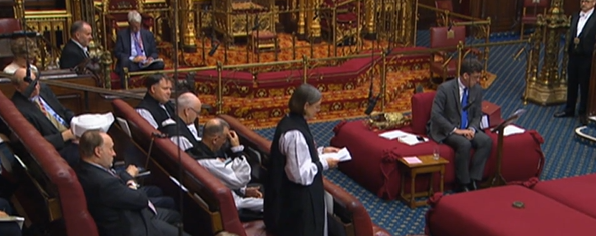
The Lord Bishop of Newcastle: My Lords, I begin by offering my congratulations to the noble Baroness, Lady Shawcross-Wolfson; I look forward to her maiden speech, and acknowledge the valedictory speech of the noble Baroness, Lady Bryan. I also thank Ministers for listening to concerns about the Bill when it was initially brought forward.
A functional social security system tackles poverty and supports people to live full lives. With that, the system needs to retain public confidence, expressing the best of our values. It must also strike a balance between supporting people who are able to work and ensuring that people who cannot work are protected and cherished for who they are. We need economic growth—that is not disputed; this is, after all, a money Bill—but I am concerned for those who are left behind or who do not fit the model of financial productivity at the rate that seems to be desired.
There is a granularity to this debate about the complexity of people’s lives, which do not always fit into neat economic models. I therefore note the point made by the noble Baroness, Lady Bennett, in her amendment to the Motion about the rates of poverty among disabled people, who are already disproportionately likely to be living in poverty. This can have an impact on children, making their start in life all the more challenging and deepening systemic injustices.
This landscape of poverty and economic inactivity is acute in the area covered by my diocese in the north-east. There are opportunities to make a difference in local communities—through devolved authority mayors, councillors, community leaders and citizens—but turning the tide on poverty still requires decisive leadership and vision from central government. One of dozens of emails I have received in recent days came from a father in the north-east, who told me about his son who has complex disabilities. He would like to work one day but is struggling to navigate what feels like a punitive approach in the changes to universal credit. His capacity to enter the workforce faces barriers even before he can contemplate exploring opportunities. Our values should hold us to account for how we raise up the most weak and vulnerable.
What do we need? I suggest some joined-up thinking. I understand the Government’s desire to reform the system. It is becoming more expensive to administer, but even if it were not, proportionate actions should be taken to help people make the most of their gifts and skills, whether in the labour market or through volunteering in their community. As other noble Lords have pointed out, the fact that social security spending is rising, and more people receive health benefits, points to shortcomings elsewhere.
On PIP, we should not shy away from the difficult questions that the Timms review needs to ask and answer about the assessment process, the treatment of physical and mental health, and a reasonable eligibility threshold. None of that can happen without tackling some of the causes of ill health: the under- investment in social security and social housing in recent decades; the shortage of mental health provision; the effects of insecure, demoralising work; and the many other areas that noble Lords have already spoken to. I am glad that the Government are addressing some of these challenges, but I hope they will not be considered in isolation, that the Government will monitor the impact of this Bill closely and that the lives of all our citizens can be improved so we may all flourish together, each according to their capacity and need.
Extracts from the speeches that followed:
Baroness Stedman-Scott (Con): The right reverend Prelate the Bishop of Newcastle made a very good point that we cannot standardise things. One size does not fit all, and having flexibility in the service we offer people is going to be really important. I note the points made by the Minister on PIP assessments. I congratulate her on the commitment to do them face to face. The only reason that face-to-face assessments were stopped was Covid, and I am glad that they are coming back.
We must do better, especially for those living with disabilities and battling severe conditions every day. I recognise the Government’s progress on the Conservative principle of the right to try and welcome recent investments in skills, but without real, personalised, wraparound support, these efforts will continue to fall short for some people who need them. I have had loads of emails, as I am sure other noble Lords have, from people concerned about the impact on disabled people. I completely agree with the noble Baroness, Lady Grey-Thompson, that the media have not helped one little bit in the way that they have frightened people into believing that certain things will happen, when maybe they will not.
Baroness Sherlock (Lab, DWP): Before I turn to the specific points raised, I say from the outset that this Bill is simply one part of the Government’s wider programme to reform our social security system so that it is sustainable and helps people to build a better life. That is what it is there to do, but it is part of a much wider programme. Let us bear that in mind as we go through.
Let us look at the specifics. I will try to talk on as many points as possible, but in 20 minutes I will not get to them all and I will not name everybody. I apologise in advance.
On the comments from the noble Baroness, Lady Bennett, the right reverend Prelate the Bishop of Newcastle, and others that the Bill pushes people into poverty, let me be clear that nobody will find themselves pushed into poverty as a result of the changes in the Bill. People who are claiming benefits are not going to be subject to these changes. As I said at the start, we estimate that the benefits changes announced at the Spring Statement, revised to account for changes in the Bill, will now lift 50,000 people out of poverty in 2029-30. That is without any impacts of our record £3.8 billion investment in employment support. It is absolutely the case that those who qualify in future will get a higher standard allowance in universal credit and will still get a health top-up in universal credit, albeit at a lower level than now, as a result of the rebalancing. They will also get much more support in their journey towards work.
As for those with the highest needs, we recognise that some people will never be able to work. That is why those with the most severe, lifelong conditions whom we do not ever expect to be able to work, and those nearing the end of their lives, will receive the current higher rate of health top-up when they apply, and we will not be calling people in for pointless assessments.
(…)
A number of noble Lords talked about the challenges we are facing in the system. It is true that making our social security system sustainable is a real objective for this Government, as it must be for every Government. That needs action on various fronts. It needs action to reduce the drivers of ill health, as the right reverend Prelate the Bishop of Newcastle said. It needs action, which we are doing, through our record levels of investment in and reform of the NHS. It needs investment in jobs in poor areas and in employment support, all of which we are doing at scale. It also needs reform of the benefits system, which we are committed to doing.
 The Church of England in Parliament
You must be logged in to post a comment.