
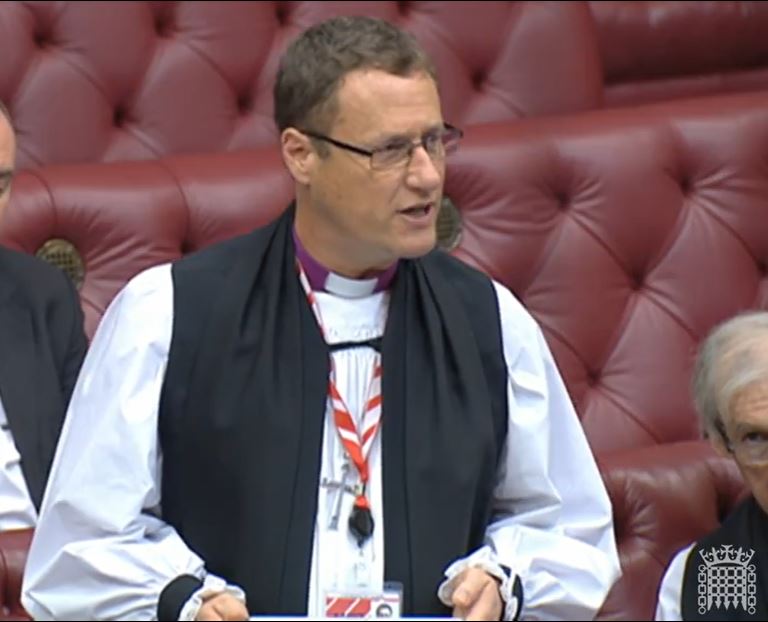
The Bishop of Leicester spoke in support of an amendment to the Public Authorities (Fraud, Error and Recovery) Bill which would provide protections for those in poverty regarding benefit overpayments on 21st October 2025:
The Lord Bishop of Leicester: My Lords, I am pleased to have added my name to this amendment. As this is the first time that I have spoken at this stage, I want to thank the Ministers for their careful consideration of the concerns raised by noble Lords, as well as all those who have engaged with such diligence on this matter. For the record, this is an important Bill. Attempts to commit fraud will not stop as a result of this Bill—that will never be possible—but it will be far harder for those making these attempts, and that is absolutely right, as is the ability to recover overpayments.
The principles behind this amendment are fairness in the face of the various reasons for an overpayment being made, including error by the department, and affordability, ensuring that those already in poverty are not pushed further into it. Let us remember who will bear the brunt of these new powers: people who are reliant on benefits, which independent research suggests are already insufficient to meet people’s basic needs. With the requirement to pay off their debts via universal credit deductions of up to 15% of the standard allowance, there is a real risk that many will, I fear, be pushed even deeper into poverty.
It is not a trivial number of people who will be affected. According to a DWP Freedom of Information Act response in 2023-24, nearly 900,000 new overpayment debts were entered on DWP’s debt management system, nearly 80% of which were recorded as caused by official error. The amendment before us offers a constructive path to stop people being pushed into even more precarious circumstances. By introducing a clear limit on how far back overpayment recovery can go, it would bring predictability and restraint to the process. People should not live in fear that an administrative slip-up made a decade ago will suddenly resurface as a bill they cannot hope to pay. Other areas of law recognise the principle of limitation periods and so should we here. Equally, by requiring an affordability assessment, the amendment would ensure that any repayment plans are fair, sustainable and consistent with human dignity. This is for the good of the individuals but also of the Government. If the state appears heavy-handed then confidence in the integrity of our welfare system, which is the thrust of this whole Bill, is undermined.
The amendment would not weaken the fight against fraud. It does not seek to excuse dishonesty or to diminish accountability. It seeks to uphold the Government’s stated objective of ensuring that recovery of overpayments is done in a fair and affordable way. I urge the Minister to take these concerns into account, in particular the suggestions of the noble Lord, Lord Verdirame, on how these concerns can be addressed practically. I, like others, will not be pushing for a Division on this matter, but I seek real reassurance from the Government.
 The Church of England in Parliament
You must be logged in to post a comment.