
During a debate on the Planning and Infrastructure Bill on 27th October 2025, the Bishop of Norwich spoke to his amendment on the protection of chalk streams, which “would require a spatial development strategy to list chalk streams in the strategy area, outline measures to protect them from environmental harm, and impose responsibility on strategic planning authorities to protect and enhance chalk stream environments.”
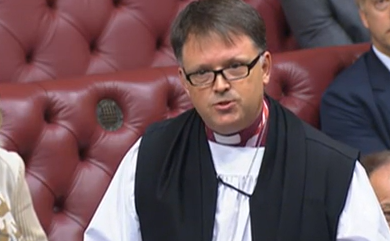
The Lord Bishop of Norwich: My Lords, I shall speak to Amendment 94, and I thank the noble Earl, Lord Caithness, the noble Viscount, Lord Trenchard, and the noble Baroness, Lady Willis of Summertown, for their support. I am most grateful to follow the noble Baroness, Lady Grender, who has just spoken so powerfully about her amendment, as well as offering her support for this amendment. Amendment 94 would require a spatial development strategy to list chalk streams in the strategy area, outline measures to protect them from environmental harm and impose responsibility on strategic planning authorities to protect and enhance chalk stream environments.
Chalk streams, as we have heard, are a very special type of river. Some 85% of the world’s chalk streams are in England. They are fed primarily by spring water from the chalk aquifer, not rain, which means that they have clear, cold water and very stable flows. These globally rare habitats are found in a broad sweep from Yorkshire and the Lincolnshire Wolds through Norfolk, the Chilterns, Hampshire and Dorset. The Bure, Glaven, Wensum, Test, Itchen and Meon are river names that come to mind flowing, as they do, through the tapestry of English history and in our literature, such as the River Pang-based Wind in the Willows. They are rich in minerals, especially calcium, and this “base rich” environment supports a distinctive and rich ecology.
It is no wonder that this amendment and a similar one in the other place have received such positive support, including in your Lordships’ Committee. What it seeks to do is such an obvious thing, for what we love, we should desire to protect; what we value, we should safeguard; what is of global significance, we should be deeply proud of.
I am grateful that the Minister responded to my letter to her about my amendment. However, her response was far from reassuring in two ways. First, the Government have pointed to local nature recovery strategies as a way of protecting chalk streams. These could, of course, in future be capable of considering, avoiding and otherwise mitigating for direct damage to these habitats, such as occurs from the footprint of a development near a chalk stream. However, to do so, LNRSs will need more bite in the planning system than they currently have. We are still waiting for the regulations designed to do precisely that, placing a duty on local planning authorities to take account of the nature strategy when making planning decisions. We are still waiting for that to be commenced, and it is now a full two years after these regulations were promised in the Levelling-up and Regeneration Act 2023.
Even once the regulations are passed, LNRSs will not be well placed to map, quantify and avoid or mitigate for the offsite impacts of development such as downstream pollution or the additional water that will be abstracted from chalk streams or their aquifers to serve new homes. These very real threats to our chalk streams, over areas much larger than are covered by strategies, cannot be addressed by LNRSs.
Secondly, the Government have pointed to their plans to limit overabstraction by water companies through amending licences, but their target achievement date is 2030. This could take far, far too long and be far, far too late for many threatened chalk streams. The current abstraction situation is grave. Water companies are not sourcing their water from chalk streams within sustainable limits. The Catchment Based Approach’s chalk streams annual review 2024-2—a mouthful of a title—published last week, reports that a third of chalk streams do not have healthy flow regimes. This CaBA report also highlights additional water bodies where, despite flows being classed as compliant overall, abstraction can cause significant local impacts in parts of the watercourse. For example, in the River Loddon, upstream areas are impacted by abstraction but, because of wastewater discharge downstream of them, flows at the assessment point are classed as compliant. If overabstraction occurs for a sustained period upstream, the whole chalk stream could well dry out.
In light of the growing and urgent challenges facing our chalk streams, we cannot afford to wait for LNRSs to have more planning bite, or for 2030, when the abstraction licence amendments come into effect. We need Amendment 94 so that spatial development strategies are equipped to enable planning authorities to direct development away from areas where development footprints, pollution and overabstraction could sound the death knell for declining chalk streams. I will certainly listen to the Minister’s response with care. However, if this amendment continues to secure wide support, I will look to test the opinion of the House.
Extracts from further speeches:
Baroness Grender (LD): Amendment 94 in the name of the right reverend Prelate the Bishop of Norwich complements this approach, and I thank him for the work he has done on this issue and his environmental expertise, which he has brought to this debate. Amendment 94 tightens oversight and demands full transparency in environmental impact reviews on watercourses at risk, an essential safeguard for communities whose local rivers are too often treated as collateral damage by the planning system’s inertia.
None of us should accept that cleaner, safer waterways are an optional extra and a nice to have. By adopting an amendment on chalk streams and supporting, out of these two amendments, Amendment 94, this House will signal that nature restoration, water quality and sustainable infrastructure are not in competition but can be advanced through co-ordinated and legally binding steps. I urge noble Lords to support these amendments for the sake of our streams and the communities they sustain.
If the right reverend Prelate the Bishop of Norwich moves to a vote, these Benches will support him. It is right that, with something as crucial as our unique chalk streams, we ask our colleagues in the House of Commons to think again and strengthen and protect in law this ecosystem that is almost unique to England. I hope that this House will unite in voting for Amendment 94 and protecting this rare heritage for future generations.
Baroness Willis of Summertown (CB): I am pleased to add my name to the important amendment tabled by the right reverend Prelate the Bishop of Norwich, and to Amendment 92 in this group, because, let us be honest, we are not starting from a good place with chalk streams. As mentioned by my noble friend, the current status of these unique and extremely rare habitats in the UK is poor, with more than three-quarters failing to meet good ecological health standards. This is precisely why the chalk streams became such an important issue for debate in the Levelling-up and Regeneration Bill. I remember only too well the same Front Bench colleagues debating long and hard for their protection.
The chalk stream recovery plan, announced by the previous Government, was seen by many, including me, as a good step in the right direction. But here we are again, with chalk streams back in the firing line and, despite the reassurance from the Minister on Report that local nature recovery strategies could propose priorities for their protection, the problem with our planning system is that it requires local authorities only to have regard to our LNRSs, which is not strong enough to protect these vulnerable habitats. We came across this a number of times in the Levelling-up and Regeneration Bill. Those words are etched in my memory.
Lord Roborough (Con): My Lords, I shall speak to the amendments in the names of the noble Baroness, Lady Grender, and the right reverend Prelate the Bishop of Norwich. I am grateful for their excellent, informative introductions. We on these Benches tabled similar amendments in Committee. The amendments share a vital purpose: to ensure that our planning system gives proper recognition and protection to chalk streams, one of our most distinct and rarest natural habitats. These streams help define our landscapes, support unique biodiversity and supply water to many communities. The amendments would require spatial development strategies to identify and protect chalk streams, setting out the responsibilities for planning authorities in their stewardship.
These are sensible, constructive proposals and I am grateful to those who have tabled and supported them. We will support the right reverend Prelate the Bishop of Norwich if he divides on his amendment this evening. Will the Minister say whether she considers chalk streams to be irreplaceable habitats, like ancient woodlands, and therefore deserving of similar policy protection? The case for stronger recognition of chalk streams within our planning system is compelling. They are an irreplaceable part of our natural heritage and a globally important asset, and the way we plan for growth must reflect that.
Baroness Taylor Stevenage (Lab, MHCLG): My Lords, I thank the noble Baroness, Lady Grender, and the right reverend Prelate the Bishop of Norwich for Amendments 93 and 94, which propose additional statutory obligations for strategic planning authorities in relation to the identification and safeguarding of chalk streams. With 85% of the world’s chalk streams found in England, these unique water bodies are not just vital ecosystems but are indeed a symbol of our national heritage. The Government are committed to restoring them, which is why we are taking a strategic approach to restoring chalk streams. Working in partnership with water companies, investors and communities, the Government will introduce a new water reform Bill to modernise the entire system so that it is fit for purpose for decades to come. This is essential to restoring chalk streams to better ecological health and addressing the multiple pressures facing these habitats.
(…)
In answer to the points made by the right reverend Prelate, local nature recovery strategies are a legal requirement and are prepared by responsible authorities, typically county or combined authorities appointed by the Defra Secretary of State. There are 48 LNRS areas and lead authorities covering the whole of England; there are no gaps, and no overlaps. LNRS responsible authorities work closely with local partnerships, involving all local planning authorities, to identify and map proposed areas for habitat management, enhancement, restoration and creation for biodiversity and the wider natural environment. The West of England Combined Authority published the first LNRS in November 2024. Five more have since followed: North Northamptonshire Council, Cornwall, Isle of Wight, Essex and Leicestershire. The remaining 42 are expected to be published by the end of 2025, or shortly thereafter.
I will also address the right reverend Prelate’s point about the provisions in the LURA. The Act created a duty requiring plan-makers to take account of LNRS. This builds on the existing requirement on all public authorities to have regard to LNRS in complying with their duty to conserve and enhance biodiversity. This duty will be commenced as part of wider planning reforms later this year.
Where a strategic authority considers chalk stream protection to be of strategic importance, Section 12D(1) requires that spatial development strategies include policies on land use and development that address such strategic priorities. Authorities will therefore be able to include such policies where appropriate.
(…)
Lastly, on the reform of farming rules for water—which the noble Lord said in his letter are currently ineffective—the levels of water pollution from agriculture are unacceptable. We are looking at reforming the regulations, including the farming rules for water, as a priority within a suite of broader interventions. We are also working with farmers, environmental groups and other parties to improve the farm pollution regulations to make sure that they are simple and effective. This will allow us to deliver pollution reductions and clean up our waters while supporting farm businesses to grow. I hope that is helpful to the noble Lord.
We need to continue to tackle the biggest impacts on chalk streams, including reducing the risk of harmful abstraction, and we are doing so, as I said, by 126 million litres through the amendment of water company abstraction licences, and rebuilding the water network with a record £104 billion investment to upgrade crumbling pipes and cut sewage spills. In light of all this, I hope noble Lords will not press their amendments.
Baroness Grender (LD): My Lords, I thank the Minister. It is very clear there is a strong feeling within this House that there is a need for something to shift and be enshrined in law. I beg leave to withdraw my amendment in order to hand over and support the right reverend Prelate the Bishop of Norwich if he decides to press his.
The Lord Bishop of Norwich: 94: Clause 52, page 73, line 22, at end insert—
“(6A) A spatial development strategy must—(a) list any chalk streams identified in the strategy area;(b) identify the measures to be taken to protect any identified chalk streams from pollution, abstraction, encroachment and other forms of environmental damage; and(c) impose responsibilities on strategic planning authorities in relation to the protection and enhancement of chalk stream habitats.”Member’s explanatory statement
This amendment would require a spatial development strategy to list chalk streams in the strategy area, outline measures to protect them from environmental harm, and impose responsibility on strategic planning authorities to protect and enhance chalk stream environments.
My Lords, I thank all who have contributed to this important debate and the Minister for her response. However, I am not convinced by her arguments; we cannot wait for a water reform Bill and have these arguments again at that stage. Amendment 94 seeks to protect chalk streams, this precious habitat which we are the custodians of. It aims to restore biodiversity and create a planning system that works with nature, not against it. At present, I am afraid, the Bill before us fails to do this for chalk streams. Thus, I seek to test the opinion of the House.
Amendment 94 agreed at vote.
 The Church of England in Parliament
You must be logged in to post a comment.