
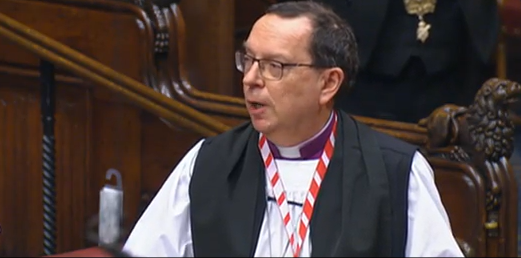
The Bishop of Winchester asked a question about the role of denial of freedom of religion as a driver of migration on 25th November 2025, in response to a government statement on changes to the migration settlement pathway :
The Lord Bishop of Winchester: My Lords, I will keep my question brief because I want to give time to the noble Baroness, Lady Bennett. One of the most encouraging developments in foreign policy in this country in recent years has been the growing recognition of the evil of the denial of freedom of religion or belief across the world, leading to widespread persecution of faith communities, Christians not least among them, as we have tragically seen in these last days in Nigeria. The UK has become a recognised global leader in advocacy for this oft-overlooked right.
Does the Minister accept that denial of freedom of religion or belief is a significant driver of migration? It is certainly so in the case of a significant number who arrive illegally, who, according to the Statement,
“could see settlement take up to 30 years”.
Does the Minister agree that we need consistency in the development of foreign and domestic policy, especially in this area but also in upstream causes and drivers of migration, to ensure that very vulnerable individuals are afforded the protection and assistance they so badly need?
Lord Hanson of Flint (Lab, Home Office): I am grateful to the right reverend Prelate for giving me the opportunity to say to the House that there is a real difference between asylum, refugee status and immigration. This Statement concerns the transition of citizens who have come here through an immigration route to work to having earned settled status.
Last week, we discussed another Statement on asylum claims. Persecution for religious faith would be a ground to seek asylum. We have also had a policy statement on how individuals can claim asylum. Some people will come here illegally, which is why I said to the noble Lord, Lord Davies, that that is not an automatic barrier. However, it is certainly a significant barrier and how that person has arrived can be examined. For those asylum claims, we will meet our obligations under the international refugee convention and our human rights obligations, and those claims will be based on an individual’s personal circumstances.
The key point of the Statement we made earlier in the week is that, instead of five years, it would now be a two and a half year period. If the circumstances of the individual are reassessed after two and a half years, the persecution in the native country may not be what it was two and a half years ago. It may be, in which case the asylum claim would still be processed.
The key to asylum claims is to process them quickly to determine whether an asylum claim is genuine. If so, we allow status. If that happens, they will fall under the routes of this particular Statement. If it is not a proper asylum claim, they will face removal from the country. That is a two-stage operation. This is not just around people who are coming on small boats; these are people who are coming on work visas who wish to have long-term settled status. Here, we are just putting some more guard-rails around that settled status so that we can ensure that individuals have contributed and, on the four key issues, are citizens that deserve the right and privilege of being British citizens as part of their consideration.
 The Church of England in Parliament
You must be logged in to post a comment.