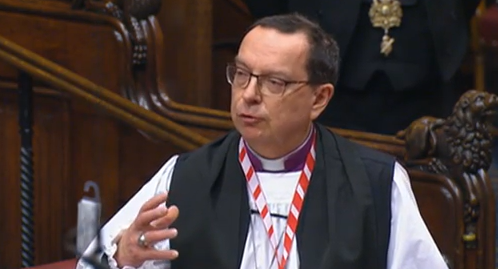
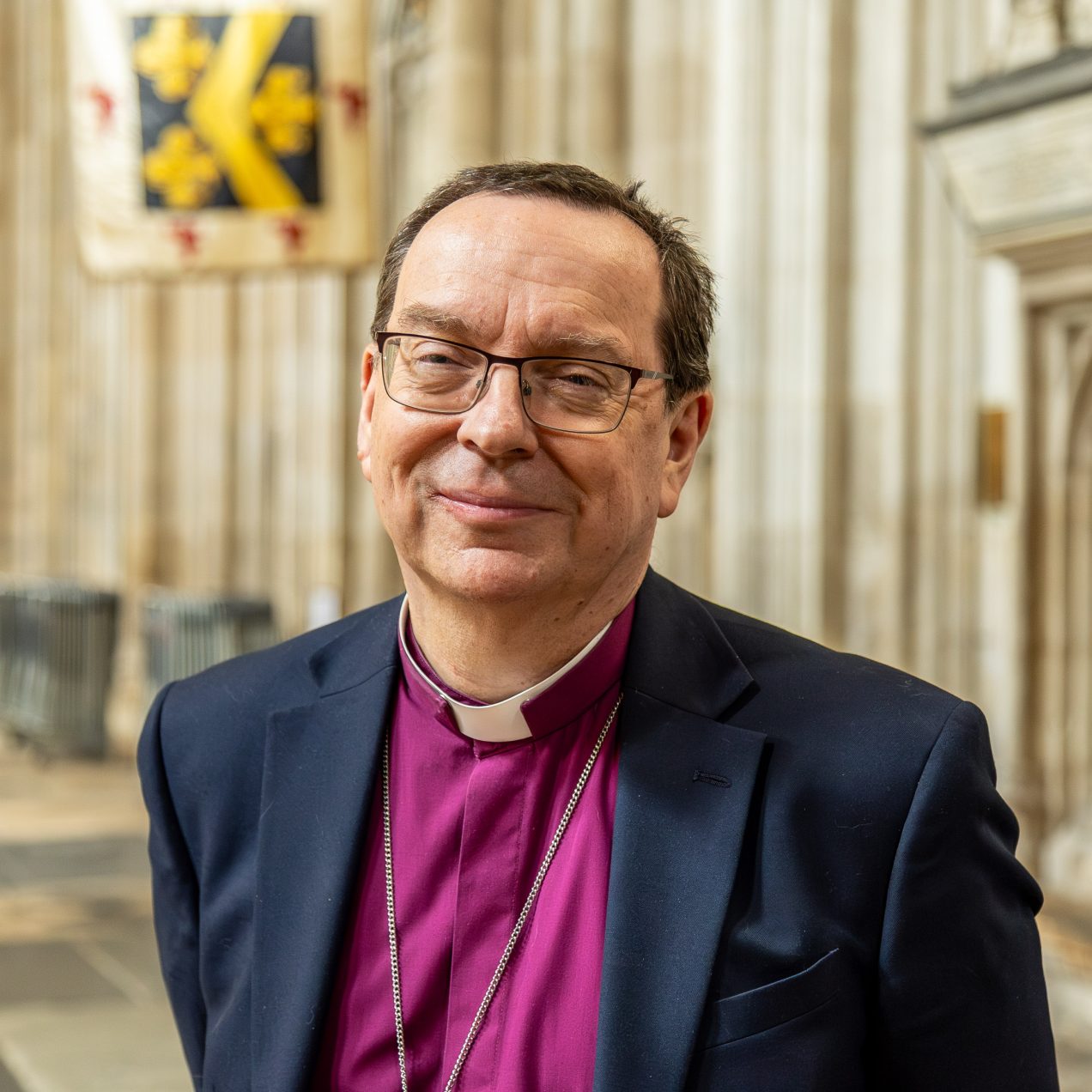
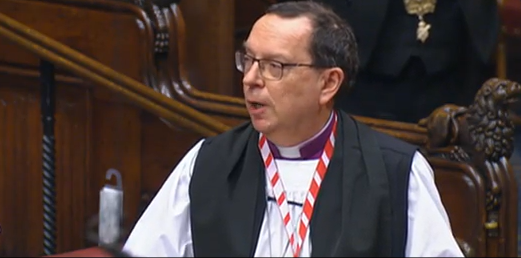
Bishop of Winchester asks about safe refugee routes for religious minorities in Iran

On 8th July Bishop of Winchester asked a question on safe and legal routes for Iranian nationals seeking asylum, particularly religious minorities facing persecution:

The Lord Bishop of Winchester: My Lords, if I may broaden the scope of the Question, given that the recent conflict has not led to any evident improvement in the situation facing ordinary Iranians, what assessment have His Majesty’s Government made of the availability of safe and legal routes for Iranian nationals? I am thinking in particular of members of Iran’s persecuted and vulnerable religious minorities, including Christian converts, Bahá’ís, Sunni and Sufi Muslims.

Continue reading “Bishop of Winchester asks about safe refugee routes for religious minorities in Iran”

Bishop of Winchester asks about therapeutic support for victims of historical forced adoption

The Bishop of Winchester responded to a government statement giving an apology for historical forced adoption on 7th July 2026, echoing the sentiments expressed and enquiring about financial support to increase capacity for therapeutic services for victims:

The Lord Bishop of Winchester: My Lords, I welcome the Prime Minister’s apology last week and thank the Lord Privy Seal for reading it with such empathy and compassion. The House will be aware, I am sure, that last month, Archbishop Sarah issued an apology for the Church of England’s involvement in these practices, and specifically for the pain, trauma and stigma experienced—and still carried—by many people as a result. She said what the Prime Minister also said in his apology: “The shame is ours, not yours”. Today, I add my voice to the apology to all people who experienced loss or received poor care in homes affiliated to the Church of England, whether mothers or adoptees. We are deeply sorry.

Continue reading “Bishop of Winchester asks about therapeutic support for victims of historical forced adoption”

Bishop of Winchester asks abut safeguarding arts education

The Bishop of Winchester asked a question on the importance of safeguarding arts education at all levels during a discussion on the independent review of Arts Council England on 7th July 2026:

The Lord Bishop of Winchester: My Lords, I hope noble Lords will indulge me if I associate all the Lords spiritual with the remarks that have been made about Lord Mackay of Clashfern. He was indeed a man of great Christian faith, generous heart and broad sympathies, and we all pay tribute to him. I may be the only Member of the House who played him once at water polo, and it was a delightful experience.

Continue reading “Bishop of Winchester asks abut safeguarding arts education”

Bishop of Winchester asks about aid delivery and civilian safety in the Democratic Republic of Congo

The Bishop of Winchester received the following written answer on 5th June 2026:

The Lord Bishop of Winchester asked His Majesty’s Government what steps they are taking to facilitate (1) humanitarian aid delivery, and (2) the safe passage of civilians, in South Kivu’s Hauts Plateaux in the Democratic Republic of the Congo.

Continue reading “Bishop of Winchester asks about aid delivery and civilian safety in the Democratic Republic of Congo”

Bishop of Winchester asks about involvement of Rwandan army in conflict in Democratic Republic of Congo

The Bishop of Winchester received the following written answer on 27th April 2026:

The Lord Bishop of Winchester asked His Majesty’s Government:

  • what consideration they have given to imposing sanctions on the Rwandan army and key military officials for supporting, training and fighting alongside the March 23 Movement in the Democratic Republic of the Congo.
  • what assessment they have made of the conflict in the Democratic Republic of the Congo (DRC); and what representations they have made to the governments of the DRC and Rwanda regarding commitments to implementing the Washington Accords for Peace and Prosperity, including the Regional Economic Integration Framework.
Continue reading “Bishop of Winchester asks about involvement of Rwandan army in conflict in Democratic Republic of Congo”

Bishop of Winchester moves that Abuse Redress and Armed Forces Chaplaincy Measures receive Royal Assent

On 9th December 2025, the Bishop of Winchester moved that two church measures, the Abuse Redress Measure and the Armed Forces Chaplains (Licensing) Measure, be sent to the King for Royal Assent:

The Lord Bishop of Winchester: That this House do direct that, in accordance with the Church of England Assembly (Powers) Act 1919, the Armed Forces Chaplains (Licensing) Measure be presented to His Majesty for the Royal Assent.

My Lords, I shall speak also to the Abuse Redress Measure, which is also in my name on the Order Paper.

The Armed Forces Chaplains (Licensing) Measure is in one sense just a tidying up of a small area of ecclesiastical law, but in a wider and more important way it is enabling and supportive of the essential work carried out by Church of England chaplains to His Majesty’s forces, to whom I am sure we all want to pay tribute. For over a century, forces chaplains have been issued with licences by the Archbishop of Canterbury, giving them ecclesiastical authority to exercise ministry in that role. However, recent work by the provincial registrars has identified a gap in the relevant statutory and canonical provision in this area.

Without this Measure, each Armed Forces chaplain would also need to obtain a licence or permission to officiate from the bishop of each diocese in which the chaplain is to exercise ministry. Not only would that give rise to a significant burden on bishops and their offices but, more significantly, it would cause problems for the Armed Forces, not least because chaplains need to be able to move with and minister to military personnel wherever they are currently serving, and sometimes to do so at some speed. It is impractical for them to seek a further authority to exercise ministry each time the service men and women they minister to move to a different part of the country. This Measure addresses that in a straightforward way by inserting a new section headed “Armed Forces chaplains” in the Extra-Parochial Ministry Measure 1967.

Continue reading “Bishop of Winchester moves that Abuse Redress and Armed Forces Chaplaincy Measures receive Royal Assent”

Bishop of Winchester asks about role of freedom of religion in migration

The Bishop of Winchester asked a question about the role of denial of freedom of religion as a driver of migration on 25th November 2025, in response to a government statement on changes to the migration settlement pathway :

The Lord Bishop of Winchester: My Lords, I will keep my question brief because I want to give time to the noble Baroness, Lady Bennett. One of the most encouraging developments in foreign policy in this country in recent years has been the growing recognition of the evil of the denial of freedom of religion or belief across the world, leading to widespread persecution of faith communities, Christians not least among them, as we have tragically seen in these last days in Nigeria. The UK has become a recognised global leader in advocacy for this oft-overlooked right.

Does the Minister accept that denial of freedom of religion or belief is a significant driver of migration? It is certainly so in the case of a significant number who arrive illegally, who, according to the Statement,

“could see settlement take up to 30 years”.

Continue reading “Bishop of Winchester asks about role of freedom of religion in migration”

Bishop of Winchester asks about religious freedom in India

The Bishop of Winchester received the following written answer on 17th November 2025:

The Lord Bishop of Winchester asked His Majesty’s Government what discussions they have had with the government of India regarding freedom of religion or belief in that country, and what other steps they are taking to support freedom of religion or belief there.

Continue reading “Bishop of Winchester asks about religious freedom in India”

Bishop of Winchester asks about importance of religious literacy for young people

The Bishop of Winchester asked a question on the role of religious literacy in promoting freedom of religion and belief on 30th October 2025:

The Lord Bishop of Winchester: My Lords, I was pleased to hear the Second Church Estates Commissioner confirm recently in another place that the Government are committed to implementing the recommendations of the Truro review, which I wrote several years ago at the invitation of the then Foreign Secretary. I have to say that that came as a pleasant surprise to me. In view of the significant and egregious growth in international violations of freedom of religion or belief in the intervening years, does the Minister agree with me that we need to ensure a high level of religious literacy among our young people and that professionally delivered RE is critical to that end?

Continue reading “Bishop of Winchester asks about importance of religious literacy for young people”

Bishop of Winchester asks about access to youth mobility schemes

The Bishop of Winchester asked a question on encouraging participation in youth mobility schemes for UK students and young people on 29th October 2025:

The Lord Bishop of Winchester: I am very grateful to the Minister for her Answer. For understandable reasons, His Majesty’s Government are very concerned at the moment to prevent people crossing the channel in one direction. However, it seems to me that we should be positively encouraging our young people to cross the channel in the other direction to take advantage of the very real opportunities a youth mobility scheme would offer, not simply for their own sake—although that is really important, as we have heard—but because, in an increasingly fractious and dangerous world, we sorely need young people with a broad, informed international perspective. Can the Minister confirm that—as well as, I hope, allowing such mobility—the Government will actually encourage such participation?

Continue reading “Bishop of Winchester asks about access to youth mobility schemes”