
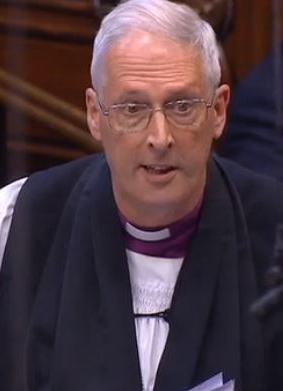
The Bishop of Southwark spoke in support of an amendment to the Terminally Ill Adults (End of Life Bill) intended to provide a framework for conscientious objections and opt-outs to the bill for a wider range of health and social care staff on 27th March 2026:
The Lord Bishop of Southwark: My Lords, I am glad to follow the noble Baroness, Lady Fox of Buckley, because I added my signature to Amendment 673 in the name of the noble Baroness, Lady Fraser, as did the noble Lords, Lord Carlile and Lord Hunt of Kings Heath.
Allowing for some reticence on the necessity of this amendment, I just wish to make two points. First, the Bill allows an opt-out for registered medical practitioners: a health professional, a social care professional or a registered pharmacist. Administrative tasks are specifically not excluded. The Bill defines health professionals as medical practitioners, pharmacists and nurses, but it does not define care professionals. This is a lacuna, which will cause problems should this or any Bill on this basis pass your Lordships’ House.
Secondly, matters of acute conscience are not restricted to the immediate preparation of a lethal dosage or the medical oversight of the procedure. There will be, for reasons of practicality, not least of cost, pressure on all sorts of ancillary staff, as anyone in a health and care setting will attest. If they are co-opted, either directly or indirectly, into what becomes the final procedure, when the conscience of such an ancillary participant tells them that they should have nothing to do with such a procedure, is it right that they should face sanction or inhibition of their careers, or even dismissal? I suggest not and I hope that the House will support this amendment.
 The Church of England in Parliament
You must be logged in to post a comment.