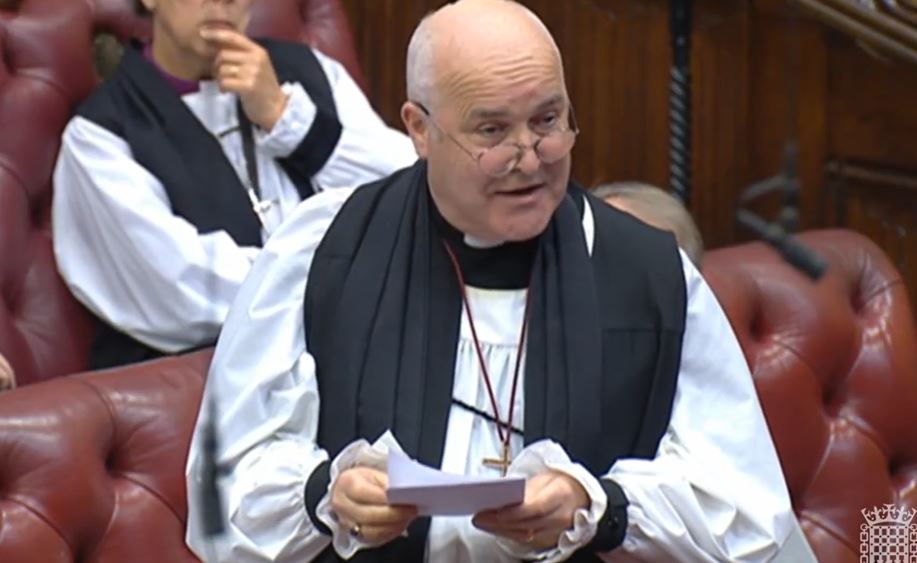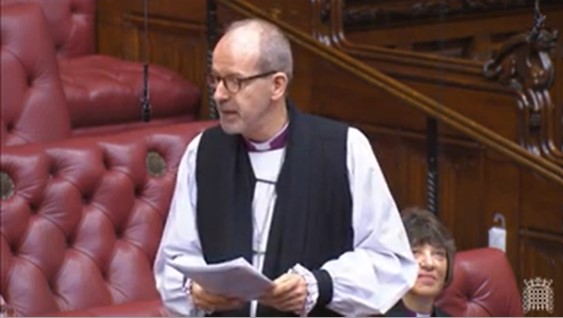
Terminally Ill Adults (End of Life) Bill: Archbishop of Canterbury restates principled opposition to bill

The Archbishop of Canterbury also spoke in the final debate on the Terminally Ill Adults (End of Life) Bill on 24th March 2026, reiterating her opposition to the bill and the need for a different approach to scrutiny and debate should the bill return to the House:

The Lord Archbishop of Canterbury: My Lords, I shall briefly make some reflections. It is a great privilege to follow my friend, the noble Baroness, Lady Rafferty; I thank her for her contribution. I recognise the enormous amount of work that has gone into this Committee stage. I am grateful to the noble and learned Lord, Lord Falconer, for meeting me; I thank him for the time that he has given me.

Noble Lords will know that I oppose the Bill in principle, both as a priest and as a nurse, but it is clear that some things unify us. Whether we support the Bill or oppose it, we are unified by the fact that we want people to die in a dignified, pain-free and compassionate way, with the least possible fear. I also believe that we are unified in the belief that there needs to be investment in palliative care now. I welcome the new modern framework for palliative care that the Government have introduced, but recognise that financial investment still needs to occur.

Continue reading “Terminally Ill Adults (End of Life) Bill: Archbishop of Canterbury restates principled opposition to bill”
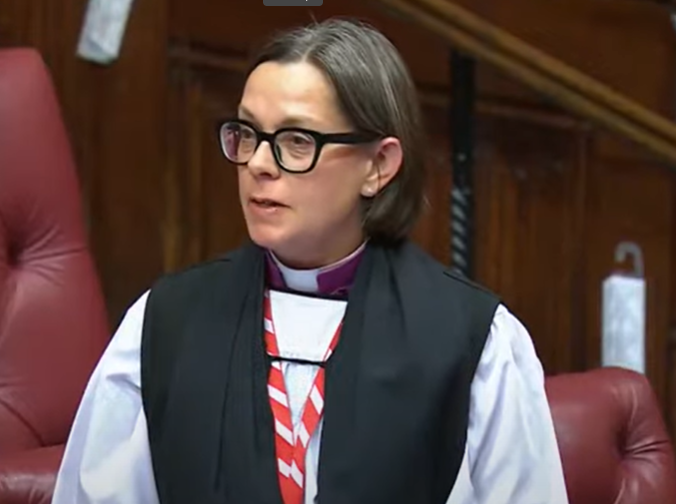
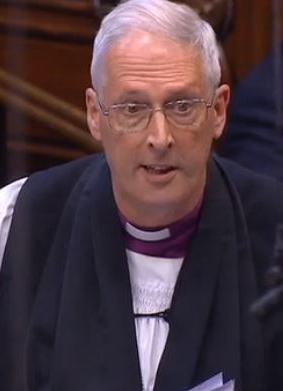
Terminally Ill Adults (End of Life) Bill: Bishop of Newcastle speaks to concerns surrounding gravity of the bill

On 24th April 2026, the Bishop of Newcastle spoke in the final committee debate on the Terminally Ill Adults (End of Life) Bill before the prorogation of Parliament, stressing the serious nature of the issues contained in the bill and the concerns raised by the ongoing debate in the House of Lords:

The Lord Bishop of Newcastle: My Lords, I speak as one of the Lords spiritual and as a member of the Select Committee that examined the Bill. I do so with a deep sense of responsibility for the integrity of our legislative process and for the dignity and protection of those whose lives may be most directly affected by what we decide. I have been deeply moved by the personal stories that have been shared by noble Lords in recent months and wish to acknowledge the stories that my noble friend shared with us just now. My own dear cousin died earlier this week from a condition that could at many stages have been described as terminal. She continued resolutely to live life to its fullness, and her sudden death is a matter of great sadness to me.

In our context, where questions of life, death, care and conscience are so closely intertwined, the quality of our scrutiny is not a procedural detail. It is a moral necessity. Some may dismiss my contribution as one grounded in a faith, but this is as legitimate and significant as any other viewpoint, whether grounded in faith, belief or none. While my faith informs my alarm at our designation of dignity or the lack of it, it is from my experience on the Select Committee that I have found that, the more closely we have examined this Bill, the more concerns have come into focus, not fewer. For a Bill of this magnitude in terms of societal change, the highest level of scrutiny is imperative. Within our proceedings, there has been an acknowledgement, even from those closely involved in the Bill, that it is not yet in a settled or satisfactory form. When such admissions are made, it is incumbent on us to listen with care.

Continue reading “Terminally Ill Adults (End of Life) Bill: Bishop of Newcastle speaks to concerns surrounding gravity of the bill”

Terminally Ill Adults (End of Life) Bill: Bishop of Southwark supports amendments on conscientious objections

The Bishop of Southwark spoke in support of an amendment to the Terminally Ill Adults (End of Life Bill) intended to provide a framework for conscientious objections and opt-outs to the bill for a wider range of health and social care staff on 27th March 2026:

The Lord Bishop of Southwark: My Lords, I am glad to follow the noble Baroness, Lady Fox of Buckley, because I added my signature to Amendment 673 in the name of the noble Baroness, Lady Fraser, as did the noble Lords, Lord Carlile and Lord Hunt of Kings Heath.

Continue reading “Terminally Ill Adults (End of Life) Bill: Bishop of Southwark supports amendments on conscientious objections”

Terminally Ill Adults (End of Life) Bill: Bishop of Newcastle speaks on issue of coercion

During a debate on the Terminally Ill Adults (End of Life) Bill on 20th March 2026, the Bishop of Newcastle spoke in support of amendments to the bill aimed at providing protection to those vulnerable to coercion:

The Lord Bishop of Newcastle: My Lords, I am grateful to my right reverend friend the Bishop of Southwark for preparing the way for some of the comments that I wish to make briefly now. Broadly, this group seeks to address issues around communication, language barriers and interpreters and I support the amendments laid before your Lordships’ House in that regard.

Continue reading “Terminally Ill Adults (End of Life) Bill: Bishop of Newcastle speaks on issue of coercion”

Terminally Ill Adults (End of Life) Bill: Bishop of Southwark supports amendments on protection of those with communication difficulties

On 20th March 2026, during a debate on the Terminally Ill Adults (End of Life) Bill, the Bishop of Southwark spoke in support of amendments to the bill focused on providing protection for those with speech, language, and communication difficulties:

The Lord Bishop of Southwark: My Lords, I support the amendments in this group, particularly Amendment 171 in the names of the noble Baronesses, Lady Nicholson of Winterbourne and Lady O’Loan.

Clause 5, as we have heard, introduces a key element in the infrastructure of assisted dying in this Bill by providing what is intended to be a safe, but not mandatory, introduction to the subject of death with the assistance of another human being. For proponents of the Bill, the advantages of such an introduction are obvious. In their minds, it will remove a good deal of unnecessary distress on the part of those who wish to proceed with such an option and on the part of those who do not. However, as we have heard from those of us who have long experience of pastoral encounters, the experience is likely to be rife with pitfalls.

Continue reading “Terminally Ill Adults (End of Life) Bill: Bishop of Southwark supports amendments on protection of those with communication difficulties”

Terminally Ill Adults (End of Life) Bill: Archbishop of York raises potential adverse impact on vulnerable groups

The Archbishop of York asked a question during a debate on the Terminally Ill Adults (End of Life) Bill, querying the impact the bill would have on coercion of vulnerable people, particularly those struggling to access palliative care, on 27th February 2026:

The Lord Archbishop of York: I entirely accept that those who are proposing the Bill do not propose it for the reason of trying to save money. I also entirely accept the desire from everyone in this House for better-funded palliative care. However, I need something to be explained. Taken that palliative care is inadequate and underfunded, and taken that there are huge regional variations, what I do not understand is the noble and learned Lord’s confidence that this will not lead to coercion of vulnerable people in places where palliative care is not available and cannot be afforded, which will lead to unintended consequences. I entirely accept that he does not want those consequences either, but I ask him to give me some confidence, if he can, that this will not follow.

Continue reading “Terminally Ill Adults (End of Life) Bill: Archbishop of York raises potential adverse impact on vulnerable groups”

Terminally Ill Adults (End of Life) Bill: Bishop of Newcastle speaks to amendment on protection for those with learning disabilities

The Bishop of Newcastle spoke in support of an amendment aimed at providing additional protection for those with learning disabilities during a committee debate on the Terminally Ill Adults (End of Life) Bill on 6th February 2026:

The Lord Bishop of Newcastle: My Lords, I will speak to Amendment 108, to which the right reverend Prelate the Bishop of Lincoln has added his name. He regrets that he cannot be in his place today, as he is interested in this amendment as lead bishop for the L’Arche community in the UK. With the Church of England, L’Arche strives to provide a positive and inclusive residential community in which adults with and without learning disabilities can live and grow together.

Continue reading “Terminally Ill Adults (End of Life) Bill: Bishop of Newcastle speaks to amendment on protection for those with learning disabilities”

Terminally Ill Adults (End of Life) Bill: Bishop of Hereford highlights importance of nuanced understanding of artificial intelligence

The Bishop of Hereford spoke during a committee debate on the Terminally Ill Adults (End of Life) Bill on 30th January 2026, pointing out a distinction between AI tools and artificial intelligence generally in regards to an amendment proposed by Baroness Coffey, which would stipulate that “(4) Artificial intelligence must not be used to carry out any functions in any section or schedule of this Act.”

The Lord Bishop of Hereford: I thank the noble Baroness, Lady Coffey, for raising a very important issue in this amendment. However, I am concerned that, as it stands, as the noble Baroness said, this amendment is too blunt an instrument. It is important that we distinguish between AI tools and the more dangerous artificial general intelligence, or superintelligence. The use of AI in medical diagnostics in patient care is already commonplace. AI tools are currently used to read scans and X-rays and will frequently perform as well as, if not better than, clinicians. To exclude the use of AI altogether might deprive patients who are considering assisted dying of valuable diagnostic assistance and care at a very vulnerable time.

Continue reading “Terminally Ill Adults (End of Life) Bill: Bishop of Hereford highlights importance of nuanced understanding of artificial intelligence”

Terminally Ill Adults (End of Life) Bill: Bishop of Newcastle points out lack of safeguards in online processes

The Bishop of Newcastle spoke during the committee debate on the Terminally Ill Adults (End of Life) Bill on 30th January 2026, highlighting the lack of adequate safeguards in any online-only process for facilitating assisted dying:

The Lord Bishop of Newcastle: My Lords, taken together, the amendments in this group highlight the importance of contact with people at the hardest time in their lives—a time when we must be most vulnerable, clinically and personally. This must not be a process in which anyone is made to feel rushed or that can be completed entirely online.

Continue reading “Terminally Ill Adults (End of Life) Bill: Bishop of Newcastle points out lack of safeguards in online processes”

Terminally Ill Adults (End of Life) Bill: Bishop of Southwark calls for royal commission on dying well

The Bishop of Southwark spoke following a government statement preceding the committee debate on the bill, asking that, should the bill fall, a royal commission on dying well be considered:

The Lord Bishop of Southwark: My Lords, I too wish to speak in good faith. That is what all our Committee consideration has been about, in almost every speech I have heard and listened to—and I have made an effort to attend a good number of sittings. I am very grateful to the Government Chief Whip for what he has said. I am also very grateful to the noble and learned Lord, Lord Falconer, for saying on the “Today” programme that he now anticipates that the Bill will fall. So my question is: if and when it does, please will the need for a royal commission on dying well be factored into consideration?

Hansard