
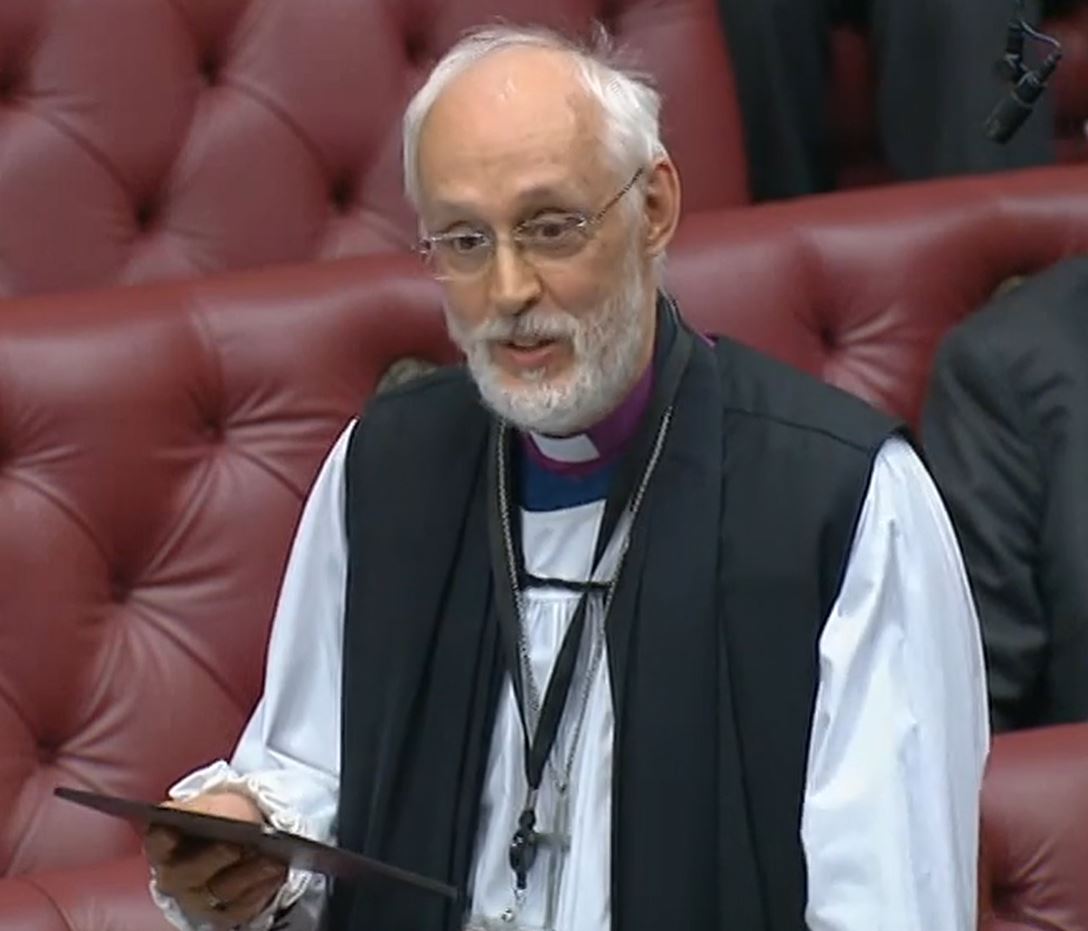
The Bishop of Manchester spoke at the second reading of the Financial Services and Markets Bill on 8th June 2026, raising the issue of access to credit and impact of debt on vulnerable people and communities:
The Lord Bishop of Manchester: My Lords, I declare my interests as set out in the register. As with all my colleagues on these Benches—not that there seem to be many of them here today—my stipend, pension contributions, housing and working costs are provided by the Church Commissioners for England. As an issuer of bonds, something we started when I was chairing, it is a regulated body.
I welcome the intention behind the Bill to modernise our financial services and to support economic growth. However, our aim must be to enable economic opportunity for all communities. Amid what is still a cost of living crisis, we must measure economic success not only by the growth of the economy itself but by how it promotes the dignity of those most in need and protects individuals at times when the system fails. It is a large Bill, so I will focus on just a few main aspects: access to credit, credit unions, consumer protection, and access to wider banking services. These are probably the issues that are most appropriate for one who is a bishop, not a banker.
Access to fair and affordable credit is not simply a financial issue but a matter of dignity, equal opportunity and participation in community life. Deepening poverty across the UK is making it more difficult for people to break free from debt. Almost everybody needs to borrow money at some point in their life, yet too often it is those with the least who end up paying the most. They face a poverty premium; they have fewer options. Christians Against Poverty, a wonderful charity, has found that its clients are now borrowing money simply to pay for food, clothing, rent and utility bills. For many, credit has ceased to be a tool for flexibility; it has become a necessity for meeting basic needs, and that drives them deeper into debt.
Debt fosters feelings of shame, fear and hopelessness, which often prevent families from then reaching out for support. Christians Against Poverty states that 46% of clients it surveyed had gone as far as considering ending their own life because of debt-related pressures. We cannot overlook the emotional toll of financial insecurity on real lives. The inaccessibility of credit for underserved communities creates a significant gap in financial policy, where these effects could be alleviated. As such, I strongly welcome measures in the Bill aimed at addressing the problem. These efforts must be sustained and targeted, and we must ensure that those facing the greatest barriers are not left behind.
I was first involved in setting up a credit union almost 40 years ago. It astonished me just how small the sector was in England. It has grown a bit since then: 2.16 million people in Great Britain are now members of a credit union, and we have a credit union for Church of England and other clergy. But Britain still compares poorly with other similar economies in what is, across many nations, a network of trusted, community-based saving and borrowing solutions, particularly for those communities least well served by conventional banking. Hence, I strongly welcome the measures in the Bill to promote the expansion of credit unions, including, critically, the broadening of common bonds to increase the number of people able to access this kind of credit.
This measure is particularly important for serving those in more deprived areas, where they may not previously have had access to banks or similar opportunities. While expanding credit unions will go a long way towards improving access for many customers, it remains the case that certain communities, such as migrants or individuals with less financial literacy, remain excluded from the credit opportunities offered by the mainstream banks. What might the Government consider doing further to improve transparency and accountability among mainstream lenders in how they serve marginalised groups alongside an expanded credit union sector?
I turn to financial protections. Increasing credit availability is an important step forward, but it must be met with adequate protections to prevent mis-selling or overborrowing and to ensure proper redress when things go wrong. While I understand that the proposed changes to the Financial Ombudsman Service are designed to streamline the process, I am concerned that stricter criteria there may make the whole process more inaccessible and less robust. Some proposals, such as stricter time limits on making complaints, may present barriers to certain consumers making claims in the first place, particularly when they discover the issue only after many years.
I also echo concerns expressed by the noble Lord, Lord Sharkey, on the proposed reforms to the Consumer Credit Act. While modernisation is clearly needed, the shift away from detailed legal protections towards regulator-led rules may, as others have said, reduce parliamentary scrutiny and weaken established routes to redress. It may also reduce certainty for consumers, making it less clear when they are entitled to redress and how they can secure it. Again, that is likely to have the greatest impact on those who are less financially literate and who may struggle to navigate complex financial systems alone.
Furthermore, existing protections, such as those offered by the consumer duty, do not provide protection to communities which are excluded from credit access in the first place. Without real efforts from mainstream providers to incorporate underserved groups in credit opportunities, those most in need of support will continue to fall through the cracks. Therefore, it is essential that protections evolve alongside access, ensuring that increased participation in financial services does not come at the expense of security. I will follow with interest the debate about how much ought to be in the Bill and how much can safely be left for later regulation. I welcome the Government’s proposed scheme to improve financial literacy in schools by 2028, but that is no replacement for adequate routes to redress, democratic accountability, and fair and equal access to credit for everyone who needs it.
Finally, while I suspect that, nowadays, many of us in your Lordships’ House access all our banking services electronically—I cannot remember when I last went into a bank or even rang one up—there are those in our communities who need access to in-person banking services beyond mere cash. Financial exclusion fosters real-world isolation. Many of the communities that the Church supports, such as elderly and disabled populations, face greater barriers to financial independence in an increasingly digital age. I am not sure that we are doing quite as much as we should in the Bill to ensure that in-person services, beyond cash, are available in both urban and rural settings.
The Bill presents an important opportunity, not only to modernise our financial system but to ensure that it serves the common good. We must reflect not only on how the Bill will enable growth but on how it might promote justice, equality of opportunity, and dignity for the communities that are the most in need. I look forward to engaging with its progress through your Lordships’ House.


You must be logged in to post a comment.