
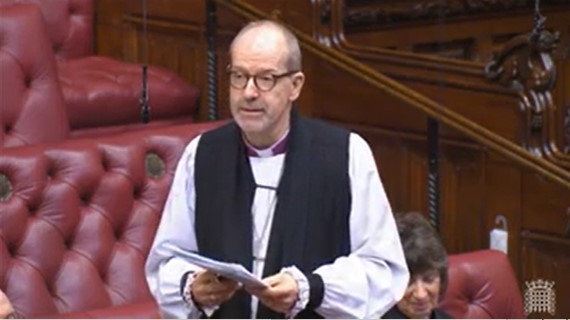
The Bishop of Hereford tabled a question for short debate on the impact of economic uncertainty, regulatory change, and environmental pressures on the mental health of those working in agriculture on 17th September 2026:
The Lord Bishop of Hereford: To ask His Majesty’s Government what assessment they have made of the impact of economic uncertainty, regulatory change, and environmental pressures on the mental health of those working in agriculture.
My Lords, I am grateful for the opportunity to raise this issue in your Lordships’ House. I declare my interest as a patron of the Agricultural Chaplains Association and bishop of the most rural diocese in England. Clergy and agricultural chaplains across my diocese, and indeed the nation, are on the front line of the pastoral response to the mental health crisis among agricultural workers. They are so often the ones who show up in times of crisis and sit with people at their moments of greatest need. They provide comfort to the families of the recently bereaved and take funerals.
Although it is imperfect, evidence suggests that British farming communities experience mental health concerns and likely rates of suicide disproportionate to the general population of Britain. The Royal Agriculture Benevolent Institution’s 2021 Big Farming Survey found that almost a fifth of respondents knew someone who had attempted suicide in the last five years. Indeed, 94% of British farmers agreed that poor mental health is the biggest hidden problem facing farmers today, according to the Farm Safety Foundation’s 2025 report.
There are multiple reasons for this. Farmers are the worst affected by the recent turbulence brought on by climate change. In only the last 18 months, we have experienced our two hottest summers on record and an extremely wet winter. Farmers are devastated by the loss of their crops due to wildfires, flooding and extreme heat, and the pests and diseases they bring. They have been forced to eat into their winter forage reserves, rework irrigation systems and add flood defences. The threat of extreme weather and climate change is keeping farmers awake at night. They are faced with tackling the worst bluetongue outbreak the nation has faced and bearing the costs of veterinary bills, vaccines and other associated expenses. The financial burden is considerable, but so too is the emotional strain of dealing with disease, uncertainty and livestock losses.
I will take a moment to thank the noble Baroness, Lady Mallalieu—I hope she will forgive me if I have pronounced that wrong—for her written support ahead of today’s debate. She drew my attention to the extraordinary pressures being felt across the wider agricultural support network. She told me that kennels collecting fallen stock in her area have at times visited as many as 140 farms in a single day—a stark illustration of the enormous strain that climate-related pressures are placing on the wider industry.
Secondly, as farmers consider their approach to the future, they do so against a backdrop of continual policy and regulatory change. The 2023 report from the Defra Select Committee in the other place on rural mental health highlighted the stress caused by changing regulatory frameworks and support schemes. Farmers must necessarily take a long-term view of their business, yet find themselves navigating a constantly shifting landscape of environmental incentives, land management requirements and biodiversity obligations. Farmers are resilient and, even if they disagree with policy, they will make it work if they have consistency. The current challenging environment in food security suggests the need for significant cross-party collaboration for a longer-term stable regulatory and policy framework.
Alongside this uncertainty sits intense financial pressure. Rising costs for fertiliser, fuel and machinery have squeezed already tight margins. For many, concerns around their farm’s long-term viability remain a constant source of anxiety. A remarkable farming support charity in my diocese, We Are Farming Minds, reports growing numbers of farmers struggling with money worries, insecure tenancies, family disputes over farm succession, legal issues and the challenge of keeping businesses afloat amid volatile markets—paperwork and administration add a further burden.
A fifth of those living rurally report poor mental health due to social isolation. For agricultural workers, this is exacerbated by long hours working alone and the increasing closure of farmers’ markets, which are places of community as well as commerce. Many also express a sense that farming is undervalued by wider society, despite the essential role that farmers play—a point well made by the noble Lord, Lord Deben, in his supplementary question earlier today.
At the same time, cultures of resilience within farming communities can create a stigma around discussing mental ill-health, discouraging people from seeking support when they need it most. Of course, in times of mental crisis, many farmers have access to firearms and agricultural chemicals, making timely and preventive support critical.
Yet there are also reasons for hope. Across the country, communities, charities and front-line organisations are developing innovative ways to reach those who might never walk through the door of a traditional mental health service. Some organisations choose to bring life-saving community to farmers, such as the monthly butty van—a joint project between the diocese of Hereford and the Methodist Church which offers a breakfast, hot drink and conversation to farmers. Others organise pop-up well-being clinics at livestock markets and agricultural shows, such as health huts, which offer both mental health advice and medical assistance. Still others train the people who farmers already trust. The DPJ Foundation equips industry professionals to spot mental health symptoms and runs a “share the load” counselling service.
I am grateful to have met the Minister earlier this week to discuss the well-being of farming communities, and I thank her for her sustained advocacy on behalf of farmers and the careful attention she has given to the many interconnected pressures affecting the sector, from mental health and welfare support through to the practical regulatory challenges that shape everyday life on farms. I warmly welcome the Government’s farmer welfare grant—a timely commitment of £1.5 million over the coming three years. It is heartening that the Minister recognises that behind every harvest and herd are men and women carrying burdens of isolation, anxiety and financial pressure that too often go unseen. Through this funding, projects such as the butty van will be better equipped to continue their vital work.
Of course, I recognise the financial constraints under which the Government are operating and the difficult choices Ministers face across public spending. In that context, this funding is a welcome and valuable investment. However, grants are a precision tool: their scope is limited, their budgets finite and their duration temporary. While this funding is due to run until 2029, charities and support organisations need longer-term certainty if they are to recruit and retain skilled staff, build trusted relationships within communities and plan effectively for the future. I hope, therefore, that the Minister will consider how this promising start might be developed into a more sustainable funding settlement.
However, as the Minister and I discussed in person, improving mental health in farming is not simply about responding to crisis; it is about creating the conditions in which farmers and farming can thrive. The Minister has rightly been engaging with practical issues such as on-farm reservoirs and water storage, and I welcome efforts to reduce unnecessary regulatory burdens where possible.
Prevention and early intervention should be at the heart of the Government’s approach. If awareness of mental health challenges becomes second nature across the sector, we can identify problems sooner, connect people with support earlier and help prevent avoidable tragedies. In doing so, we can build a healthier farming workforce and more resilient rural communities.
Extracts from the speeches that followed:
Baroness Shepard of Northwold (Con): My Lords, we are indebted to the right reverend Prelate for so graphically describing the often-ignored problem of mental health in rural communities and the part that uncertainty and unpredictability play in that problem. This issue is a deeply serious matter. Problems of access, transport links and availability of professional help for health problems are all more difficult in sparsely populated rural areas. The prosperity and, above all, the confidence of the farming sector are at the very centre of the whole rural economy, from jobs to sales of seed and fertiliser, machinery, food processing and livestock, veterinary services, and retail and hospitality. If farmers prosper, so do our rural communities.
Farmers produce 60% of our food. They care for our environment and are frequently leaders in rural communities, taking part in local government, school management, and our churches and chapels. But isolation, long working hours and financial pressures, often unpredictable, make theirs a lonely job. Farmers have to make their decisions alone, as we all know. As the right reverend Prelate said, they have access to firearms and pesticides. I fear that some noble Lords here today will have had first-hand experience of suicides within their rural communities. I certainly have, and my noble friend Lord Fuller, who comes from the same county, will also have had that experience. The right reverend Prelate has graphically described the situation.
Lord Fuller (Con): My Lords, I also thank the right reverend Prelate the Bishop of Hereford for tabling this debate. It is an important subject which is very much at the forefront of many people’s minds.
Even the Prime Minister has agreed that the war on the countryside has gone too far. It is not his fault that so many in the countryside choose to end their lives before their time, but the constant and cumulative attacks on the way that people choose to live their lives in the sticks cannot help their mental health. It is not easy when you are underappreciated, misunderstood, isolated and under financial attack from low prices, high costs, discriminatory tax and evermore burdensome regulations. Oftentimes the city dweller looks down on the country mouse who lives in the sticks: “Well, they’re just so provincial, you see”. That attitude is a problem, because nobody should be taken for granted or patronised in this way. It demeans them and the governing party that promotes that notion.
Earl Russell (LD): My Lords, it is a pleasure to speak in this debate. I am grateful to the right reverend Prelate the Bishop of Hereford for securing it and for the compassion and clarity with which he opened it. Combined with his rural knowledge, it gave us a very good introduction. I must admit that the butty van sounds like a good way of helping to make things better, as best we can.
The first debate I had in this House in my name was on children’s mental health and I have the climate change position in my party, so I come to this debate with those two threads very much in mind. In truth, they are part of the same thing. I thought the noble Baroness, Lady Shephard of Northworld, said it very well: if farmers prosper, so do our rural communities. I do take issue with one point that the noble Lord, Lord Fuller, made in his speech. I would like this debate to concentrate on what we can do to help our farmers with practical solutions to the unique set of problems that they face. To my mind, to frame this as city against country is too easy a dichotomy, and one that I do not feel is particularly helpful in moving this debate forward.
There is no doubt that our farmers face a blizzard of competing and unavoidable pressures, and many of them have been named by previous speakers, including climate change, the increasing unpredictability of extreme weather, growing financial strain, social isolation, long working hours, regulatory upheaval and a historic stigma based in self-reliance that keeps too many of them from seeking the help and support that they deserve.
The Earl of Effingham (Con): My Lords, I thank the right reverend Prelate the Bishop of Hereford for highlighting what we know to be an incredibly serious issue for the agricultural sector. I highlight my entry in the register of interests as receiving rental income from an agricultural grain store.
It is unclear to many why the Government do not appear to understand the farming industry and those whose livelihoods are connected to agriculture. The president of the National Farmers’ Union summed up the situation:
“The human impact of this goes way beyond the economics. It is something that just is not being considered by the Government, and it is so sad”.
Baroness Hayman of Ullock (Lab, DEFRA): My Lords, I thank the right reverend Prelate the Bishop of Hereford for securing this debate and for coming over to Defra to discuss these issues more broadly earlier this week. I am grateful for this opportunity to discuss what is a really important topic.
(…)
The right reverend Prelate the Bishop of Hereford mentioned the grants, the fact that they are only temporary and that charities need certainty to plan beyond that. As part of the farmer welfare grant, we were particularly interested in receiving applications which could prove longevity. We have been engaging with the sector and understand that some organisations plan to use funding to launch initiatives which can become self-sustaining when the grant period ends. We are interested in looking at how we can do more work on that, because the grant applications closed last week, and we will look at all those outcomes shortly.
(…)
In July, we published the Future of Rural England Report. The report sets out key recommendations for government action to help rural communities unlock their full potential. These recommendations were informed by the work of the Rural Taskforce, which is a group of external rural stakeholders and departments right across Whitehall that have been convened to identify how government can support rural businesses and communities to tackle rural disadvantage, and also to unlock the potential of the rural economy. At Defra we are looking at that report and working out how we can best implement those recommendations, many of which will help to unlock some of the support mechanisms we need for farmers and others living in rural communities.
I am about to run out of time, I am afraid, but I want to close by thanking all those who have made a contribution. This is an important issue and we must take it extremely seriously. I thank the right reverend Prelate the Bishop of Hereford for bringing us together again, and I thank everyone who has contributed. I hope that we can continue to work together to improve both mental health support and prevention.


You must be logged in to post a comment.