
On Wednesday 30th September the House of Lords put questions to Government on violence in the Nagorno-Karabakh region, and what representations they have made to the governments of Armenia and Azerbaijan. The Bishop of St Albans, Rt Revd Alan Smith, asked a question:
 The Lord Bishop of St Albans [V]: Does the Minister agree with the interventions made by Pope Francis and the most reverend Primate the Archbishop of Canterbury that call on all parties in the conflict to take concrete steps to resolve this latest clash? Specifically, have Her Majesty’s Government offered to be part of that mediating process? I ask this because we need to find new partners who can offer that mediation if we are to find a way through after so many years of deadlock. Continue reading “Bishop of St Albans asks Government if it will mediate in conflict between Armenia and Azerbaijan”
 The Lord Bishop of Gloucester: To ask Her Majesty’s Government what assessment they have made of (1) the level of funding that has been provided to the Female Offender Strategy launched in June 2018, and (2) whether such funding is sufficient to implement the Strategy fully.
 The Lord Bishop of Rochester: My Lords, I too was pleased to take part in the debate in March and recall noble Lords arguing points that they might not normally argue in that debate. Already in this debate we have heard some interesting contributions. I, too, look forward to the three maiden speeches that we are to hear.
 The Lord Bishop of Rochester: My Lords, the Minister will know the importance for those in need of asylum of safe and legal routes to the UK directly, rather than undertaking hazardous journeys on land and sea. The UK’s vulnerable persons resettlement scheme was one such route and has been something of a success story. However, with the scheme still paused, I believe, due to Covid, what discussions have the Government had with local authorities, and perhaps with voluntary sector groups, about their capacity in the light of Covid to restart it and—dare I say it?—extend it?
  On Monday 28th September 2020 the Bishop of St Albans, Rt Revd Alan Smith, received a written answer to a question on the case of Asif Pervaiz, a Christian sentenced to death under blasphemy laws in Pakistan:
 The Lord Bishop of Manchester [V]: My Lords, I declare my interest as set out in the register, as chair of Operation Talla, the independent ethics panel.
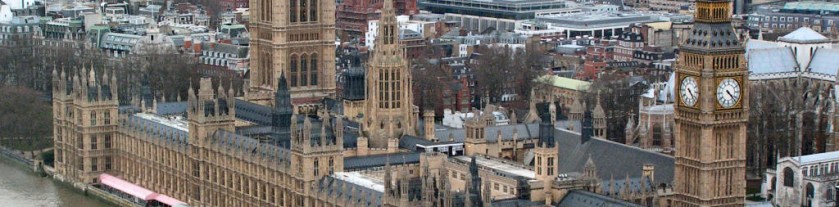 Parliament met this week in Westminster and online. Prayers were read at the start of each sitting day in the House of Lords by the Bishops of Worcester and Carlisle.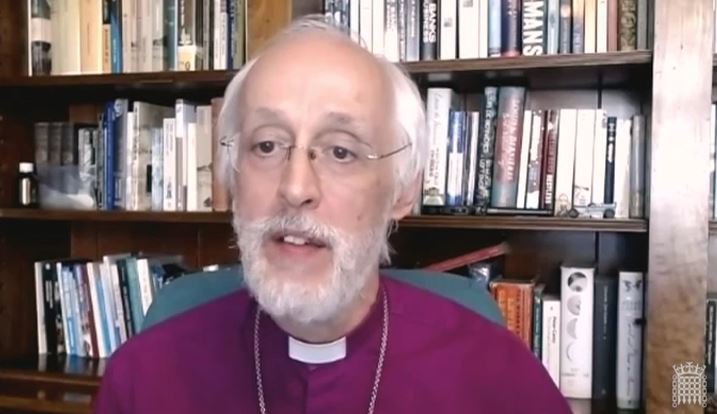
 The Lord Bishop of Carlisle: My Lords, I spoke last week with a young person whose father, sadly, died recently of Covid-19, and she told me about the impact that experience has had on her own mental health. I am therefore grateful for the reassurance from the Minister that Her Majesty’s Government will be strengthening access to mental health services in our schools and, I hope, in our colleges and universities. Are there any plans for bereavement support and counselling to form part of that provision?
  On 23rd September 2020 the House of Lords was asked to approve the Government’s Restriction of Public Sector Exit Payments Regulations 2020. The Bishop of Worcester, Rt Revd John Inge, spoke in the debate, highlighting the negative consequences of the Regulations for the pensions of longstanding and lower paid public sector workers:

You must be logged in to post a comment.