Week in Westminster 7th-11th January 2019

This week in the House of Lords bishops spoke in debates on the Government’s EU Withdrawal Agreement, and the welfare of girls in conflict-afflicted countries. 

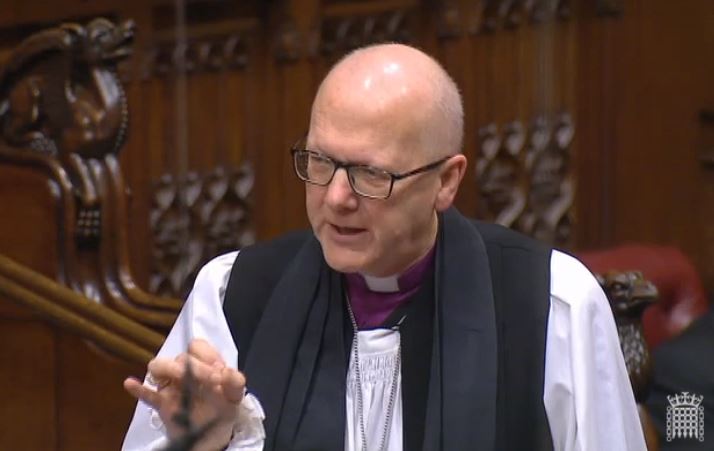
They asked questions on benefit reforms and the impact on children, Iranians seeking asylum in the UK, child refugees, and Universal Credit. The Bishop of Durham welcomed the Government’s announcement on the two-child limit on welfare benefits.

In the House of Commons the Second Church Estates Commissioner answered questions on cathedral choirs and disability discrimination legislation. Continue reading “Week in Westminster 7th-11th January 2019”

Bishop of Durham Welcomes Universal Credit Announcement

From the Church of England website:

Following comments by the Work and Pensions Secretary Amber Rudd on changes to Universal Credit, the Bishop of Durham, Paul Butler, who speaks for the Church of England on issues relating to children and young people, said:

“As a just and compassionate society, we believe that every child is a blessing and deserves to be treated equally.

“So I very much welcome today’s announcement that the two-child limit policy will not be extended to children born before the policy came into effect in April 2017. I also welcome the Government’s more considered approach to moving people on to Universal Credit from the old benefits system.

Continue reading “Bishop of Durham Welcomes Universal Credit Announcement”

Bishop of Gloucester asks about impact of benefit reforms and two-child limit on families with children

On 10th January 2019 the Bishop of Gloucester, Rt Revd Rachel Treweek, asked a question she had tabled to Government on benefit reforms and the impact on children. She specifically raised the issue of the two-child limit. A Government announcement on that was made the following day. The response to the question and to the Bishop’s subsequent question and those of other Members, can be seen in full below:

Benefit Reforms

The Lord Bishop of Gloucester: To ask Her Majesty’s Government what assessment they have made of the impact of benefit reforms on families with children.

​The Parliamentary Under-Secretary of State, Department for Work and Pensions (Baroness Buscombe) (Con): My Lords, this Government support families. Our welfare system supports those who are vulnerable and helps people into work. These reforms are working, with 3.3 million more people in work and 300,000 fewer children in absolute poverty than in 2010, a record low. Once fully rolled out, universal credit will result in an extra 200,000 people moving into work and will empower people to work an extra 113 million hours a year to support their families.

The Lord Bishop of Gloucester: I thank the Minister for her Answer and I am grateful for recent engagement with faith and other groups on this issue, but the Government’s own statistics show that child poverty is rising among families with more than two children, even when those families have an adult in work. One of the principal drivers of this increase is the Government’s two-child limit, which makes it harder for parents of more than two children to work their way out of poverty, contrary to the aims of universal credit. In light of this evidence, will the Government reconsider that two-child policy? Continue reading “Bishop of Gloucester asks about impact of benefit reforms and two-child limit on families with children”

Church Commissioner written answer – cathedrals and disability

On the 10th January the Second Church Estates Commissioner, the Rt Hon Dame Caroline Spelman answered a written question about cathedrals and disability discrimination legislation:

Adam Holloway (Gravesham):  To ask the Right Honourable Member for Meriden, representing the Church Commissioners, what duty does (a) the Church of England and (b) cathedrals and abbeys have to cathedral choristers with long-term medical conditions under disability discrimination legislation; and if she will make a statement. (205855)

Continue reading “Church Commissioner written answer – cathedrals and disability”

Archbishop of Canterbury – a no deal Brexit would be a political, practical and moral failure

On 9th January 2019 the House of Lords debated the Government’s EU Withdrawal Agreement and Political Declaration. The Archbishop of Canterbury, Most Revd Justin Welby, spoke in the debate. His full speech, and extracts of the speeches of others across the three days of debate, are below:

Continue reading “Archbishop of Canterbury – a no deal Brexit would be a political, practical and moral failure”

Church Commissioners Written Answer – Cathedral Choirs

On the 9th of January the Second Church Estates Commissioner, the Rt Hon Dame Caroline Spelman answered a written question about cathedral choristers: 
Adam Holloway (Gravesham): To ask the Right Honourable Member for Meriden, representing the Church Commissioners, how many cathedrals and abbeys (a) do and (b) do not appoint a head chorister. (205856)

Continue reading “Church Commissioners Written Answer – Cathedral Choirs”

Bishop of Gloucester urges Government to support girls in conflict-zones and ratify Istanbul Convention

On the 8th January 2019 Baroness Hodgson of Abinger hosted a debate about adolescent girls in conflict-affected countries. The Bishop of Gloucester, the Rt Revd Rachel Treweek spoke in the debate to highlight the need to ratify the Istanbul Convention and to increase the support given to education of children:

Gloucester071117 b

The Lord Bishop of Gloucester:  My Lords, I too thank the noble Baroness, Lady Hodgson, for securing this debate. It is a great honour to be taking part and to listen to the contributions of so many amazing supporters of women and girls. I should also like to draw attention to my interests as set out in the register.


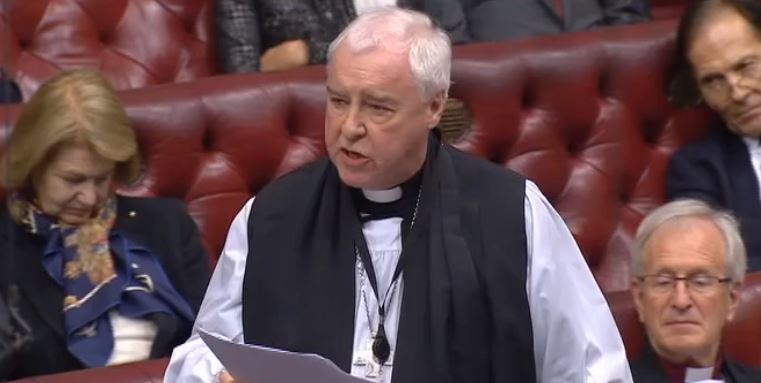
Following previous speakers, I too should like to reinforce what has been said about violence and access to education. As has been said, before, during and after conflict girls face both physical and sexual violence. It is important to note that trauma follows adolescent girls when they flee from conflict, whether they become refugees or are internally displaced. There is a high risk of sexual abuse in overcrowded, unsanitary and unsafe refugee areas. Girls face not only prostitution and the risk of early marriage; they also face isolation and a lack of access to healthcare and psychological support. I would like to ask the Minister: what specific action are the Government currently taking to support girls in these vulnerable places, and how will rebuilding peace after conflict specifically involve support for these girls?

Continue reading “Bishop of Gloucester urges Government to support girls in conflict-zones and ratify Istanbul Convention”

Bishop of Durham asks for clarity on Universal Credit regulations

On 8th January 2019 the House of Lords heard the repeat of a Government statement on delaying the timetable for a full rollout of Universal Credit. The Bishop of Durham, Rt Revd Paul Butler, asked a clarificatory question:

The Lord Bishop of Durham: My Lords, I thank the Minister for the time that she has given to a number of us. The session that we had at the DWP was very informative and helpful, and I thank her for it. However, ​I am still confused as to why, when we met the Minister, we were told that these regulations had to be dealt with before Christmas, yet we are still not clear exactly what regulations we will be asked to debate. Can she please clarify that? Continue reading “Bishop of Durham asks for clarity on Universal Credit regulations”

Bishop of Gloucester asks Government about child refugees and rights to family reunion

Gloucester 150318On the 8th January 2019 Lord Roberts of Llandudno asked a question of the government about migrants crossing the English channel. the Bishop of Gloucester, Rt Revd Rachel Treweek asked a follow-up question about the right of family reunion and child migrants.

The Lord Bishop of Gloucester: My Lords, children granted refugee status in the UK have no rights to family reunion. This sets the UK apart from all other European countries. What are the Government doing to ensure legal protection and mental health support for these children? Will they consider granting rights to family reunion?

Continue reading “Bishop of Gloucester asks Government about child refugees and rights to family reunion”

Bishop of Durham asks Government about Iranians seeking asylum in the UK

On 7th January 2019 the House of Lords heard repeated a Government statement on migrant crossings of the English Channel. The Bishop of Durham, Rt Revd Paul Butler, asked a follow-up question:

The Lord Bishop of Durham: My Lords, on a slightly different tack, given that those seeking asylum seem to be mainly Iranians, and the number of Iranians seeking asylum in the past two years has been steadily reducing, is work being done to discern whether this is an ​increase in number or a transfer of route? Is work being done to understand the dynamics of exactly what is going on? Continue reading “Bishop of Durham asks Government about Iranians seeking asylum in the UK”