Bishop of St Albans asks about grassroots engagement to improve voter turnout

On 12th May 2016 Lord Kinnock asked Her Majesty’s Government “what steps they are taking to emphasise the importance to citizens, particularly young people, of registering to vote to enable them to participate in the referendum on the United Kingdom’s membership of the European Union on 23 June.” The Bishop of St Albans asked a follow up question: 
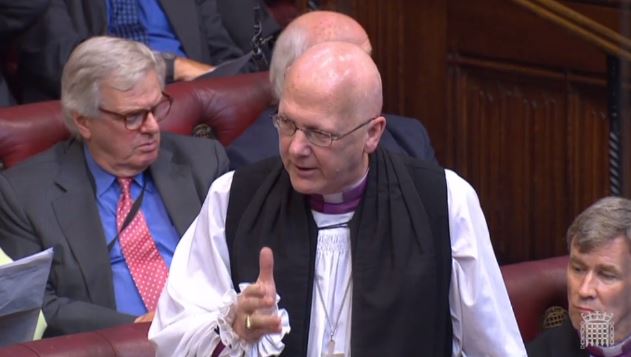
St Albans 2The Lord Bishop of St Albans: In response to a previous debate, I worked with Bite The Ballot and got it into one of our church schools. The interesting thing for me was seeing not that people could not understand voting but that they did not know what difference it would make. Watching young people being taken through the process and the penny drop about the implications was fundamental. It seems to me that we need people to engage at the grassroots. What attempt is being made to use voluntary and charitable organisations, many of which—including the churches—have newspapers and all sorts of other publications and are in touch with millions of people, as a way of trying to raise the issue in the next month, as the noble Lord asked? Continue reading “Bishop of St Albans asks about grassroots engagement to improve voter turnout”
Bishop of St Albans asks Government about action to prevent fly-tipping

On 12th May 2016 the Bishop of St Albans, Rt Revd Alan Smith, received written answers to questions of Government about fly-tipping:

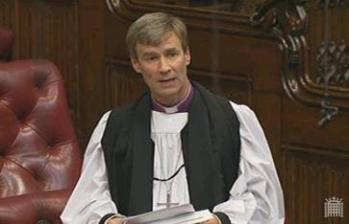
St Albans 2The Lord Bishop of St Albans: To ask Her Majesty’s Government what assessment they have made of the levels of fly-tipping on private land across the UK in each of the last five years. [HL8278]

Lord Gardiner of Kimble: Fly-tipping is unacceptable whether it occurs on public or private land, it spoils our enjoyment of the countryside, can harm human health and wildlife, and damage farming and rural tourism. It also undermines legitimate waste businesses where unscrupulous operators undercut those that operate within the law and is a drain on both local authorities and landowners that clear it up. Tackling this scourge and other forms of illegal waste activity is a priority for the Government. Continue reading “Bishop of St Albans asks Government about action to prevent fly-tipping”

Bishop of Truro – Government’s Life Chances Strategy needs to address food insecurity and young people’s mental health services

Bishop of Truro 20.6.13On 11th May 2016 Lord Farmer led a debate in the House of Lords on the motion “to ask Her Majesty’s Government what steps they are taking to deliver the Life Chances Strategy to transform the lives of the most disadvantaged people in Britain, as outlined by the Prime Minister on 11 January.” The Bishop of Truro, Rt Revd Tim Thornton, spoke during the  debate. The full text of his speech and extracts from the Minister’s reply are below.

The Lord Bishop of Truro: My Lords, I, too, congratulate the noble Lord, Lord Farmer, on securing this important debate. He kindly mentioned me in his introduction, and I probably ought to note that I once used to work in a college where, much later, he was on the governing body. He was also very sweet to mention that I might say something interesting. I find that most people look forward to what I have to say rather than look back on it. Continue reading “Bishop of Truro – Government’s Life Chances Strategy needs to address food insecurity and young people’s mental health services”

Bishop of St Albans asks Government about support for unaccompanied child refugees

On 10th May 2016 the Bishop of St Albans, Rt Revd Alan Smith, asked a question in the House of Lords on support for unaccompanied child refugees. His question, the follow up and further questions from Peers are below: 

The Lord Bishop of St Albans: To ask Her Majesty’s Government what extra resources they plan to provide to local authorities to support the foster care of unaccompanied refugee children, and what plans they have to engage charities that may have volunteers available to help.

St Albans

The Advocate-General for Scotland (Lord Keen of Elie) (Con): My Lords, the Minister for Immigration will shortly be writing to local authorities to set out the new funding rates for unaccompanied asylum-seeking children. We are consulting with local authorities across the United Kingdom to understand how many children they can support, and we will engage charities with relevant expertise as a part of that process.

The Lord Bishop of St Albans: I thank the Minister for that Answer. In all our debates and statistics, it is vital that we remember that the needs of the child are paramount at every point. A number of my colleagues have signed a letter that was published in the Times today, calling on Her Majesty’s Government to ensure that the unaccompanied children living in the Calais camps who have families here in the UK are reunited with them in time for the new school term in September—and, furthermore, calling on the Government to act on the 300 unaccompanied children in Greece and Italy and deal with that in the same timeframe. In the light of this profound humanitarian need—indeed, crisis—would the Minister assure the House that the Government will act on these matters immediately? Continue reading “Bishop of St Albans asks Government about support for unaccompanied child refugees”

Church of England Week in Westminster, 2nd-6th May 2016

Westminster-abbeyWelcome to the Church of England’s weekly round-up of activity in Parliament.

This week bishops in the House of Lords asked questions on prison suicides, development support to Iraq and help for Afghan interpreters who had worked with the UK military. Bishops also spoke on disability benefit assessments and took part in votes on amendments to the Government’s Housing and Planning Bill. In the House of Commons the Second Church Estates Commissioner answered questions from MPs on Near Neighbours, same-sex marriage, Iraq, apprenticeships and ethical investment. MPs also held a debate on the contribution of faith organisations to the voluntary sector. Continue reading “Church of England Week in Westminster, 2nd-6th May 2016”

MPs debate contribution of faith organisations to voluntary sector in local communities – transcript

Voluntary Sector: Faith Organisations

05 May 2016 11.08 am

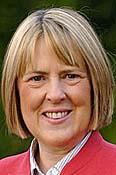
BruceFiona Bruce (Congleton) (Con)

I beg to move,

That this House has considered the contribution of faith organisations to the voluntary sector in local communities.

Christians possess a rich heritage of social reform and charitable care which is alive today. In the 19th century, William Wilberforce and Lord Shaftesbury led campaigns for the abolition of slavery and child labour. Others, such as Barnardo and William and Catherine Booth, were involved in founding charitable organisations, covering every conceivable form of human need, as an expression of Christian love. The Christian principles that drove Wilberforce and Shaftesbury are still very much alive in Britain today and are as relevant as ever. Continue reading “MPs debate contribution of faith organisations to voluntary sector in local communities – transcript”

Church Commissioners: Near Neighbours

On 5th May 2016 the Second Church Estates Commissioner, Rt Hon Caroline Spelman MP, answered a written question from Karl McCartney MP, on Near Neighbours:

Karl McCartney (Lincoln): To ask the right hon. Member for Meriden, representing the Church Commissioners, what progress has been made on the Near Neighbours programme. [904799]

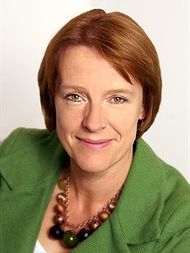
Caroline SpelmanMrs Caroline Spelman: The Church Commissioners welcome the Government’s recent announcement of a further £1.5 million for the Near Neighbours programme, which is administered by the Church Urban Fund.

This third round of funding for Near Neighbours will help it build on its successful track record of delivering projects up and down the country to transform local areas by strengthening relationships between those of different religious and ethnic backgrounds on issues of shared concern.

The Near Neighbours programme has offered small grants between £250 and £5,000, providing seed capital for local groups and organisations who are working to bring together neighbours, to develop relationships across diverse faiths and ethnicities in order to improve their communities.

The Near Neighbours grants fund has so far awarded seed capital worth £3.66m to over 1,120 projects. These projects have impacted the lives of 941,000 people and 71% of projects have continued to run after the initial seed capital was spent. All Near Neighbours projects are designed to change hearts and minds by bringing together different communities within a neighbourhood so that they can work together on issues of shared concern and common values.

More information on Near Neighbours can be found on its website at: https://www.cuf.org.uk/how-we-help/near-neighbours

(via Parliament.uk)

Bishop of St Albans supports call for UK to welcome Afghan interpreters

Bishop of St AlbansOn the 5th May, Lord Ashdown of Norton-sub-Hamdon asked Her Majesty’s Government “what assessment they had made of the treatment of Afghan interpreters seeking to be housed in the United Kingdom.” The Bishop of St Albans, the Rt Revd Alan Smith, asked whether the Government could do more to recognize the value Afghan interpreters have provided for British military efforts.
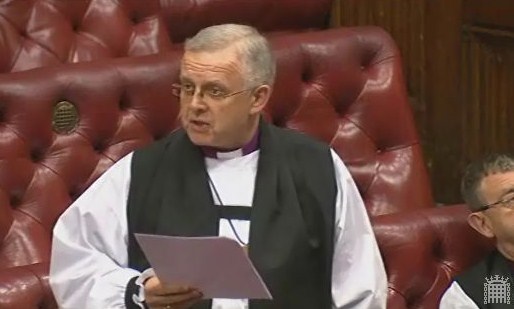
The Lord Bishop of St Albans: My Lords, does the Minister not recognise that, with this story that is going on, not only do we owe them a debt of honour but what it is going to mean is that, when future conflict is going on, other people will think, “I dare not take the risk”? As well as being the right thing to do, this is actually in our own interests, because we need these people when we go into conflict to help us and co-operate with us. This is a long-term strategy. Could the Minister comment on that, please? Continue reading “Bishop of St Albans supports call for UK to welcome Afghan interpreters”

Church Commissioner questions: same sex marriage, Near Neighbours, Iraq, apprenticeships, ethical investment

On 5th May 2016 MPs asked questions in the House of Commons to Rt Hon Caroline Spelman MP, on behalf of the Church Commissioners. Questions were asked on same sex marriage, Near Neighbours, Iraq, apprenticeships and ethical investment:
Spelman CCQs June 2015 4 Continue reading “Church Commissioner questions: same sex marriage, Near Neighbours, Iraq, apprenticeships, ethical investment”

Bishop of Peterborough supports move to find fairer mobility assessment criteria for disability benefit claimants

14.02 PeterboroughOn 4th May 2016 Baroness Thomas of Winchester put a Motion to the House of Lords: “That this House calls on Her Majesty’s Government to hold urgent talks with Disability Rights UK and the Disability Benefits Consortium to identify a mobility criterion in the Personal Independence Payment “moving around” assessment which is fairer than the current 20 metre distance, in the light of the impact on reassessed disabled claimants and the resulting large number of successful appeals.” The Bishop of Peterborough, Rt Revd Donald Allister, spoke in support of the Motion, which was subsequently passed by the House.

The Lord Bishop of Peterborough: My Lords, I support the noble Baroness, Lady Thomas of Winchester, and thank her for bringing this Motion before the House. I have a simple point to make.

The tick-box approach is rarely the right one. People are individuals and wherever possible should be treated as such. While it is clear that the 20-metre rule is too restrictive, setting a replacement figure, whether the old one of 50 metres or some other, is still arbitrary and a matter of ticking boxes instead of treating people as people. The high number of successful appeals, whatever the reasons, shows that the 20-metre rule simply does not work. Continue reading “Bishop of Peterborough supports move to find fairer mobility assessment criteria for disability benefit claimants”