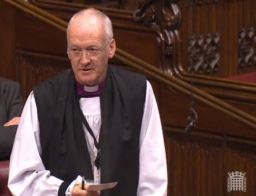
Bishop of Durham says prevention must stay at top of agenda for those tackling child abuse

On 14th March 2016 Lord Lexden asked Her Majesty’s Government “what steps they are taking to ensure that the police, social services and other agencies work together effectively to protect vulnerable children from sexual abuse.” The Bishop of Durham, Rt Revd Paul Butler, asked a follow up question:
Bp Durham June 2015 bThe Lord Bishop of Durham: My Lords, I declare my interests in relation to safeguarding for the Church of England, in which connection I shall be at the Goddard inquiry on Wednesday morning. Will the Minister agree that prevention must stay at the top of the agenda for all agencies, both statutory and voluntary, in responding to the crime of child sexual abuse and, in so doing, recognise that potentially every single child is vulnerable and that grooming must be one area of concern? Continue reading “Bishop of Durham says prevention must stay at top of agenda for those tackling child abuse”

Bishop of Leeds asks about effect of UK leaving the EU on UK nationals living abroad

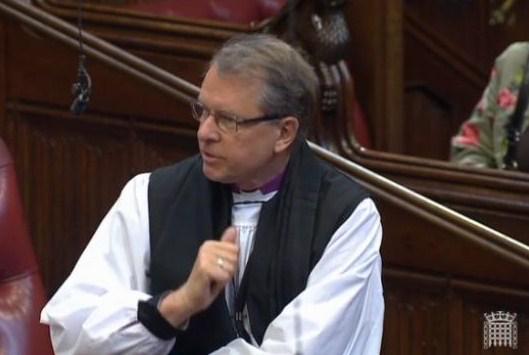
BpLeeds2On the 4th, 9th & 14th March 2016 the Bishop of Leeds received written answers to questions about the implications for UK citizens overseas if the UK should decide to leave the EU.

The Lord Bishop of Leeds: To ask Her Majesty’s Government what assessment they have made of the implications of a decision by the UK to leave the EU for those UK nationals resident in other EU member states. [HL6398]

Continue reading “Bishop of Leeds asks about effect of UK leaving the EU on UK nationals living abroad”

Church of England Week in Westminster 7th-11th March 2016

Welcome to the Church of England’s weekly round-up of activity in Parliament.

Westminster-abbeyThis week the Bishop of Gloucester gave her maiden speech in a Lords debate on International Women’s Day and the Bishop of Coventry led a debate on Syria. Bishops in the House of Lords spoke to and voted on amendments to the Government’s Immigration Bill and on Tax Credit Regulations. Bishops also spoke in debates on the BBC, the Government’s Housing and Planning Bill, and a private member’s bill to regulate fixed odds betting terminals.. They asked questions on starter homes, the effects of UK withdrawal from the EU and the targeting of faith-based schools by campaign groups. In the House of Commons the Second Church Estates Commissioner answered a question on the landfill community fund and took part in the debate on Sunday trading in the Government’s Enterprise Bill. Continue reading “Church of England Week in Westminster 7th-11th March 2016”

Gambling Bill: Bishop of St Albans supports move to regulate fixed odds betting terminals

On 11th March 2016 the House of Lords considered at Second Reading the Gambling (Categorisation and Use of B2 Gaming Machines) Bill [HL] – a Private Member’s Bill introduced by Lord Clement Jones. Introducing the Bill, Lord Clement Jones said

“Fixed-odds betting terminals—FOBTs—are touch-screen roulette machines in betting shops that allow the user to bet up to £100 every 20-second spin.  It is clear that the experiment to allow high-speed roulette in easily accessible betting shops has been a disaster..The essence of my Bill is to reduce the stake to £2 a spin.”

The Bishop of St Albans, Rt Revd Alan Smith, spoke in support of the Bill.

StAlbans171115The Lord Bishop of St Albans: My Lords, I am grateful to the noble Lord, Lord Clement-Jones, for taking forward the Bill, which I support. It enables us to have an opportunity to discuss an area of deep concern to many people on all sides of the House. There is little doubt that B2 gaming machines can be very addictive, which is why, for well over a decade now, successive Governments have talked tough about regulating them, although it seems to me that regulation is not tough enough. This modest Bill is immensely helpful. Continue reading “Gambling Bill: Bishop of St Albans supports move to regulate fixed odds betting terminals”

Interpreting and explaining religion should be a key role of BBC, Bishop of Leeds tells Peers

On the 10th March 2016 the Bishop of Leeds, Rt Revd Nick Baines, spoke in a short debate on the BBC Charter Review. He expanded on these remarks in a subsequent blog post.

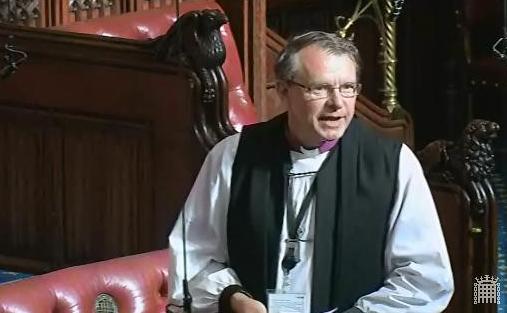
BpLeeds2The Lord Bishop of Leeds: My Lords, the BBC has three core purposes: to inform, to educate and to entertain. Will the Minister comment on a fourth purpose, which is to interpret? Diversity has been perceived in terms of regional diversity when one could also say that ethnic and religious diversity in the country need to be taken more seriously. Religion is a primary motivator of individuals and communities, inspiring and informing their political, economic, ethical and social behaviour.
It needs to be interpreted. What the world looks like when seen through a particular religious lens needs to be taken more seriously. In July 2015, Ofcom expressed concern about the diminution of attention to religion in the BBC. Can the Minister assure us that this will be taken more seriously in the charter renewal? Continue reading “Interpreting and explaining religion should be a key role of BBC, Bishop of Leeds tells Peers”

Church Commissioners: Impact of Landfill Communities Fund

Church CommissionersOn the 10th March the Second Church Estates Commissioner, Rt Hon Caroline Spelman MP, answered a written question from Nic Dakin MP about the impact of changes to the Landfill Communities Fund on church buildings.
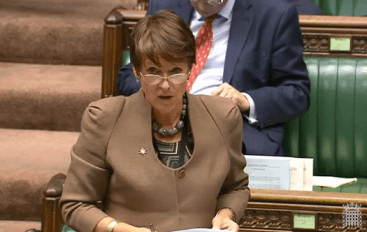
 Nic Dakin (Scunthorpe): To ask the right hon. Member for Meriden, representing the Church Commissioners, what assessment she has made of the potential effect of the proposed changes to the Landfill Communities Fund on the restoration and repair of listed church properties and church buildings.

Immigration Bill – Divisions

On 9th March 2016 the House of Lords considered the Government’s Immigration Bill at Report Stage. Votes were held on two amendments, both of which passed. The Bishops of Durham and Chester took part in the votes. Continue reading “Immigration Bill – Divisions”

Immigration Bill: Bishop of Durham supports right to work for asylum seekers

On 9th March 2016 the House of Lords considered the Government’s Immigration Bill at Report Stage. The House considered an amendment from Lord Alton of Liverpool that sought to give the right to seek work to those asylum seekers whose claims had not been processed within six months. The Bishop of Durham, Rt Revd Paul Butler, spoke in support of the amendment, which passed by a vote of 280 to 195.

14.06.10 Bishop of Durham 5The Lord Bishop of Durham: My Lords, I support the amendment and endorse everything that has been said already, and reinforce the point that the General Synod had a major debate on this and overwhelmingly supported such a move.

Some of the saddest conversations I have ever had have been with asylum seekers who came to this country and thought they would be welcomed, but have felt unwelcome; who want to be able to uphold their human dignity and feel that the best way of doing that is to become contributors to this society. Continue reading “Immigration Bill: Bishop of Durham supports right to work for asylum seekers”

Bishop of Durham raises targeting of faith-based schools by campaign groups

On 9th March 2016 Lord Watson of Invergowrie asked Her Majesty’s Government “why they are proposing to prevent some parents and organisations from objecting to violations of the School Admissions Code”. The Bishop of Durham, Rt Revd Paul Butler, asked a follow up question.

Bp Durham June 2015 b

The Lord Bishop of Durham: My Lords, we know that some campaign groups are actually targeting faith-based schools as part of a broader agenda. How many of the upheld objections were unrelated to religious selection criteria, and how many were upheld on minor administrative infringements? Are the significant time and resources used to respond to such objections justified in the light of those numbers? Continue reading “Bishop of Durham raises targeting of faith-based schools by campaign groups”

Enterprise Bill: House of Commons rejects Sunday trading plans

Caroline 4On the 9th of March the House of Commons debated the Government’s Enterprise Bill at its Report Stage. Debate focused on proposals to allow Local Authorities in England Wales to deregulate Sunday Trading in their areas. Several amendments were tabled to the bill, including one from David Burrows MP to remove those clauses altogether.

The Rt Hon Caroline Spelman MP, Second Church Estates Commissioner, spoke in the debate and drew attention to a compromise amendment that she had tabled (though not in her capacity as a Church Commissioner). Her amendment was not voted on as the House accepted by 317 to 286 votes the amendment from David Burrowes to remove the clauses on Sunday trading from the bill. 

Her speech in the debate is below and can also be watched here Continue reading “Enterprise Bill: House of Commons rejects Sunday trading plans”