Bishop of Worcester calls on Government to help tackle negative perceptions of adoption

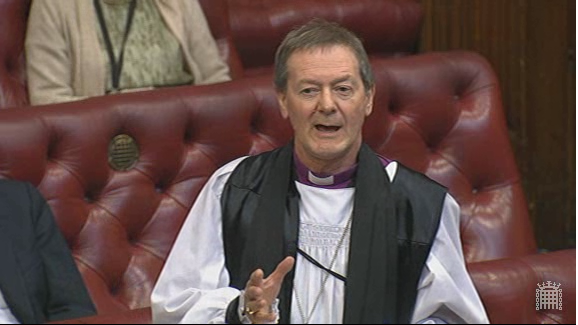
On 18th November 2014, Baroness King of Bow asked Her Majesty’s Government what assessment they have made of the recent drop in referrals of children for adoption by local authorities. The Bishop of Worcester, the Rt Revd John Inge, asked a supplementary question: 
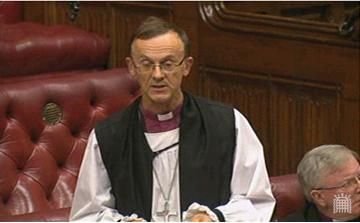
WorcesterThe Lord Bishop of Worcester: My Lords, does the Minister agree that, whatever the assessment of these figures, there remains a task to be done concerning negative perceptions about adoption in this country? Does he agree with the observation of a judge in the adoption of one of my children that whereas conception is sometimes a biological accident, adoption is always an act of love? Does he agree that it is a noble task and a noble thing to do? What are the Government doing to promote adoption in that light?

Lord Nash: As is well known, the Government have in place a very active reform programme on adoption which has had quite a substantial effect. I agree entirely with the right reverend Prelate’s comments. I was interested to see recent research by Professor Julie Selwyn at Bristol which shows that only 3% of adoptions break down. I think there is cross-party consensus that where there is no option of staying with the birth family, a long-term relationship with loving adoptive parents who have been well scrutinised is clearly in the best interests of the child.

(via Parliament.uk)
Bishop of St Albans raises concerns about protection of local welfare budgets

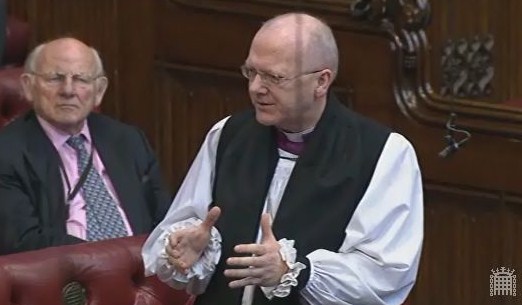
On 18th November 2014, Baroness Farrington of Ribbleton asked Her Majesty’s Government what assessment they have made of cuts in funding to local authorities in the most deprived and least deprived areas of England. The Bishop of St Albans, the Rt Revd Alan Smith, asked a supplementary question: 

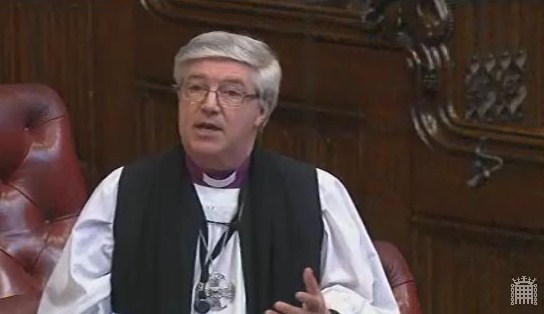
Bishop of St AlbansThe Lord Bishop of St Albans: My Lords, the dedicated funding for local welfare provision has been vital in providing a net for some of the most vulnerable in society. It is proposed that this will no longer be ring-fenced but will be part of a general grant to local councils, at a time when their budgets are increasingly pressed—indeed, there may be a move for that money to be used for core statutory services in future. If that money is not to be ring-fenced, will the Minister tell us how Her Majesty’s Government will monitor the effects of these changes and whether they will be willing to report back to your Lordships’ House on them, to ensure that the most vulnerable are not even further disadvantaged?

Baroness Williams of Trafford: The right reverend Prelate makes a good point. The ring-fenced funding pots were not always used for their intended purposes. It is the Government’s belief that in devolving funds straight to local authorities they will make the best use of them. I shall follow up the right reverend Prelate’s question on reporting back—I am sure that we can report back in due course.

(via Parliament.uk)

Bishop of St Albans presses Government to ratify Istanbul Convention

On 18th November 2014, the Bishop of St Albans, the Rt Revd Alan Smith, received an answer from Home Office Minister Lord Bates on the subject of the Istanbul Convention on Preventing and Combating Violence against Women and Domestic Violence.

Bishop of St AlbansThe Lord Bishop of St Albans: To ask Her Majesty’s Government whether they have any plans to ratify the Istanbul Convention now that the Anti-Social Behaviour, Crime and Policing Bill 2014 has received Royal Assent. [HL2559]

The Parliamentary Under-Secretary of State, Home Office (Lord Bates): The Coalition Government signed the Istanbul Convention on 8 June 2012 signalling its strong commitment on tackling violence against women and girls. The UK already has some of the most robust protections in the world against violence towards women and we already comply with the majority of the articles to the convention. Continue reading “Bishop of St Albans presses Government to ratify Istanbul Convention”

Bishop of Derby takes part in debate on Modern Slavery Bill

I wonder whether there is some way of privileging people once they have been recognised as having been exploited or enslaved, to give them a different way of accessing benefits and support because they have been enslaved and treated as commodities. That would make an enormous difference.

On 17th November 2014, the Bishop of Derby, the Rt Revd Alastair Redfern, took part in the Second Reading debate of the Government’s Modern Slavery Bill. The Bishop, who was a member of  the Joint Select Committee on the Draft Modern Slavery Bill, welcomed the progress that had been made in bringing the Bill to its current form. He noted that concerns about the commodification of humans through slavery required further thinking on supply chain accounting and other aspects of the legislation, and also raised questions about how best the vicitms of trafficking and slavery could be supported by the state.

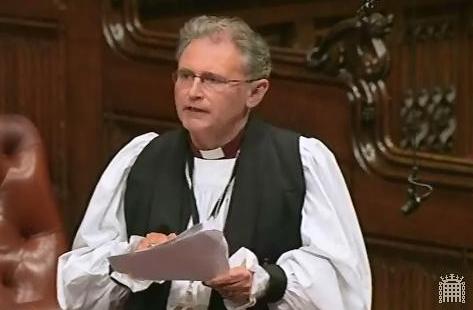
DerbyThe Lord Bishop of Derby: My Lords, I was privileged to be on the Joint Select Committee and I congratulate the noble Lord, Lord Bates, on his very positive introduction. I also express my appreciation to the Government for listening and being willing to negotiate and explore options as this legislation unfolds.

I remind your Lordships that this is not just a huge and wicked crime. It is, as the noble and learned Baroness, Lady Butler-Sloss, says, increasing as we talk, massively. It treats human beings as commodities to be traded. The challenge of this legislation is to stop this practice. I am delighted that the Government are committed to producing a slavery strategy to complement the Bill and I hope that many of our concerns can be refined through that strategy. I would like to raise three of four things that might benefit from further scrutiny and wider debate in our process. Continue reading “Bishop of Derby takes part in debate on Modern Slavery Bill”

Bishop of St Albans presses Government to tackle cold calling by payday lenders

On 17th November 2014, Liberal Democrat Peer Lord Sharkey asked Her Majesty’s Government what steps they are taking to bring organisations which make cold calls connected with the promotion, or sale, of financial services or products under the regulation of the Financial Conduct Authority. The Bishop of St Albans, the Rt Revd Alan Smith, asked a supplementary question:

Bishop of St AlbansThe Lord Bishop of St Albans: My Lords, I wonder if I could press the Minister again, particularly on payday loans. The recent report published by the Children’s Society, Playday not Payday, has highlighted the regulatory gap whereby payday loan companies can make unsolicited marketing calls, whereas, as we have heard, mortgage providers are not allowed to. That report showed that over 40% of people who have taken out payday loans are receiving on average more than one unsolicited phone call a day. Does the Minister not agree that the provisions that prevent the mortgage providers from making that sort of marketing approach really must now be brought in for the payday loan companies in order to protect those who are most vulnerable?

Lord Newby: The very specific arguments that apply in respect of mortgages do not apply to payday loans. The key thing about payday loans at the moment is that the payday loan companies are being regulated for the first time, which is leading to a collapse in the number of payday loan companies, so that it is expected that we may end up with as few as four payday loan companies in operation at the end of this process. However, the FCA is undertaking an in-depth thematic review of the debt management sector to assess the quality of advice and the area mentioned by the right reverend Prelate. If it finds substantial evidence of consumer detriment of the kind he suggests, it will be able to consider the scope of further regulations.

(via Parliament.uk)

Bishop of Norwich asks question on Gangmasters Licensing Authority

On 17th November 2014, the Bishop of Norwich, the Rt Revd Graham James, received an answer to a written question from the Home Office on the subject of the Gangmasters Licensing Authority.

14.06.12 Bishop of NorwichThe Lord Bishop of Norwich: To ask Her Majesty’s Government whether they have any plans to extend the powers of the Gangmasters Licensing Authority under the Gangmasters (Licensing) Act 2004 in order to regulate gangmasters in sectors such as hand car washes. [HL2564]

The Parliamentary Under-Secretary of State, Home Office (Lord Bates): The Government has no plans to extend the licensing remit of the Gangmasters Licensing Authority to additional sectors such as hand car washes. Licensing can be an appropriate response to particular problems in particular sectors, but that does not mean it is appropriate in all cases. However the Government will keep the Gangmasters Licensing Authority’s remit under review.

(via Parliament.uk)

Church of England Week in Westminster, 10th – 14th November 2014

Welcome to the Church of England’s weekly round-up of activity in Parliament.

Westminster-abbeyIn the two sitting days before the House of Lords rose for the short November recess, bishops spoke in debates about carbon capture in the Government’s Infrastructure Bill and electoral registration in the Government’s Wales Bill. Bishops also took part in votes on both Bills. They also asked questions about the Living Wage and freedom of religion in Egypt. Continue reading “Church of England Week in Westminster, 10th – 14th November 2014”

Bishop of Coventry highlights Church in Wales support for engagement with young voters

On 11th November 2014, the Bishop of Coventry, the Rt Revd Christopher Cocksworth, took part in the the Report Stage of the Government’s Wales Bill. At the request of the Archbishop of Wales, the bishop spoke on behalf of him and the Church in Wales in support of amendments to ensure that electoral registration officers upheld their obligation to engage and support 16- and 17-year olds to ensure they are on the electoral register, and encourage them to vote. Following the debate and comments from the Minister, the amendments were withdrawn.

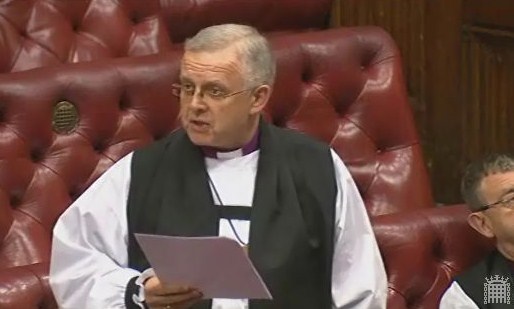
13.10 Bishop of CoventryThe Lord Bishop of Coventry: My Lords, it is 94 years since the voice of the bishops in Wales has been heard in this House but, as my noble Lord Roberts implied, I thought it right to consult the Church in Wales, and the Archbishop of Wales in particular, about the amendments, which seem to me to have a great deal of merit, to see whether their voice might be heard today indirectly, as it were. As a result, I can say that the Archbishop of Wales has asked me to convey to your Lordships’ House that the bishops of the Church in Wales are very supportive of the amendments. Indeed, I understand that they also support the extension of the franchise, as was proposed and discussed earlier, but I chose to concentrate my consultations on these amendments. Continue reading “Bishop of Coventry highlights Church in Wales support for engagement with young voters”

Wales Bill – Division

On 11th November 2014, the Bishop of Lichfield, the Rt Revd Jonathan Gledhill, took part in a division of the House of Lords, on an amendment to the Government’s Wales Bill.

House of Lords Division Lobby

Amendment 1

Crossbench Peer Lord Elystan-Morgan moved amendment 1, to insert the new clause Reserved powers for the National Assembly for Wales, which sought to requre the Secretary of State to bring forward detailed measures on further legislative steps needed to establish a model of reserved powers for the National Assembly for Wales.

The Bishop of Lichfield voted ‘not content’. No bishop voted ‘content’.

There were Contents: 146 | Not Contents: 215 | Result: Government Win

(via Parliament.uk)

Bishop of Peterborough calls on Government to support adoption of Living Wage

On 11th November 2014, Lord Haske asked Her Majesty’s Government what is their assessment of the report by the Resolution Foundation Low Pay Britain 2014.The Bishop of Peterborough, the Rt Revd Donald Allister, asked a supplementary question:

14.02 PeterboroughThe Lord Bishop of Peterborough: My Lords, now that the economy is picking up, will the Minister comment on the living wage and on whether the Government believe that the minimum wage really is enough?

Lord Ashton of Hyde: The right reverend Prelate is right to bring this subject up. The minimum wage is a minimum as a catch-all; the Government support people and businesses paying above that, if they can pay the living wage, but only when it is affordable and not at the expense of jobs. In BIS, the department I represent, we have recently increased the pay of the lowest-paid workers in the department so that everyone receives the living wage. We support that as long as it is not at the expense of jobs.

(via Parliament.uk)