Written Questions – Disabled Students’ Allowances

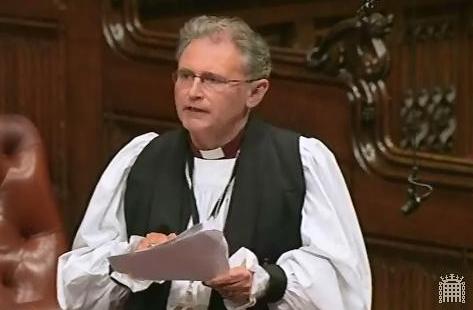
On 14th July 2014, the Bishop of St Albans, the Rt Revd Alan Smith, received answers to two written questions, on the subject of Disabled Students’ Allowances.
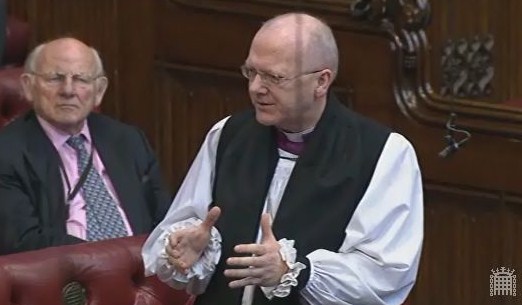
Bishop of St AlbansThe Lord Bishop of St Albans: To ask Her Majesty’s Government which criteria they will use, under the proposed changes to the Disabled Students’ Allowance, to distinguish between the need for higher specification or higher cost computers where a student needs one by virtue of their disability, as opposed to a need because of the way in which a course is delivered.

Lord Ahmad of Wimbledon: The criteria for determining when Disabled Student Allowances (DSAs) will contribute to the cost of higher specification or higher cost computers will be set out in guidance that will be published alongside the appropriate regulations in the autumn. Support under DSAs will continue to be available if the need for a higher specification or higher cost computer is by virtue of the student’s disability, rather than how the course is being delivered by the Higher Education Institution (HEI). If access to a higher specification or higher cost computer is essential to all students on that course, regardless of whether they are disabled or not, then provision of such computers would be a matter for the HEI.

Continue reading “Written Questions – Disabled Students’ Allowances”

Church of England Week in Westminster, 7th – 11th July 2014

Red BenchesWelcome to the Church of England’s weekly round-up of activity in Parliament by the Lords Spiritual.

In the past week, Bishops in the House of Lords have spoken in debates on the Deregulation Bill and in response to the Government statement on child abuse cases.

They have also put questions to the Government on sexual violence and food security in South Sudan, legal aid and the political situation in Egypt.

Continue reading “Church of England Week in Westminster, 7th – 11th July 2014”

Bishop of Coventry asks questions on democratic reform in Egypt

On 10th July 2014, the Bishop of Coventry, the Rt Revd Christopher Cocksworth, received answers to two written questions on elections and democratic reform in Egypt.

13.10 Bishop of CoventryThe Lord Bishop of Coventry: To ask Her Majesty’s Government what assessment they have made of the preliminary assessment of the European Union’s election observation mission to Egypt on 29 May, which claimed that the presidential election in Egypt was administered in an environment that fell short of the principles of the new constitution.

The Senior Minister of State, Department for Communities and Local Government & Foreign and Commonwealth Office (Baroness Warsi): The European Union election observation mission to Egypt issued a preliminary statement on 29 May. Their headline assessment was “Presidential elections administered in line with the law, in an environment falling short of constitutional principles”. We followed the presidential election closely and staff from our Cairo Embassy took part in the EU’s Electoral Observation Mission. The EU Observation Mission will issue its full report in due course. Continue reading “Bishop of Coventry asks questions on democratic reform in Egypt”

Bishop of St Albans asks Government what support they are giving to Churches in South Sudan

On 8th July 2014, Labour Peer Baroness Kinnock of Holyhead asked Her Majesty’s Government what assessment they have made of the concerns expressed by the Disasters Emergency Committee over the prospect of famine in South Sudan. The Bishop of St Albans, the Rt Revd Alan Smith asked a supplementary question.

Bishop of St AlbansThe Lord Bishop of St Albans: My Lords, the situation is dire. As well as the 4 million people in need of humanitarian aid, more than 10,000 people have already been killed and 1.4 million people have been displaced. When we are facing such terrible problems it is important not to underestimate the role played by various agencies already on the ground, including many Anglican and ecumenical agencies working with the Anglican Alliance. Indeed, Archbishop Daniel Deng has been a leader in the efforts to bring peace. How can Her Majesty’s Government support the churches working on the ground in their humanitarian and peace efforts and in delivering aid?

Baroness Northover: I too pay tribute to those who are working in these extremely difficult circumstances. The right reverend Prelate will know that the United Kingdom is a leading donor. We are meeting about 7.5% of the total appeal at the moment and working to support all the agencies that are managing to get in. We do not underestimate the difficulties.

(via Parliament.uk)

Bishop of Chelmsford calls for implementation of Low Commission findings on legal aid

On 7th July 2014, Lord Bach asked Her Majesty’s Government, 15 months after the coming into force of the Legal Aid, Sentencing and Punishment of Offenders Act 2012, what is their assessment of the effect of the Act on the legal advice system in relation to social welfare law in England and Wales. The Bishop of Chelmsford, the Rt Revd Stephen Cottrell, asked a supplementary question:
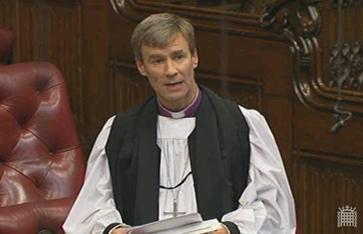
14.06.09 Chelmsford 3The Lord Bishop of Chelmsford: My Lords, I, too, should like to make reference to the Low commission. The church, faith communities and charities are all too keenly aware of the impacts of some of the cuts in legal aid on the poorest communities in our country. Sometimes a professional lawyer is needed. Would the Minister still regard the proposals of the Low commission for a nationally resourced strategy to provide support and legal advice as an important priority?
Lord Faulks: My Lords, as I said in response to the debate, it was a valuable contribution. The LASPO reforms were implemented only in April 2013; it is relatively early days. We are considering carefully the effects of these reforms. We have not ruled out the possibility of further changes but, at the moment, the various steps we are taking are helping to ensure that those who need representation are receiving it.

Bishop of Truro highlights church support for independent inquiry into abuse cases

On 7th July 2014, a Government statement on an inquiry into child abuse was repeated in the House of Lords. The Bishop of Truro, the Rt Revd Tim Thornton, asked a question about Church involvement in the matter.

Bishop of Truro 20.6.13The Lord Bishop of Truro: My Lords, I welcome the Statement. The church is keen to be involved in any such overarching inquiry. A question was asked in the other place about whether the church is involved in this matter. Is the Minister aware that my friend the most reverend Primate the Archbishop of Canterbury wrote to the Home Secretary some weeks ago asking for an inquiry such as this? The church is very willing to be involved. In a situation such as this—in which, inevitably and sadly, people involved in various authorities at a high level would be related to other authorities and institutions—it is crucial that such an inquiry is allowed to go wherever it needs to go. The church and other organisations and institutions should explicitly be involved in this matter. Perhaps I may add as chairman of the Children’s Society that we would be keen to stress that the voice of children and young people should be always in the centre of one’s thoughts on any matters such as this. If any matters come to light through this inquiry that need to be directed to the police, that will, one hopes, happen and they will be dealt with swiftly and decisively.

Lord Taylor of Holbeach: I pay tribute to the role of the church in the care of children. I am sure that the Home Secretary will note the offer of involvement in the review and these inquiries. I am delighted that the right reverend Prelate has raised this issue. The involvement of church activists in the national group to tackle sexual violence against children and vulnerable people is an important start.

(via Parliament.uk)

Bishop of Worcester calls for action on sexual violence in South Sudan

On July 7th 2014, the Bishop of Worcester, the Rt Revd John Inge, received an answer to a written question on South Sudan.

WorcesterThe Lord Bishop of Worcester: To ask Her Majesty’s Government what assessment they have made of the prevalence of sexual violence in the conflict in South Sudan; whether they are planning to deploy suitable experts from the Stabilisation Unit to strengthen and support efforts in South Sudan to respond; and, if so, when.

The Senior Minister of State, Department for Communities and Local Government & Foreign and Commonwealth Office (Baroness Warsi) (Con): We are deeply concerned by reports of human rights violations and abuses in South Sudan, including the widespread use of sexual violence. We fully support the work of the Africa Union Commission of Inquiry and echo the call in the recent UN Human Rights Council resolution for thorough and genuine investigations into all human rights violations and abuses and for the perpetrators to be brought to justice.

The UK is funding a project with non-governmental organisation Non Violent Peaceforce to establish women’s protection teams in Northern Bahr El Ghazal. This project aims to tackle sexual violence in communities affected by insecurity around the border with Sudan by establishing and training women’s peacekeeping teams to work within communities. We continue to raise the issue of human rights, and of sexual violence specifically, with South Sudanese Ministers. The Parliamentary Under-Secretary of State for Foreign and Commonwealth Affairs, my hon. Friend the Member for Boston and Skegness (Mr Simmonds), discussed the issue with the Foreign Minister of South Sudan at the Global Summit to End Sexual Violence in Conflict on 11 June. Our Ambassador also raises these issues regularly with the Government of South Sudan.

There are currently no plans to send additional experts from the Stabilisation Unit to South Sudan. However, we keep all such plans under constant review.

(via Parliament.uk)

Bishop of Truro takes part in debate on Deregulation Bill

“In general, the question of whether or to what extent a particular type of economic activity is a legitimate driver of economic growth is a moral one that should not just be subsumed under a catch-all principle that regulators should promote economic growth. The prevention of damaging or unjust economic activity, surely, is equally germane to their mission.” – The Bishop of Truro, 07/07/14

On 7th July 2014, the Bishop of Truro, the Rt Revd Tim Thornton, took part in the Second Reading debate on the Government’s Deregulation Bill, led by Lord Wallace of Saltaire. In his speech he welcomed many of the measures, but raised concerns about two areas covered by the Bill – the work of employment tribunals and provisions that would require regulators to have regard for promoting economic growth.

Bishop of Truro 20.6.13The Lord Bishop of Truro: My Lords, I think that I need to begin with an apology. I am grateful to the noble Lord, Lord Stevenson, for drawing our attention to matters relating to dog collars. I was not going to refer to them but I will make sure that one of my colleagues does when we get to Committee.

I have no more interest than any other Member of this House in regulation for its own sake. In fact the New Testament, on the principle that,

“where the Spirit of the Lord is, there is freedom”,

specifically warns people against submitting to unnecessary regulations in matters of religion. This is something on which I will comment when we get to York later this week for the meeting of the General Synod. Continue reading “Bishop of Truro takes part in debate on Deregulation Bill”

Church of England Week in Westminster, 30th June – 4th July 2014

Welcome to the Church of England’s weekly round-up of activity in Parliament by the Lords Spiritual and the Second Church Estates Commissioner.

In the past week, Bishops in the House of Lords have spoken in debates on the Criminal Justice and Courts Bill and the rural economy.

They have also put questions to the Government on busking, the needs of dyslexics in higher education, National Voter Registration Day 2015, violence in the Middle East, sexual violence in Syria, protection of civilians in South Sudan, and the appointment of the next Bishop of Guildford.

In the House of Commons, the Second Church Estates Commissioner has answered a written question on the subject of apprentices and spoken about the role of Leicester Cathedral in commemorating King Richard III. Continue reading “Church of England Week in Westminster, 30th June – 4th July 2014”

Bishop of Oxford calls for more intentional support for the rural economy and rural schools

“I very much hope that the Department for Education will not resort to a philosophy of “the weakest to the wall” with these small schools because small rural schools are so often worth their weight in gold, as the heart and hub of our rural communities. The Church of England will publish a report very soon on how to support our rural schools effectively” – Bishop of Oxford, 3/7/14.

On 3rd July, the Bishop of Oxford, the Rt Revd John Pritchard, took part in a debate on the rural economy, lead by the Earl of Shrewsbury. The Bishop spoke about the need for intentional support for the many micro-businesses that make up the rural economy, and also for greater personal investment in rural schools, particularly through an increase in the number of foundation govenors supporting rural schools.

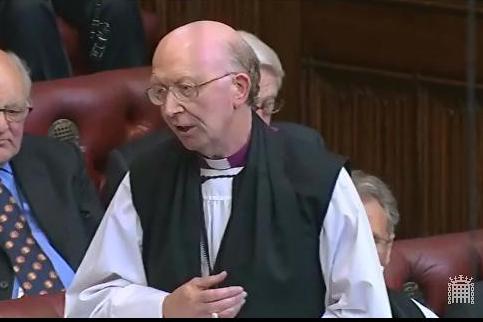
Bishop of OxfordThe Lord Bishop of Oxford: My Lords, I, too, am grateful to the noble Earl, Lord Shrewsbury, for giving us this opportunity to debate this matter. We all approach this important subject from different angles. I want to emphasise one that is economic and the other that is personal in the sense of our own personal investment and commitment. I serve a diocese which is largely rural although it has large centres of population such as Oxford, Reading, Milton Keynes and Slough. However, the rural expanses of Oxfordshire, Buckinghamshire and Berkshire are considerable, with 815 churches and 650 clergy, all of whom are strongly connected to the all-round flourishing of our diverse communities. Continue reading “Bishop of Oxford calls for more intentional support for the rural economy and rural schools”