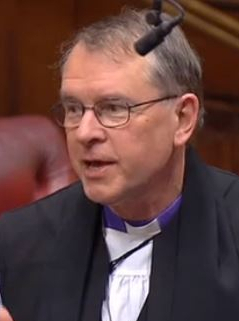
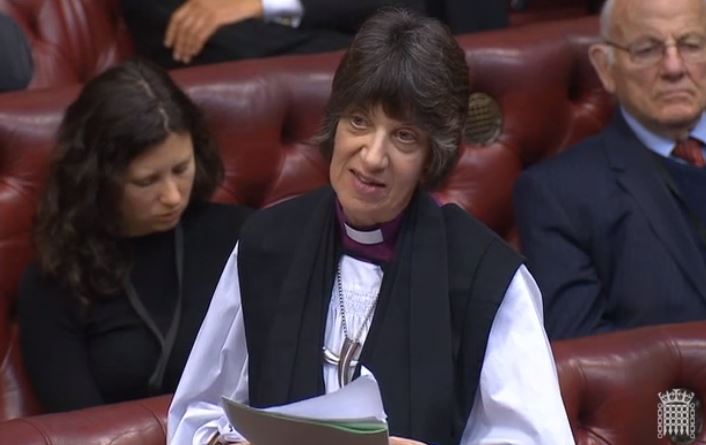
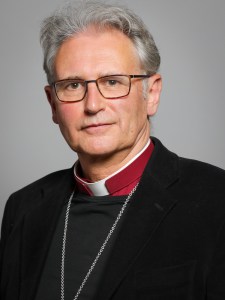
Bishop of Newcastle speaks in debate on education, employment and welfare

The Bishop of Newcastle spoke in a debate on the government record on Education, Employment and Welfare on 16th July 2026: 

The Lord Bishop of Newcastle: My Lords, I am grateful to the noble Baroness, Lady Evans of Bowes Park, for bringing this debate today, and it is an honour to follow the noble Lord, Lord Mohammed of Tinsley.

I want to focus my comments on opportunity and social mobility. In assessing the Government’s record on education, employment and welfare since July 2024, we cannot ignore the growing loss of humanities provision across higher education. Universities are autonomous institutions, but their decisions are shaped by the wider financial and policy environment.

A successful education system is measured not simply by qualifications or apprenticeships but by the breadth of opportunity it offers. The Social Mobility Commission’s State of the Nation 2024 reminds us that opportunity remains profoundly shaped by geography. When courses disappear from universities across whole regions, it is often students without the financial means to relocate who lose more opportunities first. Those from more affluent backgrounds can frequently move elsewhere or absorb the additional costs of studying further from home; those from less advantaged backgrounds often cannot. As a result, talent is constrained not by ability but by circumstance.

Continue reading “Bishop of Newcastle speaks in debate on education, employment and welfare”
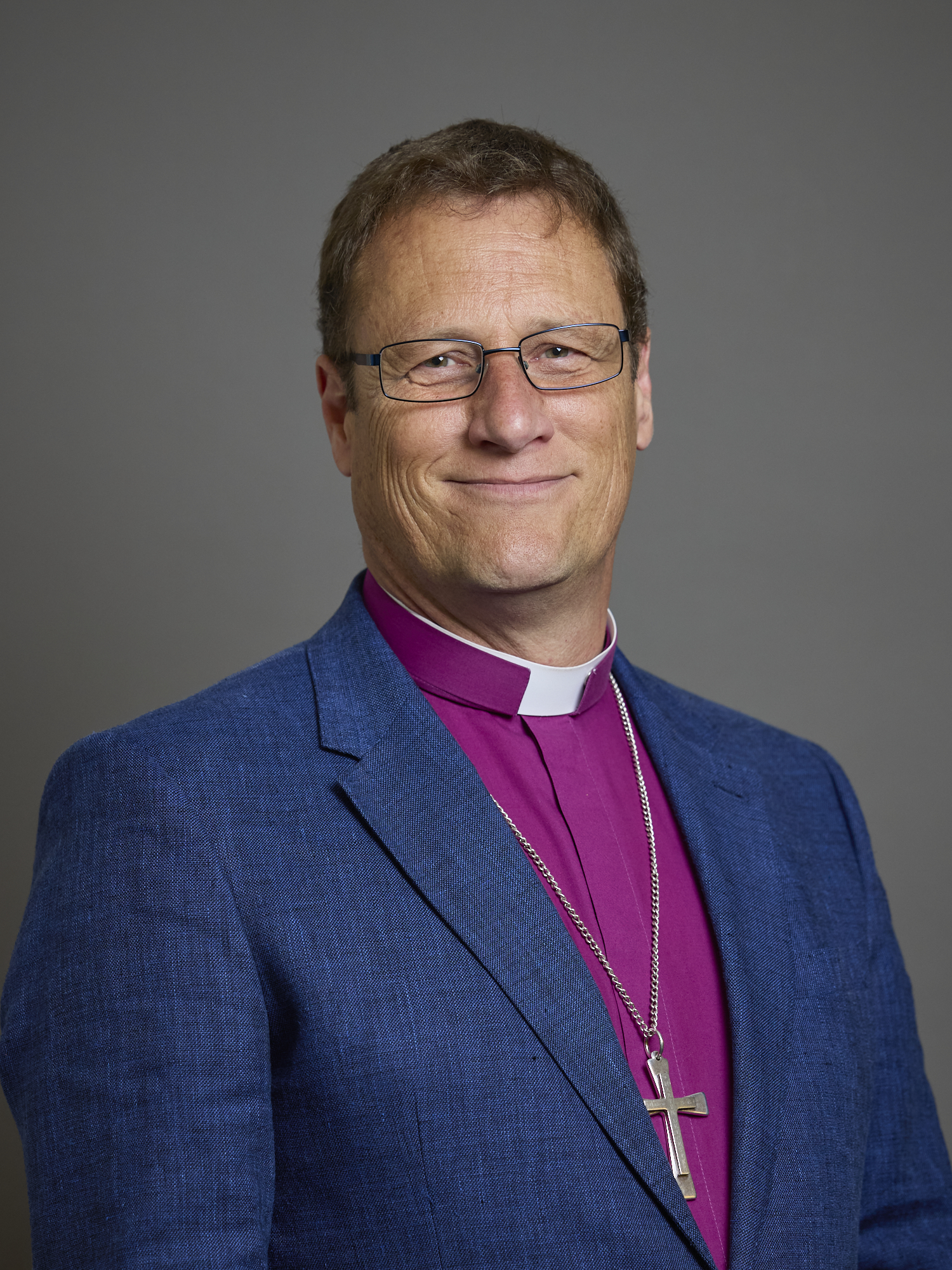
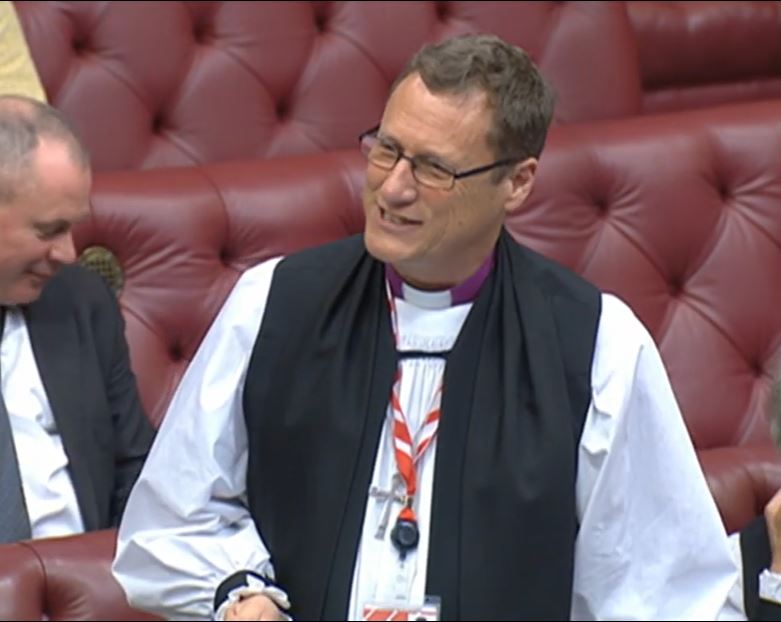
Bishop of Leicester asks about universal credit sanction rates

The Bishop of Leicester received the following written answer on 25th February 2026:

The Bishop of Leicester: To ask His Majesty’s Government, further to the Written Answer by Baroness Sherlock on 3 February (HL13743), what assessment they have made of the reasons that Universal Credit sanction rates vary by (1) ethnicity, and (2) region.

Continue reading “Bishop of Leicester asks about universal credit sanction rates”

Bishop of Leicester asks about welfare payments

The Bishop of Leicester received the following written answer on 30th January 2026:

The Lord Bishop of Leicester asked His Majesty’s Government what plans they have to ensure that cash payments received through the Crisis and Resilience Fund do not lead to a deduction in a person’s Universal Credit payment.

Continue reading “Bishop of Leicester asks about welfare payments”

Bishop of Leicester asks about welfare reform and child poverty

On 9th July 2025, the Bishop of Leicester asked a question on approaches to welfare provision and the need to tackle child poverty:

The Lord Bishop of Leicester: My Lords, reference has already been made to the Children’s Commissioner’s report published yesterday, which gives voice to the experiences of children and young people in poverty. It makes for harrowing reading, including one boy who was faced with the choice of going hungry or eating mouldy food, and many other such difficult stories. Will the Minister commit to ensuring that all the Government’s work on welfare will be based on the human dignity and equal value of every person in this country?

Continue reading “Bishop of Leicester asks about welfare reform and child poverty”

Bishop of Gloucester asks about increasing community advice services to low income households

The Bishop of Gloucester received the following written answer on 13th July 2022:

The Lord Bishop of Gloucester asked Her Majesty’s Government whether they have carried out an impact assessment of increasing the numbers of face-to-face advice services covering (1) household finances, and (2) benefit entitlement, in community centres that provide food to households on low incomes.

Continue reading “Bishop of Gloucester asks about increasing community advice services to low income households”

Bishop of Durham speaks in a debate on Bill to front-load Child Benefit

On 8th July 2022, the House of Lords debated the Front-Loaded Child Benefit Bill at its second reading. The Bishop of Durham spoke in the debate on this Private Member’s Bill and his speech and contributions from other peers are below:

The Lord Bishop of Durham: My Lords, I rise to speak to this Bill with a degree of curiosity. I thank the noble Lord, Lord Farmer, for introducing it.

Children, and the family who cares for them, should be particularly supported in their early years. This is when their most important development happens, so we must want them to thrive. These early years are still too often overlooked in the impact they have on both the leading of a happy and healthy life or the long-term harm of adverse childhood experiences. The Bill is an interesting one, as I can see some of the arguments for front-loading child benefit. However, I also have some quite deep concerns. I understand that the noble Lord, Lord Farmer, has intentionally kept his briefing for the Bill minimal to accommodate the policy-making that would have to accompany it, but there are some key details to learn, or note.

Continue reading “Bishop of Durham speaks in a debate on Bill to front-load Child Benefit”

Bishop of Gloucester asks about benefits of early years interventions

The Bishop of Gloucester tabled a question on the benefits of early years interventions for welfare and social mobility on 1st December 2021:

The Lord Bishop of Gloucester: To ask Her Majesty’s Government what assessment they have made of the benefits of early years interventions on people’s welfare and social mobility later in life.

Baroness Chisholm of Owlpen (Con): My Lords, we know that the early years are key to children’s later life chances, and effective early support is crucial. That is why we have put unprecedented investment into childcare over the past decade, committed £153 million to support education recovery in the early years, rolled out the proven Nuffield Early Language Intervention, and have announced £300 million to create a network of family hubs and transform crucial Start for Life services.

Continue reading “Bishop of Gloucester asks about benefits of early years interventions”

Bishop of Coventry asks Government about rise in abortions and link to two-child benefit limit

On 30th December the Bishop of Coventry received written answers to three questions on abortion and the two-child benefit limit:
The Lord Bishop of Coventry: To ask Her Majesty’s Government what assessment they have made of the reported rise in the number of abortions among women with two or more children. [HL11398] Continue reading “Bishop of Coventry asks Government about rise in abortions and link to two-child benefit limit”

Bishop of Portsmouth urges Government to keep uplift in universal credit for those ‘on cliff edge’

On 3rd December the House of Lords debated the Chancellor’s November Spending Review statement. The Bishop of Portsmouth took part in the debate:

The Lord Bishop of Portsmouth [V]: My Lords, I was delighted to hear the Chancellor stress that the Government would continue to support the most vulnerable, but the proof of that assertion will be in how much money the Government are prepared to provide. That will be the barometer of what and who they consider most important. I therefore join my voice to those profoundly deprecating the proposed cut in development aid. I urge the Government to think again. Continue reading “Bishop of Portsmouth urges Government to keep uplift in universal credit for those ‘on cliff edge’”

Bishop of Blackburn asks Government for increase in universal credit to help families struggling because of covid

On 8th October 2020 Baroness Sherlock asked the Government “what assessment they have made of the impact of the COVID-19 pandemic on (1) low-income families with children, and (2) the support provided to them by the social security system.” The Bishop of Blackburn asked a further question:

The Lord Bishop of Blackburn: My Lords, a recent report by the Church of England and the Child Poverty Action Group highlighted the “disproportionate impact” of the pandemic on low-income families with children, saying that:

“Without a radical change in policy direction, the prospects for many families are likely to deteriorate further through the remainder of this year as unemployment rises”

and more families become reliant on the welfare system. Following Prime Minister’s Question Time in the other place yesterday, will the Government do more than consider? Will they commit to making the temporary uplift in universal credit permanent? Will they also commit to a commensurate increase in the level of support for children, to reflect the additional needs of families with children? Continue reading “Bishop of Blackburn asks Government for increase in universal credit to help families struggling because of covid”