Bishop of St Albans – food security in Angola (Written Answer)

On 11th August 2014 the Bishop of St Albans, the Rt Revd Alan Smith, received an answer to a question on food security in Angola.
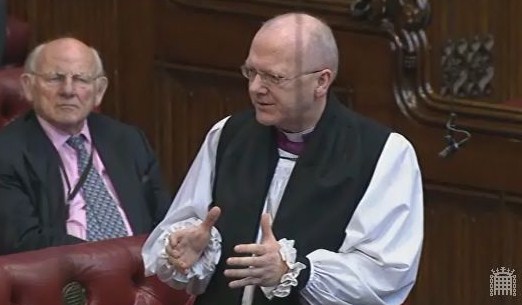
Bishop of St AlbansThe Lord Bishop of St Albans: To ask Her Majesty’s Government what discussions they have had with the government of Angola regarding food insecurity in that country; and whether they have encouraged that government to undertake an assessment of the situation.

Baroness Northover (LD): Poor seasonal rainfall early in 2014 in parts of Western Angola has affected the harvest and food availability there. However, throughout most of the country production is considered to be good and expected to be higher than normal. This has helped to maintain reasonable food prices for urban populations.

The Government has not had recent bilateral discussions with the Government of Angola regarding the food situation. The Government of Angola is leading the food assistance programme and is best placed to prepare for and lead such a response with the support of UN partners. The Government of Angola has set up an Inter-ministerial Commission to tackle the drought. The Government of Angola is also embarking on infrastructure projects, such as water supply projects, to mitigate drought impact in the future.

(via Parliament.uk)
Bishop of Coventry receives answers to written questions on current situation in Iraq

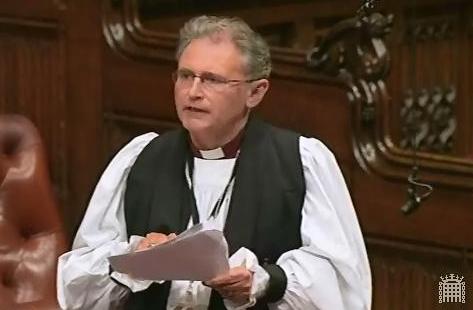
On 11th August 2014, the Bishop of Coventry, the Rt Revd Christopher Cocksworth, received answers to four written questions on the situation in Iraq. The questions were originally tabled on 28th July 2014. Further questions regarding resettlement of vulnerable groups in the UK are expected to receive answers in due course.

13.10 Bishop of CoventryThe Lord Bishop of Coventry: To ask Her Majesty’s Government what assessment they have made of the state of freedom of religion and belief in Iraq.

Lord Popat (Con): We are deeply concerned about the situation in Iraq including freedom of religion and belief. We condemn the Islamic State of Iraq and the Levant’s (ISIL) threats to ethnic and religious minorities in Iraq, including Christian, Yezidi and Turkomen and the desecration of mosques and churches by ISIL. The Parliamentary Under-Secretary of State for Foreign and Commonwealth Affairs, my hon. Friend the member for Bournemouth East ( Mr Ellwood), met Archbishop Athanasius of the Syriac Orthodox Church in London on 29 July and issued a statement strongly condemning the persecution of Christians and other minorities in Iraq. Our Ambassador in Baghdad has met religious representatives, including Chaldean Patriarch Luis Sako, and the Consul General in Erbil has met the Archbishop of Erbil and the Archbishop of Mosul to discuss the current situation, the needs of the Christian community, and UK humanitarian assistance to those displaced by fighting in Iraq. On Sunday 3 August, the British Chargé d‘Affaires attended a service at St George’s Anglican Church in Baghdad, joined by officials from our Embassy, to highlight the British Government’s continued support to Christians and other minorities affected by recent violence in Iraq. Continue reading “Bishop of Coventry receives answers to written questions on current situation in Iraq”

Bishop of St Albans – Public Forest Estate oversight (Written Answer)

On 4th August 2014 the Bishop of St Albans, the Rt Revd Alan Smith, received an answer to a written question on the oversight of the Public Forest Estate.

Bishop of St AlbansThe Lord Bishop of St Albans: To ask Her Majesty’s Government when they intend to bring forward legislation to establish a new public body to hold the Public Forest Estate to account.

The Parliamentary Under-Secretary of State, Department for Environment, Food and Rural Affairs (Lord De Mauley): The Government’s policy on the future of the Public Forest Estate is set out in its Forestry and Woodlands Policy Statement of January 2013. The Government is committed to maintaining the Public Forest Estate in public ownership and to establishing a new operationally independent public body to manage the estate for the long-term benefit of people, nature and the economy.

There were many proposals competing for the limited space within the Fourth Session programme and the proposed forestry measures could not be accommodated. However, the Government stands by its commitment to establish the new public body as soon as parliamentary time allows.

(via Parliament.uk)

Church of England Week in Westminster, 28th July – 1st August 2014

Red BenchesWelcome to the Church of England’s weekly round-up of activity in Parliament.

In the past week, bishops in the House of Lords have spoken in debates on the Government’s Armed Forces Bill, the role of the Leader of the House of Lords, the impact on wellbeing of the built environment and on the trade and human rights situation in Colombia.

They have also put questions to the Government about the living wage, the under-occupancy charge, implementation of the Marriage (Same Sex Couples) Act and South Sudan.

The House of Lords rose for the summer recess on Wednesday 30th July. The Commons will return in September, the Lords in October. Weekly updates will resume after recess. Continue reading “Church of England Week in Westminster, 28th July – 1st August 2014”

Bishop of Sheffield on UK trade with Colombia and human rights

On 30th July 2014, Lord Stevenson of Balmacara led a debate in the House of Lords on the motion ‘that the Grand Committee takes note of the Bilateral Agreement for the Promotion and Protection of Investments between the United Kingdom and Colombia’.

The Bishop of Sheffield, the Rt Revd Steven Croft, spoke during the debate, raising the issues of land ownership rights, protection of the human rights of indigenous Colombian people and the need for a monitoring system.

14.03.27 Bishop of SheffieldThe Lord Bishop of Sheffield: My Lords, I shall speak briefly to support and echo the excellent remarks of the noble Lord, Lord Stevenson, and the points made by other noble Lords on the dangers posed by this treaty, in three specific areas. Continue reading “Bishop of Sheffield on UK trade with Colombia and human rights”

Bishop of St Albans raises human rights abuses in South Sudan

On 30th July 2014 the Bishop of St Albans, Rt Rev Alan Smith, received a written reply from Foreign Office Minister Baroness Warsi to a question about human rights in South Sudan.

Bishop of St AlbansThe Lord Bishop of St Albans: To ask Her Majesty’s Government what discussions they are having to ensure that allegations raised in the United Nations Mission in the Republic of South Sudan human rights report of 8 May are being addressed.[HL1307] Continue reading “Bishop of St Albans raises human rights abuses in South Sudan”

Bishop of St Albans asks Government about impact of the under-occupancy charge on household debt and child poverty

On 30th July 2014, the Bishop of St Albans, Rt Rev Alan Smith, received answers to two written questions on the impact of the under-occupancy charge, on household debt and child poverty.

The questions and answers are reproduced in full below:

Bishop of St Albans

The Lord Bishop of St Albans: To ask Her Majesty’s Government what plans they have to mitigate the impact of the under-occupancy charge on household debt.[HL1588]

The Parliamentary Under-Secretary of State, Department for Work and Pensions (Lord Freud) (Con): The removal of the spare room subsidy was a necessary change in order to get the housing benefit bill under control, return fairness to the system and make better use of social housing stock. Continue reading “Bishop of St Albans asks Government about impact of the under-occupancy charge on household debt and child poverty”

Bishop of St Albans calls for Living Wage to help improve youth employment

On 30th July 2014 Baroness Sherlock asks Her Majesty’s Government what action they are taking to reduce levels of youth unemployment following the recent closure of the youth employment contract incentive scheme. The Bishop of St Albans, the Rt Revd Alan Smith, asked a supplementary question:

Bishop of St AlbansThe Lord Bishop of St Albans: My Lords, a significant part of the problem is that there are some posts suitable for young people, but they are often in parts of the country where accommodation is prohibitively expensive or the cost of commuting simply precludes them from taking those jobs. In the light of that, have Her Majesty’s Government considered embracing the concept of the living wage for all people of working age?

Lord Freud: Obviously we have looked at the living wage. If the figure suggested for the living wage were to be adopted, we would have to consider the impact on unemployment and the particular impact on youngsters, who would be hit worst. The NIESR estimated that adopting the living wage as opposed to the minimum wage would knock 300,000 youngsters out of work.

(via Parliament.uk)

Church and the Marriage (Same Sex Couples) Act – Lords questions

Red BenchesOn 30th July 2014, Conservative Peer Lord Fowler asked Her Majesty’s Government “whether they are satisfied with the enactment and operation of the Marriage (Same Sex Couples) Act 2013.”

In his follow up question, Lord Fowler raised the situation of clergy who are married to someone of the same sex. A number of other Peers also asked questions relating to the situation in the Church of England.

The Bishop of Sheffield, the Rt Rev Steven Croft, set out the Church of England’s position in his own supplementary question and the full transcript of all the exchanges is reproduced below: Continue reading “Church and the Marriage (Same Sex Couples) Act – Lords questions”

Bishop of St Albans Receives Answers to Questions on Social Housing

On 30th July 2014, the Bishop of St Albans, the Rt Revd Dr Alan Smith, received answers to two written questions on the social impacts of the under-occupancy charge from the Minister for Welfare Reform, Lord Freud.

Bishop of St AlbansThe Lord Bishop of St Albans: To ask Her Majesty’s Government what plans they have to mitigate the impact of the under-occupancy charge on household debt.[HL1588] 

Lord Freud: The removal of the spare room subsidy was a necessary change in order to get the housing benefit bill under control, return fairness to the system and make better use of social housing stock.

For those that are vulnerable and who may require more time to make the transition to change, the Discretionary Housing Payment scheme administered by local authorities is available. Money management and budgeting and debt advice is also provided by many local authorities and social sector landlords. Continue reading “Bishop of St Albans Receives Answers to Questions on Social Housing”