Bishop of Chester presses Government on carbon capture during Infrastructure Bill debate

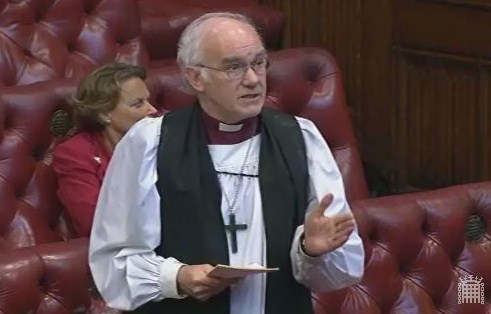
On 10th November 2014, the Bishop of Chester, the Rt Revd Peter Forster, took part in the Report Stage of the Government’s Infrastructure Bill. He asked the Minister a number of questions regarding the UK’s carbon reduction commitment, carbon capture by power stations, and the UK’s strategy for oil and gas extraction. The amendments that the Bishop spoke to were withdrawn following the brief debate.

14.03 Bishop of ChesterThe Lord Bishop of Chester: My Lords, can I ask the Minister when she responds to comment on two points? First, if we are now to be committed in this legally strengthened way to the maximum economic exploration of our oil and gas reserves, how do the Government see that to be compatible with the commitment under the Climate Change Act to reduce our emissions to only 20% of the 1990 level by 2050 without also having a strategy for carbon capture and storage, which I think lies behind the amendment?

Secondly, the amendment refers to the economic extraction of our hydrocarbons—I have never yet heard any reliable estimate of what the additional cost will be of having carbon capture and storage on a typical power station, be it a coal station or a gas station. What level of increase per kilowatt hour—in a unit that can be easily understood—is anticipated if carbon capture and storage is required on such stations? That impacts on what is economically recoverable. Continue reading “Bishop of Chester presses Government on carbon capture during Infrastructure Bill debate”

Bishop of Bristol takes part in debate on Assisted Dying Bill

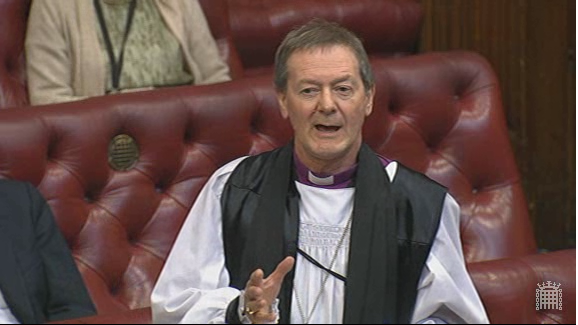
On 7th November 2014, the House of Lords held the Committee Stage of Lord Falconer of Thoroton’s Assisted Dying Bill. The Bishop of Bristol, the Rt Revd Mike Hill, spoke to two amendments that he sponsored and co-sponsored. The amendments sought to strengthen the decision-making process surrounding the application and ingestion of the drugs that would be used to enable someone to commit suicide. Following a short debate on the amendments, Lord Falconer agreed to bring back amendments at Report Stage dealing with the period of time between application and ingestion. However, he did not agree to make further changes to his Bill, as he claimed that the Bishop’s concerns were dealt with elsewhere in the Bill.The Bishop did not press his amendments to a vote.

14.03 Bishop of BristolThe Lord Bishop of Bristol: My Lords, I may not be the only one who is a bit confused about what is happening. I stand to speak in support of Amendment 12 tabled by my noble friend Lord McColl, but I would like to address noble Lords’ attention to Amendment 77, which stands in my name. I rather hoped it might have been grouped with Amendment 85, but they stand separately grouped now. I would like to reserve the right to come back to Amendment 85 at a later occasion and I hope a later occasion will occur for that to happen.

Amendment 77 deals with something slightly different. Quite rightly, most of our debate today has focused on the decision to apply for assisted suicide and to sign the declaration. However, it is fair to say that the request for assistance with suicide involves two different and discrete decisions: first, there is the decision to apply for it, and then there is the decision to ingest fatal drugs. The Bill makes it clear that there has to be a minimum of 14 days between the application and the actual ingestion of the drugs, except in the case of somebody who is given a prognosis of a month or less and then the time lag reduces to six days. Continue reading “Bishop of Bristol takes part in debate on Assisted Dying Bill”

Bishop of St Albans calls on Government to uphold its commitment to zero-carbon homes

On 5th November 2014, the Bishop of St Albans tabled an amendment to the Infrastructure Bill, during its Report Stage, which sought to hold the Government to its commitment to a zero-carbon homes strategy as originally envisaged, including removing exemptions for small construction companies and allowing construction companies to buy themselves out of their obligation to build zero-carbon homes. Following the debate on the amendment, assurances were given tat consultation on the commitment were ongoing, and the Bishop did not press it to a division of the House.

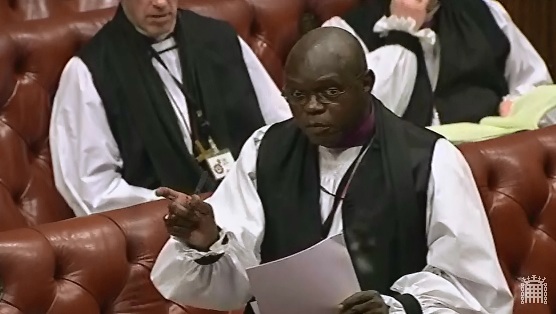
Bishop of St AlbansThe Lord Bishop of St Albans: My Lords, in speaking to Amendment 108A, I should like to thank the noble Lord, Lord Berkeley, for co-sponsoring it. I bring forward this amendment out of concern that the standard proposed in the Bill is significantly lower than that already agreed through cross-industry consensus. I fear that an excessive focus on off-site carbon savings will undermine the effectiveness of the proposals and that an exemption for small sites will create confusion by causing the emergence of a two-tiered regulatory system. It is essential that housebuilders meets the carbon compliance standards that have already been agreed through cross-industry consensus. This was endorsed by the Government back in 2011 and strongly supported by around 70% of those responding to their consultation. I am therefore troubled by the proposal of a new on-site energy performance standard for zero-carbon homes that is lower than the one already agreed. It is not clear why this reduction is necessary. The proposed exemptions from the standard for homes built on small sites and for starter homes would also serve to undermine the main purpose behind the zero-carbon standard: namely, that of prioritising carbon reduction. It is to address the lack of measures necessary to realise the Government’s stated commitment to carbon neutrality that I have tabled this amendment which requires the previously agreed carbon compliance standard to be met on-site before allowable solutions can be undertaken. It also requires all homes to meet that standard, ensuring that no exemptions are allowed. Continue reading “Bishop of St Albans calls on Government to uphold its commitment to zero-carbon homes”

Infrastructure Bill – Division

On 15th November 2014, three bishops voted on an amendment to the Infrastructure Bill, during its Report Stage. The amendment, tabled by Labour peer Lord Adonis, sought to create a National Infrastructure Commission, based on recommendations made by Sir John Armitt in his independent review into national infrastructure for the Labour Party.

House of Lords Division Lobby


The Bishop of Norwich, the Rt Revd Graham James, the Bishop of Portsmouth, the Rt Revd Christopher Foster, and the Bishop of St Albans, the Rt Revd Alan Smith, voted ‘content’ with the amendment. No bishop voted ‘not content’.

There were Contents: 195 | Not Contents: 235 | Result: Government Win.

(via Parliament.uk)

Bishop of St Albans co-sponsors amendment to protect Public Forest Estate

On 5th November 2014, the Bishop of St Albans took part in a debate on an amendment to the Infrastructure Bill, which he co-sponsored with Baroness Royall of Blaisdon. The amendment sought to guarantee the protection of the Public Forest Estate, following the recommendations made by the Independent Panel on Forestry, which was chaired by the former Bishop of Liverpool, the Rt Revd James Jones. Following the debate on the amendment, the Government agreed to bring forward amendments to the Bill at Third Reading.

Bishop of St AlbansThe Lord Bishop of St Albans: My Lords, I am glad to speak in support of this amendment proposed by the noble Baroness, Lady Royall. I am also glad to pay tribute to her persistence on this matter which I, too, believe is crucial. When the discussions about the future of the forestry estate have come before the public they have made their views absolutely clear that trees, woods and forests are a vital part of the make-up of the English countryside. Although they now cover only 9% of the land area of England, trees have an iconic place in our relationship with the landscape. Whether living in towns, cities, villages or hamlets, many people express affection and deep regard for the well-being of trees in the locality. Protecting the Public Forest Estate will bring many benefits to the public and the environment. I will mention three of them briefly. Continue reading “Bishop of St Albans co-sponsors amendment to protect Public Forest Estate”

Bishop of Truro leads call for stronger regulation on telephone sales of high-cost short-term credit

On 5th November 2014, the Bishop of Truro, the Rt Revd Tim Thornton, sponsored an amendment to the Consumer Rights Bill, during its Committee Stage. The amendment sought to place a duty on the Secretary of State for Business, Innovation and Skills to make regulations to prevent the sale of high-cost short-term credit through unsolicited marketing calls. Following assurances from the Minister, the Bishop withdrew his amendment.

Bishop of Truro 20.6.13The Lord Bishop of Truro: My Lords, Amendment 105C is in my name and those of the noble Lord, Lord Mitchell, and the noble Baroness, Lady Bakewell. I declare an interest: I am chair of the trustees of the Children’s Society, which has co-ordinated this amendment as part of its campaign—of which I am very proud—on the impact of debt on children and families. We produced a report entitled The Debt Trap earlier this year.

In September this year, the Children’s Society launched another report, entitled Playday not Payday, which looked at the effects of the advertising of payday loans on children, and in particular at the telemarketing of payday loans. The report identified a gap in the regulations which allows payday loan companies to use unsolicited marketing calls to offer people payday loans through phone calls and texts. For mortgage products, this type of unsolicited marketing is completely banned by the Mortgage Conduct of Business rules. The Financial Conduct Authority, which regulates payday lenders, said: Continue reading “Bishop of Truro leads call for stronger regulation on telephone sales of high-cost short-term credit”

Bishop of Truro supports child protection amendments to Consumer Rights Bill

On 5th November 2014, the Bishop of Truro, the Rt Revd Tim Thornton, spoke during the Committee Stage of the Consumer Rights Bill, in support of Baroness Howe of Idilcote’s amendment which would require internet service providers and mobile phone operators to provide default adult content filtering. Following the debate, Baroness Howe withdrew her amendment, but suggested that she would re-table it at Report Stage.

Bishop of Truro 20.6.13The Lord Bishop of Truro: My Lords, I support the amendment and am grateful to the noble Baroness for providing a comprehensive and excellent introduction to it. I do not want to repeat the important points that have already been made; I simply want to underline one particularly important point.

These days, we all have a responsibility to take child protection and safeguarding very seriously. Your Lordships may or may not be aware that you cannot be made a bishop in the Church of England unless you have had statutory safeguarding training. The most reverend Primate the Archbishop of Canterbury has made that very clear in all that he has said and done, and that seems absolutely right and proper. Continue reading “Bishop of Truro supports child protection amendments to Consumer Rights Bill”

Bishop of Norwich supports ban on pre-watershed payday loan advertising

“These loans are not being taken seriously by young people, serious though they are. We have allowed them to take over our televisions and radios, normalising them to the point where their use is seen as casual. Just this morning I was told the story of a young woman who took out a payday loan to pay for a Domino’s pizza. That could prove to be a very expensive pizza indeed.”- Bishop of Norwich, 3/11/14

On 3rd November 2014, the Bishop of Norwich, the Rt Revd Graham James, took part in the Committee Stage of the Government’s Consumer Rights Bill, speaking in favour of an amendment to regulate the advertising of payday loans to children. The Bishop highlighted the pervasiveness of pre-wateshed advertising of payday loans, and the fact that young parents were far more likely to take out a loan than older parents. He also called for greater investment in financial education.

The amendment, which was co-sponsored by the Bishop of Truro, was withdrawn at the end of the debate, with its supporters calling for the Government to take further action before the Bill returned for its Report Stage.

14.06.12 Bishop of NorwichThe Lord Bishop of Norwich: My Lords, I rise to support the noble Lord, Lord Alton, and to speak to Amendment 105B, in the name of my colleague the right reverend Prelate the Bishop of Truro, on the advertising of payday loans. He cannot be here today but has been working very closely with the Children’s Society on this issue. Amendment 105B seeks to make provisions to restrict the times at which payday loan advertisements are shown, most specifically in relation to the watershed.

It surprised me to discover that, according to Ofcom, no less than 80% of all payday loan advertisements are shown before the watershed. It is therefore no surprise—to pick up on some of the statistics that the noble Lord, Lord Alton, mentioned—that the Children’s Society found in its survey that over half of all children aged 10 to 17 reckon that they see payday loan advertisements either “often” or “all the time”. It is the sheer quantity of these advertisements that normalises payday loans for children and young people. The research shows that one-third of all teenagers think that the payday loan adverts themselves are tempting and exciting—they are very well designed. Those teenagers are much more likely than their counterparts to say that they would consider taking out a payday loan in the future. Continue reading “Bishop of Norwich supports ban on pre-watershed payday loan advertising”

BISHOP OF DURHAM CO-SPONSORS AMENDMENT TO SERIOUS CRIME BILL ON CHILD PROTECTION

14.06.10 Bishop of Durham 4The Bishop of Durham, the Rt Revd Paul Butler, contributed to the debate on amendment 43 to the serious crime bill, moved by Baroness Walmsley, which places legal obligations on people in positions of power to report allegations of abuse, making failure to do so a serious crime. The Bishop argued in favour of this amendment, highlighting cases over the years where failure to report allegations of abuse had often led to cases of widespread and prolific abuse in institutions of a highly serious nature. Baroness Walmsley the lead sponsor of the amendment decided when concluding her remarks at the end of the debate to withdraw amendment 43 following assurances given by the Government Minister, she said “I am delighted that there will be a public consultation’ … ‘I hope that they will make their voices heard.”

Read the full transcript of his speech here:

The Lord Bishop of Durham: My Lords, I once again support the amendment of the noble Baroness, Lady Walmsley. Indeed, since I last spoke in this place on this matter, the need for an obligation to be placed

on certain individuals to report knowledge or reasonable suspicions of abuse involving the most vulnerable has become more pressing. Continue reading “BISHOP OF DURHAM CO-SPONSORS AMENDMENT TO SERIOUS CRIME BILL ON CHILD PROTECTION”

BISHOP OF ROCHESTER CO-SPONSORS AMENDMENTS TO SERIOUS CRIME BILL ON FEMALE GENITAL MUTILATION

Bishop of RochesterThe Bishop of Rochester, the Rt Revd James Langstaff, co-sponsored amendments 44 and 44a to the Serious Crime Bill, which concerned Female Genital Mutilation. He also contributed to the debate on amendment 44, stressing that the seriousness of harm done to the individual by acts of FGM was too great for it to be allowed in the UK under the principle of tolerance for alternative cultural and religious practices. Baroness Smith of Basildon the lead sponsor of the amendments concluded the debate on amendments 44 and 44a. Following the Ministerial statement reacting to the debate on the amendments Baroness Smith decided ot to press the amendments to a vote on the basis of further discussion before Third Reading.

Read the full transcript here: Continue reading “BISHOP OF ROCHESTER CO-SPONSORS AMENDMENTS TO SERIOUS CRIME BILL ON FEMALE GENITAL MUTILATION”