On 9th February 2016 Baroness Janke asked Her Majesty’s Government “whether they will provide further information on their proposals for renewal or replacement of failed housing estates, following the announcement by the Prime Minister of £140 million funding; and whether any additional funding will be made available.” The Bishop of Rochester, Rt Revd James Langstaff, asked a follow up question:
 The Lord Bishop of Rochester: My Lords, I speak as one who lived on one of these estates for some 10 years in the 1980s and 1990s at a time when significant public money was invested in that estate. My memory, looking back with the benefit of hindsight, is that we probably gave relatively too much attention to physical investment and not enough to investment in other kinds of infrastructure. Will the Minister assure me that, while attention is given to the physical fabric, whether that is new or renewed, equal attention—maybe even over and above the £140 million, or another £140 million—will be given to such matters as educational, social and economic infrastructure?
Baroness Williams of Trafford: The right reverend Prelate makes a really good point about regeneration being about not just the physical structures that are in place but some of the social structures that are in place to support communities, and other amenities, as he said, such as schools, hospitals and GP surgeries, that so often are not thought about when we think about regeneration.
(via Parliament.uk)

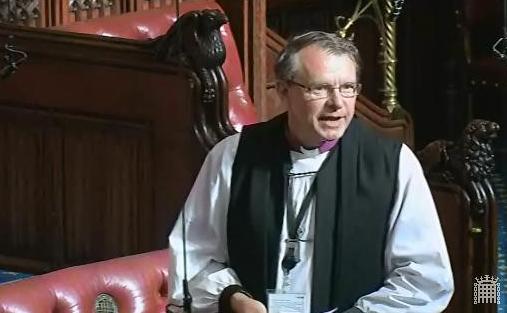 On 11th February 2016 the Bishop of Durham, Rt Revd Paul Butler, recieved a written answer to a question on Burundian refugees.
 On the 10th February 2016 Lord Storey asked the Government “whether they plan to legislate to ensure that food and drink provided in all types of schools follow Food Standards Agency food and nutritional guidelines”. The Bishop of Chester, the Rt Revd Peter Forster, asked a follow up question.
 The Lord Bishop of Chester: My Lords, although I agree with all that the Minister has said in response to the questions, is it not the case that engaging parents—making sure that what is taught in schools relates to and engages parents as much as possible—is also important to any government action which may be forthcoming in the future?
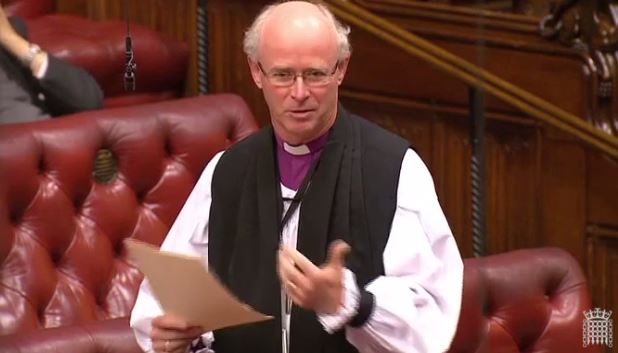
 The Lord Bishop of Rochester: My Lords, as one of the bishops from Kent, may I take the Minister back to his previous answer? In fact, some 1,300 unaccompanied refugee children are housed in Kent, and the local authorities and the voluntary agencies are under very significant pressure. May I push him a little as to whether, in the light of the somewhat unencouraging response from other local authorities, Her Majesty’s Government intend to do anything else to ensure a more effective national dispersal programme—given that we are talking not just about this moment, but about the likely 10 years that will be needed to get a young person from the point of arrival to full integration, with all the work in education, language and healthcare needed to go with that, and the considerable investment required? Some assurance would help my colleagues in Kent.

 Church of England: Community Relations: Written question –
  The Lord Bishop of St Albans: To ask Her Majesty’s Government what proportion of new houses built in each of the years from 2010 to 2015 were built on floodplains, and whether they expect that proportion to change in the next five years. [HL5515]
 The Church of England in Parliament
You must be logged in to post a comment.