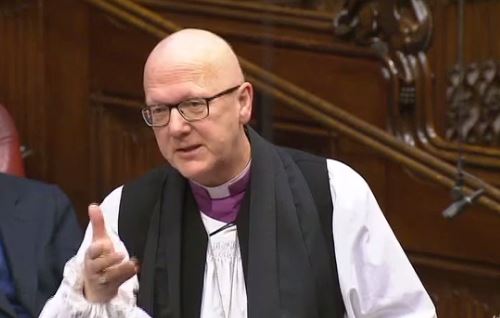
Bishop of Leeds asks Government to stress test all scenario outcomes for Gibraltar in leaving the EU

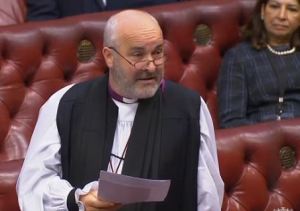
Leeds160620On 21st March 2017, Lord Boswell of Aynho asked Her Majesty’s Government what their response is to the Report from the European Union Committee Brexit: Gibraltar (13th Report, HL Paper 116). The Bishop of Leeds, the Rt Revd Nick Baines, spoke in the debate, asking whether the Government were stress testing the outcomes of leaving the European Union on Gibraltar.

The Lord Bishop of Leeds My Lords, I endorse all that has been said so eloquently. The report is excellent, but for me it raises a number of questions. The main one concerns the fact that throughout the referendum campaign, and subsequently, we have repeatedly heard statements such as, “We will get a good deal”, and, “We will do this and we will do that”, when in fact we do not hold the power in a lot of this—it will have to be negotiated. Despite urging that we get the best for Gibraltar, I want to be assured that the Government are stress-testing all the scenarios, including the worst-case ones. We owe it to the people of Gibraltar to do that because it was not done in preparation for the referendum itself. Continue reading “Bishop of Leeds asks Government to stress test all scenario outcomes for Gibraltar in leaving the EU”

Bishop of Leeds comments on the capability of the armed forces and the UK’s relationship with Russia

leeds-20117On 21st March 2017 the Government’s Armed Forces Act (Continuation) Order 2017 was laid before Parliament with a motion to approve. The Bishop of Leeds, the Rt Revd Nick Baines spoke in the debate, commenting on the UK’s relationship with Russia.

The Lord Bishop of Leeds My Lords, I hesitate to follow such eloquent speeches on so much detail, but I want to make one or two general points about a more specific area. I do so from an interest that began when I was a Soviet specialist at GCHQ in a previous incarnation, although I realise that that is probably not the right religious phrase to use.

It still seems to me that an SDSR should enable us to be flexible enough to cope with whatever changes are likely to come. My fear, which I have expressed in the House before, remains that in 15 to 20 years’ time we may end up with a force that meets the demands of now but perhaps not the demands of the situation 15 or 20 years down the line because the world changes so much. When I left GCHQ, the Soviet Union was intact, and we see what has changed since then. Therefore, I want to focus on Russia in particular. Continue reading “Bishop of Leeds comments on the capability of the armed forces and the UK’s relationship with Russia”

Bishop of Derby on role of the Commonwealth in development and modelling diversity

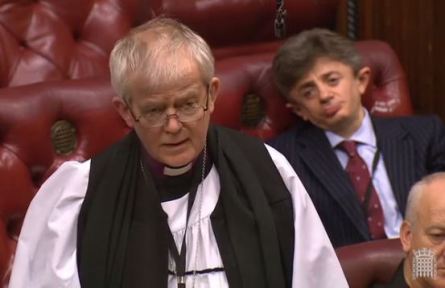
On 16th March 2017 the House of Lords debated a Government motion “To move that this House takes note of the United Kingdom’s relationship with the Commonwealth, ahead of the United Kingdom hosting the Heads of Government meeting in 2018.” The Bishop of Derby, Rt Revd Alastair Redfern, spoke in the debate:

The Lord Bishop of Derby: My Lords, I thank the noble Baroness, Lady Anelay for her introduction and her leadership in international development matters and, now, the Commonwealth. I want us to think of ​the Commonwealth as a global community which, like any community, will have very mixed ingredients, as we have already heard. Although it is important in our present moment to look at the potential for trade and its enriching, I want us to look at the wider context in which the meeting is happening and what the agenda for the Heads of Government might be to be fruitful. Continue reading “Bishop of Derby on role of the Commonwealth in development and modelling diversity”

Bishop of Chester welcomes Government policy reversal on National Insurance contributions

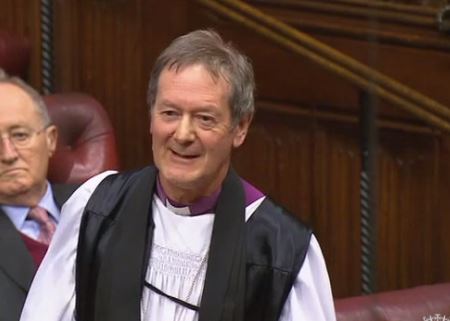
ChesterOn 15th March 2017, a statement by the Chancellor of the Exchequer on national insurance contributions was repeated in the House of Lords. The Bishop of Chester, the Rt Revd Peter Forster, responded to the statement.

The Lord Bishop of Chester: My Lords, I think I can paraphrase the remarks of the noble Lord, Lord Rooker, by saying:

“To improve is to change; to be perfect is to change often”,

as Churchill said. It is a strength that the Government can change their mind so openly and directly, and I wish that politicians would more often simply and openly accept that they have changed their mind in the light of the evidence. So, in that sense, I welcome this announcement. Continue reading “Bishop of Chester welcomes Government policy reversal on National Insurance contributions”

Bishop of Durham highlights the importance of chaplaincy and a whole person approach to end of life care

durham-230117On 14th March 2017, Baroness Finlay of Llandaff led a short debate on the question of ‘how the Government intends to ensure that Clinical Commissioners respect the undertakings made in Our Commitments to You for End of Life Care: The Government Response to the Review of Choice in End of Life Care’. The Bishop of Durham, the Rt Revd Paul Butler spoke in the debate, paying tribute to the importance of chaplaincy to end of life care.

The Lord Bishop of Durham My Lords:

“The medical side of a patient’s health is not always the key to treating them”.

So said a medical student recently, describing what he had learned from a leading end-of-life care specialist at St Benedict’s Hospice and Centre in Sunderland. Another medical student said:

“Palliative care is not just end-of-life care. It is a very holistic approach which supports the patients’ needs very well”. Continue reading “Bishop of Durham highlights the importance of chaplaincy and a whole person approach to end of life care”

Bishop of Chester speaks about national debt and expenditure pressures in Budget debate

Chester1On 14th March 2017, the Commercial Secretary to the Treasury, Baroness Neville-Rolfe, moved that this House takes note of the economy in the light of the Budget Statement. The Bishop of Chester, the Rt Revd Peter Forster, spoke in the debate, focusing on national debt and expenditure pressures.

The Lord Bishop of Chester My Lords, it is not only the last spring Budget, it is the last Budget in Lent. If we had any doubts, then the early speeches in this debate brought that Lenten theme home rather well.

I do not want to get into the details of the Budget, which are very political, but to talk about two broader, longer-term issues to which the Chancellor referred in his speech. The first, which has already been alluded to, is our national debt. Its rate of growth is forecast to slow in this decade, but that is stabilisation at a very high level, representing nearly £62,000 for every household in the country. Even at the current very low interest rates, servicing that debt costs £50 billion a year—more than the combined costs of defence and police services in this country. Continue reading “Bishop of Chester speaks about national debt and expenditure pressures in Budget debate”

EU (Notification of Withdrawal) Bill: Archbishop of York speaks to amendment on Parliamentary Scrutiny

On Monday 13th March, the House of Lords debated an amendment to the EU (Notification of Withdrawal) Bill, during ping pong. This amendment would have insisted on retaining the Lords’ original amendment to protect the status of EU nationals in the UK.  The Archbishop of York spoke against the amendment, which was later defeated during […]

On Monday 13th March, the House of Lords considered the EU (Notification of Withdrawal) Bill, which had been returned to it by the House of Commons during a parliamentary process known as ‘ping pong’. MPs had rejected an amendment passed by the Lords  to ensure Parliamentary scrutiny of any final EU negotiated deal.  The Liberal Democrats tabled a further amendment to disagree with the Commons in its decision. The Archbishop of York, the Rt Hon and Most Rev Dr John Sentamu, spoke in favour of agreeing with the Commons (so opposing the amendment, which was later defeated during a vote).

york-170117-b


The Archbishop of York: I shall not detain noble Lords long, but in response to the noble Lord, Lord Pannick, who always speaks with such clarity and grace, I must say that the problem with the amendment is with subsection (4). If the Prime Minister does not get an agreement, whatever she does she has to have the rule of Parliament. She will bring it to Parliament, but the problem is this, if I understand it right—that triggering Article 50 is an irreversible act. Continue reading “EU (Notification of Withdrawal) Bill: Archbishop of York speaks to amendment on Parliamentary Scrutiny”

EU (Notification of Withdrawal) Bill: Archbishop of York speaks to amendment on EU Nationals

york-170117On Monday 13th March, the House of Lords considered the EU (Notification of Withdrawal) Bill, which had been returned to it by the House of Commons during a parliamentary process known as ‘ping pong’. MPs had rejected an amendment passed by the Lords  to make protection of EU/EAA nationals a priority in the Brexit negotiation process.  The Liberal Democrats tabled a further amendment to disagree with the Commons in its decision. The Archbishop of York, the Rt Hon and Most Rev Dr John Sentamu, spoke in favour of agreeing with the Commons (so opposing the amendment, which was later defeated during a vote).


The Archbishop of York: My Lords, I have been listening to what people have said and do not want to repeat anything. However, some of us objected to the amendments not because we lacked sympathy, understanding or compassion. We did it simply because we thought there was a confusion of process with substance. Continue reading “EU (Notification of Withdrawal) Bill: Archbishop of York speaks to amendment on EU Nationals”

Bishop of Worcester speaks against legalisation of assisted suicide in UK

WorcesterOn Monday 6th March 2017, Baroness Jay of Paddington tabled a debate in the House of Lords, asking the Government “what assessment they have made of recent legislation on assisted dying in North America; and whether those laws provide an appropriate basis for legislation in England and Wales.” The Bishop of Worcester, the Rt Revd John Inge, spoke in the debate.

The Lord Bishop of Worcester: My Lords, I oppose assisted dying not on religious, but on human grounds. Surely the only place in North America where legislation has been in place long enough to draw any reasonable conclusions is Oregon. The claim of those pressing for assisted suicide here, that there have been no documented cases of abuse or coercion in the two decades since it was passed, is highly contentious. Continue reading “Bishop of Worcester speaks against legalisation of assisted suicide in UK”

Bishop of St Albans raises need for affordable housing in rural areas

On 2nd March 2017 the House of Lords debated a motion from Lord Hollick “That this House takes note of the Report from the Economic Affairs Committee, Building More Homes (1st Report, HL Paper 20).” The Bishop of St Albans, Rt Revd Alan Smith, spoke in the debate:

stalbans190117-bThe Lord Bishop of St Albans: My Lords, my thanks go to the noble Lord, Lord Hollick, for tabling this Motion and giving us the opportunity to discuss the Building More Homes report. I am grateful also for the contributions from a number of members of the Economic Affairs Committee, which have been both helpful and enlightening. Continue reading “Bishop of St Albans raises need for affordable housing in rural areas”