
On November 27th 2017 Lord Watson of Invergowrie led a debate in the House of Lords “To move that this House takes note of the case for a comprehensive strategy for life-long learning and adult re-skilling in response to the challenges of technology, productivity, and the changing nature of work.” The Bishop of Worcester, Rt Revd John Inge, spoke in the debate:
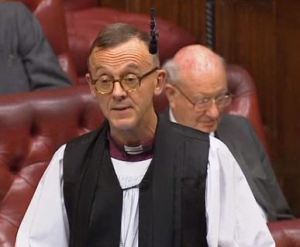 The Lord Bishop of Worcester: My Lords, I echo the thanks expressed to the noble Lord, Lord Watson, for securing this debate. It is clearly essential for the prosperity of our nation that lifelong learning is made a priority. Following cuts in the recent past, the Budget offered some welcome additional funding, including new funding for training in digital skills and construction, and the announcement of a retraining scheme for adults. The industrial strategy published today is a welcome step forward. Continue reading “Bishop of Worcester – lifelong learning should be as much about virtue and character as the acquisition of skills”
 The Lord Bishop of Coventry: My Lords, I join others in commending the noble Lord, Lord Soley, for securing this debate and for framing it in this way. He made it clear that UK defence forces exist not only for the protection and promotion of immediate British interests but to contribute to global peace, stability and security. The scale of that task has obvious implications for the size of the defence budget and its distribution.
 The Church has, down the centuries, provided a constant yet adaptable force in education. The Church of England recently produced a new vision for education, two pillars of which are dignity and hope. As the ultimate aim of our schools is to promote human flourishing, we are particularly concerned—particularly in our emphasis on supporting schools in areas of disadvantage—to enable every child to fulfil his or her aspirations, and indeed to be given the opportunity to have any aspirations in the first place.
 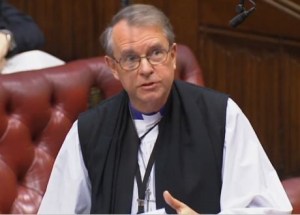 The Lord Bishop of Durham: My Lords, I, too, congratulate the noble Baroness, Lady Hollis, on securing this debate and on her introduction.
 The Lord Bishop of St Albans: My Lords, I am deeply concerned—as I know are many other Members of this Chamber—about rising levels of household debt in this country. Households in the UK are taking on far more debt than they used to and overall are taking on more debt than they bring home in income. While the ratio of household debt to income has not yet eclipsed the 160% peak hit in early 2008, it currently hovers around 140%, a dramatic shift from the ratio of 95% in 1997.
 The Lord Bishop of Gloucester: My Lords, like other noble Lords, I am very grateful to the Select Committee for this report, and I agree with so much that has been said already. So many young people today source their identities from social media and internet advertising, which has resulted in low self-esteem and poor mental health. Over the last 18 months or so, I have been spearheading a campaign called
 The Lord Bishop of Oxford: My Lords, I warmly welcome the report and I congratulate the noble Lord, Lord Farmer, and others involved. I find myself liking it more each time I read it. Its very modesty is its virtue, for a small number of strategic changes can make an immense difference. I speak from a background of nine years as a vicar in outer estate parishes in Halifax, in very poor communities, and seven years before my previous appointment as Bishop of Sheffield serving again some of the most impoverished regions in the country.
 The Church of England in Parliament
You must be logged in to post a comment.