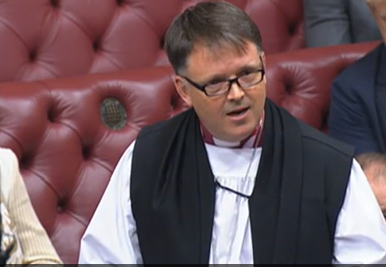
Bishop of London raises impact of COVID-19 pandemic and health inequalities on during debate on social cohesion

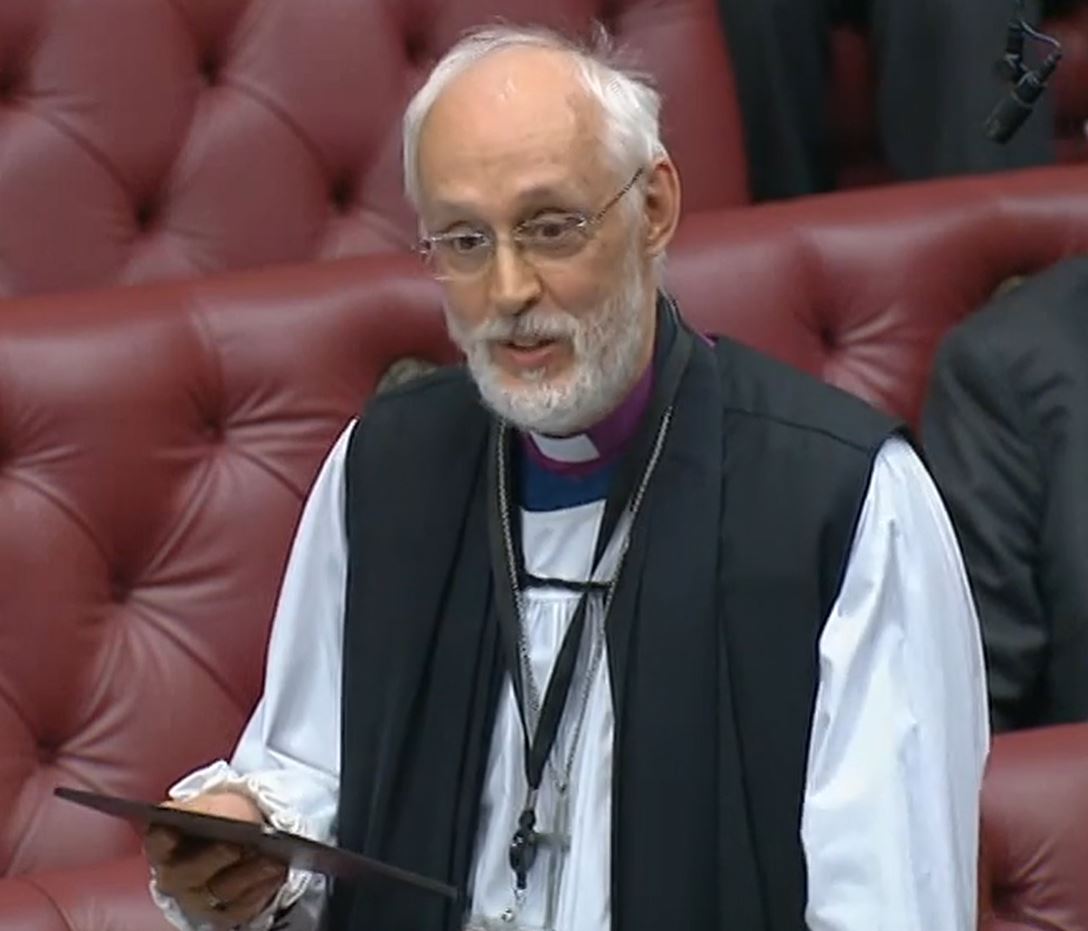
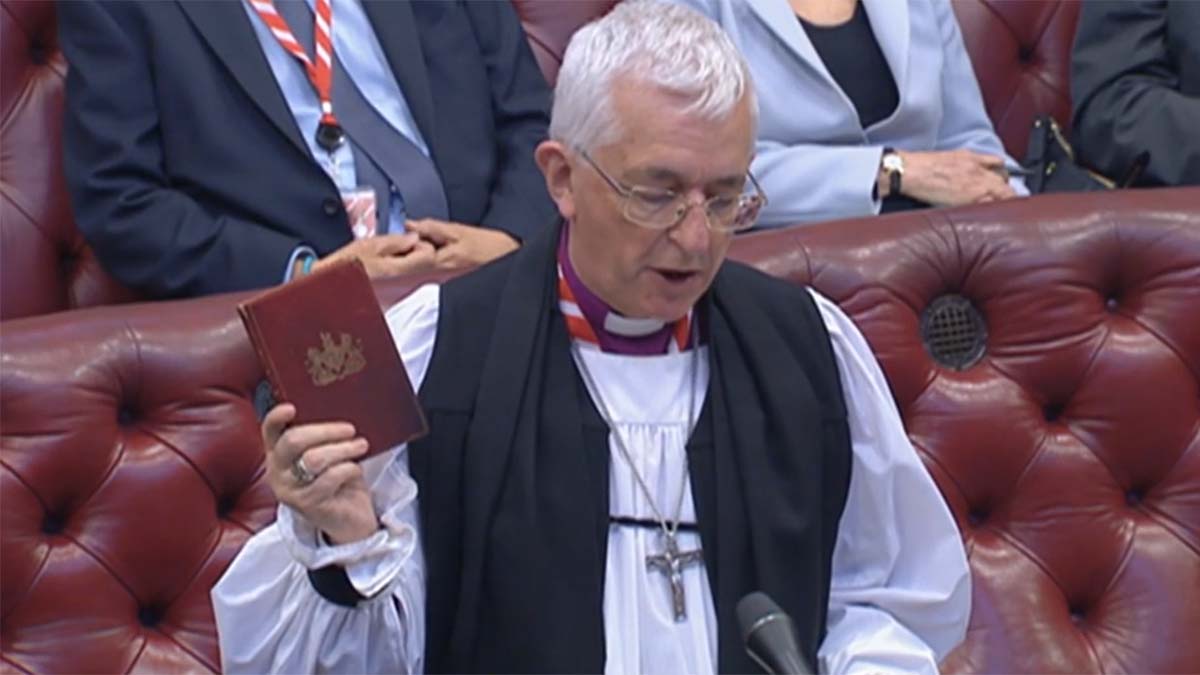
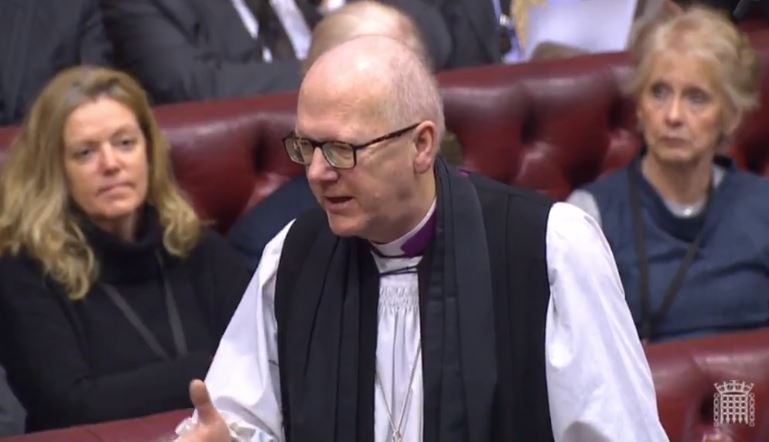
The Bishop of London spoke in the Archbishop of York’s debate on social cohesion on 6th December 2024, speaking on the impact of the COVID-19 pandemic and the effects of widespread health inequalities in the UK:

The Lord Bishop of London: My Lords, I declare my interests as set out in the register, particularly as a commissioner on the National Preparedness Commission. I am glad to be taking part in this debate today. It is a privilege to follow the noble Baroness, Lady Bottomley, and I look forward to the maiden speech of the noble Lord, Lord Sharma, who has much to offer this House. I have the privilege of being Bishop of London, and I can assure the noble Lord, Lord Lilley, that London is full of great diversity of political views. I extend an invitation to him to come and see where we wrestle with some of our Christian faith and politics.

The riots over the summer were a wake-up call to us all to prioritise community cohesion. There is much to be said about this, and I echo much of what my friend the most reverend Primate has already said. I am going to focus my remarks on two issues which are central to this topic but are particularly related to health, although they have a much wider application, and those two topics are trust and partnership.

First, on trust, as the most reverend Primate indicated, we have much to do to improve trust within the Church of England. Not least, we must ensure we have a greater survivor focus and introduce independent safeguarding and mandatory reporting. I join my friend the most reverend Primate in apologising for the shocking failures that the Makin report highlighted.

Continue reading “Bishop of London raises impact of COVID-19 pandemic and health inequalities on during debate on social cohesion”

Archbishop of York leads debate on social cohesion

The Archbishop of York led a debate on Social Cohesion and Community during Periods of Change on 6th December 2024:

The Lord Archbishop of York: That this House takes note of the importance of social cohesion and strong, supportive community life during periods of change and global uncertainty.

My Lords, on Monday 29 July this year, just before 11.50 am, police officers were called to a property in Southport, where children attending a dance school had been appallingly and ferociously attacked by a man with a knife. Three of the children—Elsie Dot Stancombe, Alice Dasilva Aguiar and Bebe King —died. Many others sustained terrible injuries, and a whole community and many families were devastated and traumatised.

Understandably, horror and anguish convulsed not just Southport but the whole country. Rumours quickly circulated on the internet that the man to blame for this attack was an asylum seeker who had arrived in the UK illegally and was on the MI6 watch-list. This was not true. As a reporter put it a few days later, once lit, the torch paper of disinformation burned quickly. Although this rumour was quickly debunked, in the days that followed, as we know, riots broke out all over our country.

Continue reading “Archbishop of York leads debate on social cohesion”

Bishop of London speaks in debate on new healthcare roles

The Bishop of London took part in a debate on the upcoming review of the Physician and Anaesthetist Associate Roles on 5th December 2024, highlighting the need for clarity and trust in the healthcare system:

The Lord Bishop of London: My Lords, it is good to participate in this important debate and I am grateful to the noble Baroness, Lady Bennett, for having secured it. I declare my entry in the register of interests, specifically that I was formerly the Government’s Chief Nursing Officer.

This is clearly a complex issue, and I join other noble Lords in welcoming the Government’s recently announced review of the physician associates and anaesthetist associates. In building an NHS fit for the future, it is right that the right people with the right training and the right competence undertake the right roles. Over the last 20 years, we have seen an expanding of roles to release medical staff to do what only they can do; for example, the development of nurse-led assessment, advanced nurse practitioners and nurse prescribing, and the expansion of the role of pharmacists. In some sense, the development of physician associates and anaesthetist associates is part of this change. However, any change in role and the healthcare workforce needs to be carefully implemented and regulated. Therefore, I welcome the regulation of physician associates and anaesthetist associates, but I too question whether their regulation should take into account the outcome of this review, rather than moving ahead at present.

The main points I will make are around clarity and trust. Noble Lords will often hear me speak in this place about the essential commodity of trust in healthcare and the health of the nation. Research carried out by Healthwatch found that the public awareness of physician associate roles is mixed, particularly among older people, who are less likely to know the difference between a PA and a GP. Clear information needs to be given to people about the healthcare worker they are seeing, and they need to be reassured that they are competent and working to clear standards.

Continue reading “Bishop of London speaks in debate on new healthcare roles”

Bishop of St Albans speaks in debate on housing, highlighting the needs of rural communities

On 5th December 2024, the Bishop of St Albans also spoke in a debate on housing, emphasising the effects of the housing crisis on rural areas:

The Lord Bishop of St Albans: My Lords, I too thank the noble Baroness, Lady Warwick of Undercliffe, for securing this important debate. I declare my interests as president of the Rural Coalition and vice-president of the LGA. I offer my thanks to the most reverend Primate the Archbishop of Canterbury for his valedictory speech. During his tenure, he has been a champion of housing, and we have already referred to the Coming Home report, which is pertinent both to today’s debate and to His Majesty’s Government, with their very good and ambitious targets to build more housing. I hope we can assist the Government in achieving that.

Homelessness and rough sleeping are on the rise. Government statutory homelessness figures, released last week, reveal that 159,380 children are now homeless and living in temporary accommodation, a 15% increase in a year and the highest figure since records began in 2004. More particularly, the November 2023 CPRE report on the state of rural housing showed that rural homelessness has increased by 20% since 2021 and 40% since 2018-19.

Continue reading “Bishop of St Albans speaks in debate on housing, highlighting the needs of rural communities”

Archbishop of Canterbury makes valedictory speech on the need for safe, stable, and affordable housing

On 5th December 2024, the Archbishop of Canterbury made his valedictory speech in the House of Lords during a debate on housing:

The Lord Archbishop of Canterbury: My Lords, it is often said and it is a cliché to say it—but hey, I am the Archbishop still—that if you want to make God laugh, make plans. On that basis, next year, I will be causing God more hilarity than anyone else for many years, because the plans for next year were very detailed and extensive. If you pity anyone, pity my poor diary secretary, who has seen weeks and months of work disappear in a puff of a resignation announcement.

The reality, which I wish to start with—then pay some thanks, and then talk about housing—is that there comes a time, if you are technically leading a particular institution or area of responsibility when the shame of what has gone wrong, whether one is personally responsible or not, must require a head to roll. There is only, in this case, one head that rolls well enough. I hope not literally: one of my predecessors in 1381, Simon of Sudbury, had his head cut off and the revolting peasants at the time then played football with it at the Tower of London. I do not know who won, but it certainly was not Simon of Sudbury.

The reality is that the safeguarding and care of children and vulnerable adults in the Church of England today is, thanks to tens of thousands of people across the Church, particularly in parishes, by parish safeguarding officers, a completely different picture from the past. However, when I look back at the last 50 or 60 years, not only through the eyes of the Makin report, however one takes one’s view of personal responsibility, it is clear that I had to stand down, and it is for that reason that I do so.

Next, I want to say thank you to so many people in the House. In these 12 years, I cannot think of a single moment when I have come in here and the hair on the back of my neck has not stood up at the privilege of being allowed to sit on these Benches. It has been an extraordinary period, and I have listened to so many debates of great wisdom, so many amendments to Bills that have improved them, so much hard work.

Continue reading “Archbishop of Canterbury makes valedictory speech on the need for safe, stable, and affordable housing”

Bishop of London speaks in debate on the importance of fracture liaison services

The Bishop of London spoke in a debate on fracture liaison services on 4th December 2024, highlighting the importance of the service for vulnerable communities and as an early intervention:

The Lord Bishop of London: My Lords, it is very good to participate in this important debate on the fracture liaison service, especially since the issue of prevention in healthcare seems to be gathering pace. I thank the noble Lord, Lord Black, for having moved this debate.

We have heard that the fracture liaison service identifies people at risk of osteoporosis and reduces the risk of long-term fractures. Treatment provided by the fracture liaison service is often excellent, and often nurse-led. But, as we have heard, there are just not enough of them. Like many aspects of healthcare that we discuss in your Lordships’ House, provision varies by region, and there are also other inequalities of access to these services. We know that bone density decline can be accelerated by other factors, including smoking, diet and other illness.

Continue reading “Bishop of London speaks in debate on the importance of fracture liaison services”

Bishop of Oxford supports ban on smartphones in schools

The Bishop of Oxford spoke in a debate on proposals to ban the use of smartphones in schools on 28th November 2024, raising examples of the impact of phone use in schools on behaviour, concentration and mental health:

The Lord Bishop of Oxford: My Lords, it is an honour to take part in this debate. I congratulate the noble Baroness, Lady Kidron, on her excellent introduction. I too look forward to the maiden speech of the noble Baroness, Lady Cass.

The diocese of Oxford, where I serve, has 285 church schools. We share in the education of over 60,000 children through these schools and the network of multi-academy trusts. There is a broad consensus on the importance of this issue and in favour of smartphone-free schools. However, there is not yet a final consensus on the next steps to be taken to bring this about. The consensus arises from our commitment to follow the Christian values of wisdom, respect, community and hope in all our schools.

Continue reading “Bishop of Oxford supports ban on smartphones in schools”

Bishop of Norwich highlights importance of rule of law for faith and society

The Bishop of Norwich spoke in a debate on the importance of the rule of law on 26th November 2024, highlighting the intersection of the rule of law with faith communities and the need to uphold human rights legislation, particularly with regards to immigration and asylum:

The Lord Bishop of Norwich: My Lords, I am grateful to the noble and learned Baroness, Lady Smith, for bringing this debate forward and congratulate her on her outstanding maiden speech. I also congratulate the noble Baroness, Lady Laing of Elderslie, on hers.

While I feel an utter novice in this area, especially following such informed speeches, I am acutely aware that your Lordships have a role in reviewing decisions of the General Synod of the Church of England and passing—or not—our Measures into law. As such, our ecclesiastical laws are also laws of the land. The Church of England values its participation in this process, and, by virtue of that, engaging with any debate on the rule of law that strengthens the ordering of a safe, healthy and flourishing society.

Continue reading “Bishop of Norwich highlights importance of rule of law for faith and society”

Mental Health Bill: Bishop of London raises issues of trust and accessibility for faith communities

The Bishop of London spoke at the second reading of the Mental Health Bill on 25th November 2024, raising the issues of trust and accessible care across different communities and faith traditions, and the need for investment in the mental health workforce:

My Lords, I am grateful to be able to participate in Second Reading of this important Bill. It is a privilege to follow the noble Baronesses, Lady Barker and Lady Watkins, who have a real breadth of experience in this field. I too welcome, along with many noble Lords, the reform of the Mental Health Act, which is long overdue.

The noble Earl, Lord Howe, highlighted the over-representation of minoritised communities detained under the Act but also placed on community treatment orders. Some groups are also more likely to be detained through contact with the criminal justice system or emergency departments. It is important to remember that we are speaking about these inequalities in the wider context of health inequalities; some groups present to health services far later, when their symptoms have worsened. The Royal College of Nursing notes in its briefing that mental health services are

“not seen as accessible to all communities”,

and that:

“Many black men have a first interaction with a service via the police during a crisis”.

Continue reading “Mental Health Bill: Bishop of London raises issues of trust and accessibility for faith communities”

Bishop of St Albans speaks in support of farming families and communities

The Bishop of St Albans spoke in a debate on the continuity of farming families on 21st November 2024, highlighting the levels of stress among farmers and the need to reconcile raising revenue with supporting farming communities:

The Lord Bishop of St Albans: My Lords, I too congratulate the noble Baroness, Lady Northover, on securing this debate. I declare my interests as president of the Rural Coalition and a vice-president of the LGA. I am a farmer’s son, and one of the great privileges of my job serving in a diocese that covers Bedfordshire and Hertfordshire is going into some of the most wonderful, forward-looking and innovative farms in this country, which are at the forefront of farming across Europe.

Even though there are many successful, go-ahead farmers, there is nevertheless a huge level of mental stress among them. That has been true for many years. Sadly, there is an extraordinarily high number of suicides among the farming community. As one elderly farmer put it, “Many of us are feeling so depressed because these announcements suggest that we are not wanted and are worth more dead than alive”. He pointed out that if he manages to die before April 2026, his assets will be passed on; if he does not, the farm will probably not survive.

Continue reading “Bishop of St Albans speaks in support of farming families and communities”