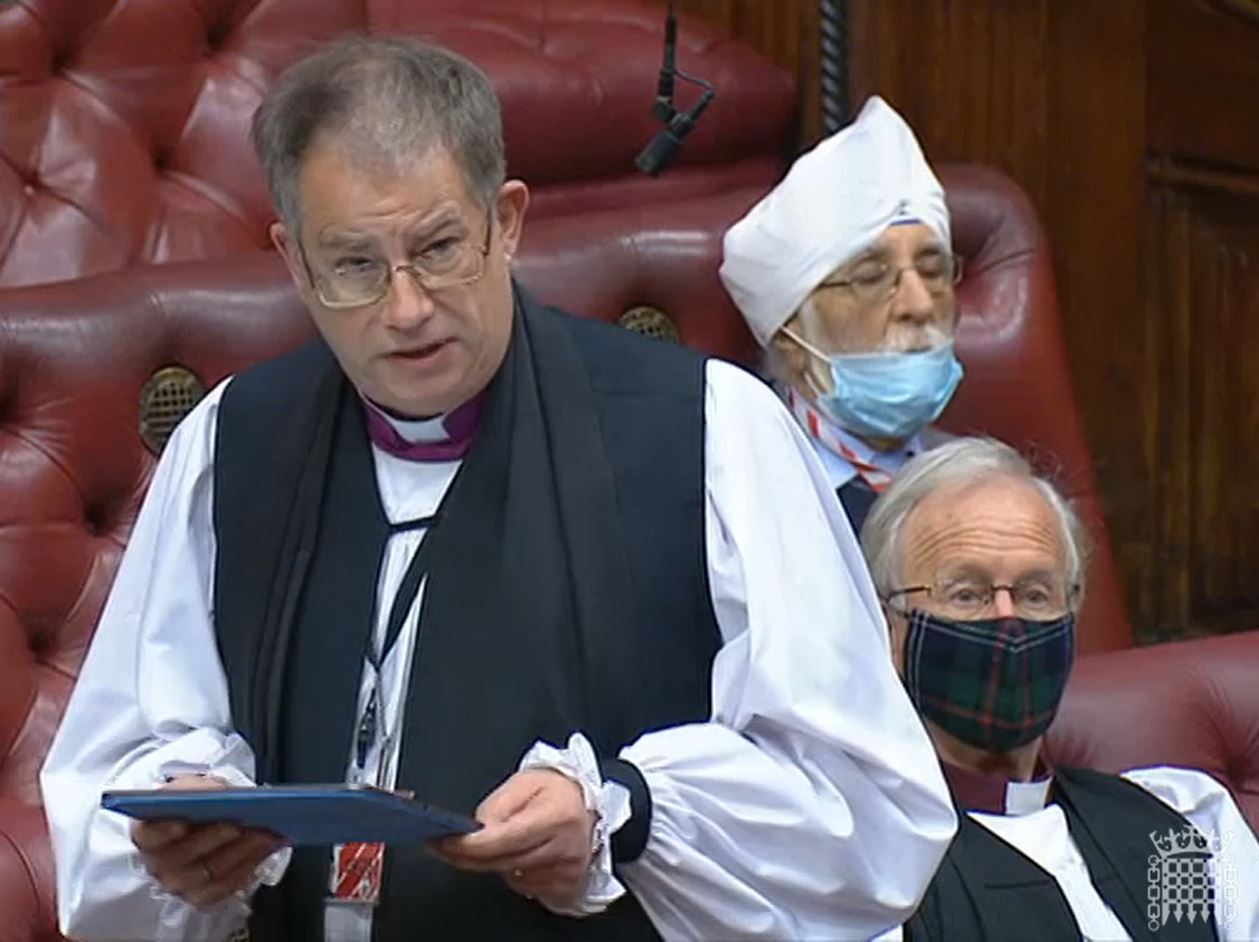
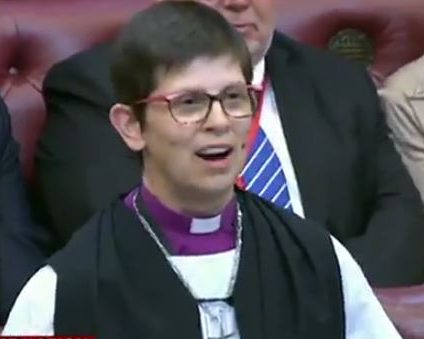
Bishop of Manchester speaks in a debate on immigration and nationality

On 6th July 2022, the House of Lords discussed charges associated with processing citizenship cases involving children. The Bishop of Manchester spoke in the debate:

The Lord Bishop of Manchester: My Lords, I thank the noble Baroness for giving us the opportunity to hold this short debate. The matters she raises are serious and require urgent address.

Greater Manchester—the Minister knows and loves it as much as I do—is a very diverse city region. Many of those who contribute to its flourishing and growth are families whose origins lie elsewhere. The children of those families enrich the life of our schools, including the 190-plus Church schools that educate over 60,000 children every day, often in the poorest communities. While these children rejoice in the distinctive heritage of their ancestral culture, and offer its riches to us, they are being brought up to be as British as I am. They know no other home. They are not immigrants—as the noble Baroness has said, we must not confuse the asserting of citizenship with immigration—they are British. They simply need to clarify that legally.

Ideally, I would not put a price on citizenship; it is far too precious. However, if a charge has to be made, it seems invidious to pitch it at a level where over half of the revenue is pure profit. Indeed, the profit levels might set the mouths watering of some of those who notoriously have milked our public coffers through the charges they have exacted for substandard PPE equipment—but perhaps that is for another day.

Continue reading “Bishop of Manchester speaks in a debate on immigration and nationality”

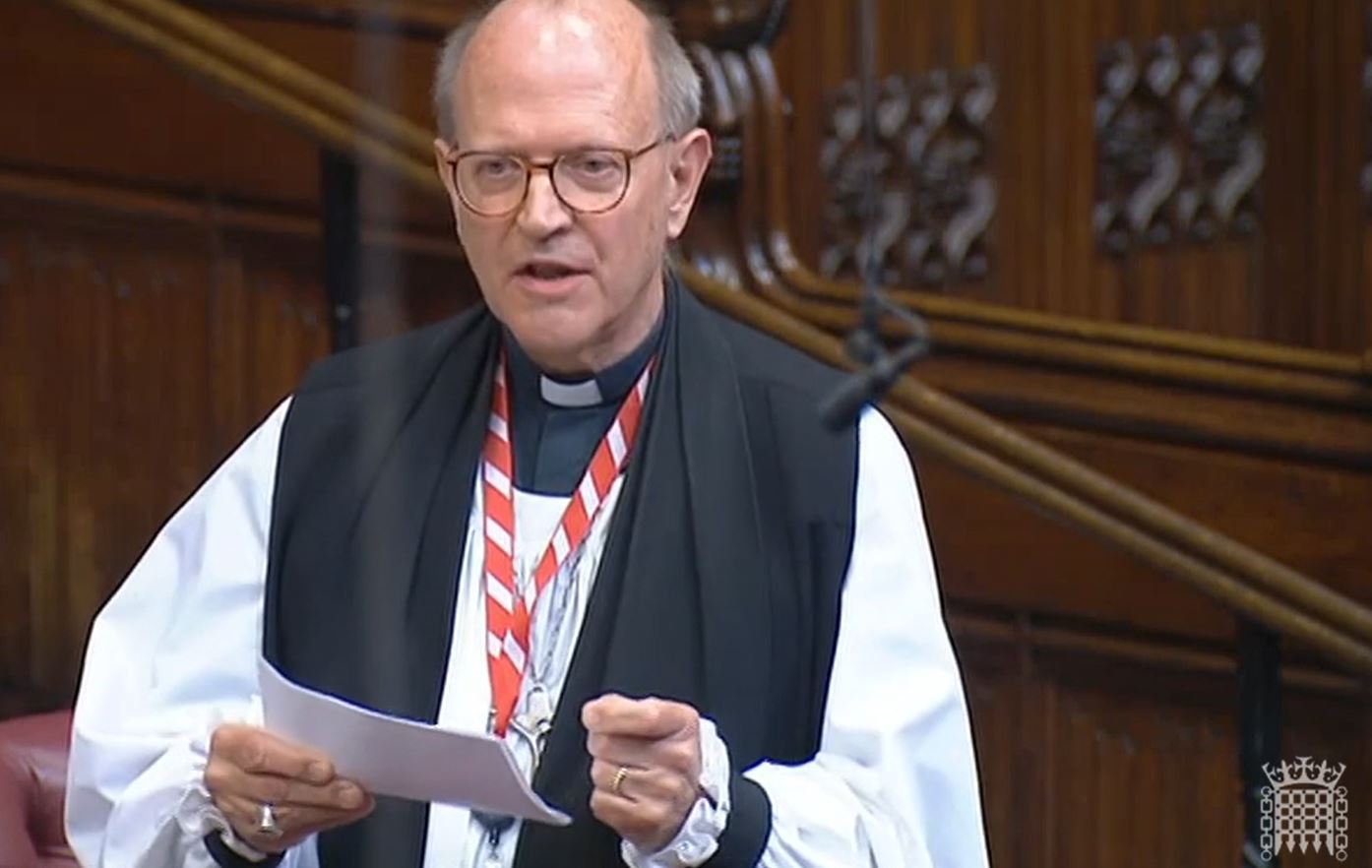
Bishop of Southwark and Bishop of Guildford speak in a debate on the Commonwealth

The Bishop of Southwark and the Bishop of Guildford spoke in a debate on the 2022 Commonwealth Heads of Government Meeting and the future of the Commonwealth on 30th June 2022:

The Lord Bishop of Southwark: My Lords, I too am grateful to the noble Lord, Lord Howell of Guildford, for securing this timely debate. There is a tension throughout the history of the Commonwealth in its structure between cohesion and comprehension; between the fullest capacity to relate, and demands of function and utility. When the Imperial Conference of 1926 adopted the London declaration that the United Kingdom and dominions were

The Lord Bishop of Southwark

“autonomous Communities within the British Empire, equal in status, in no way subordinate one to another in any aspect of their domestic or external affairs”—

comments which I think still resonate in terms of the last speech—the competing argument of imperial federation was in terminal retreat.

Continue reading “Bishop of Southwark and Bishop of Guildford speak in a debate on the Commonwealth”

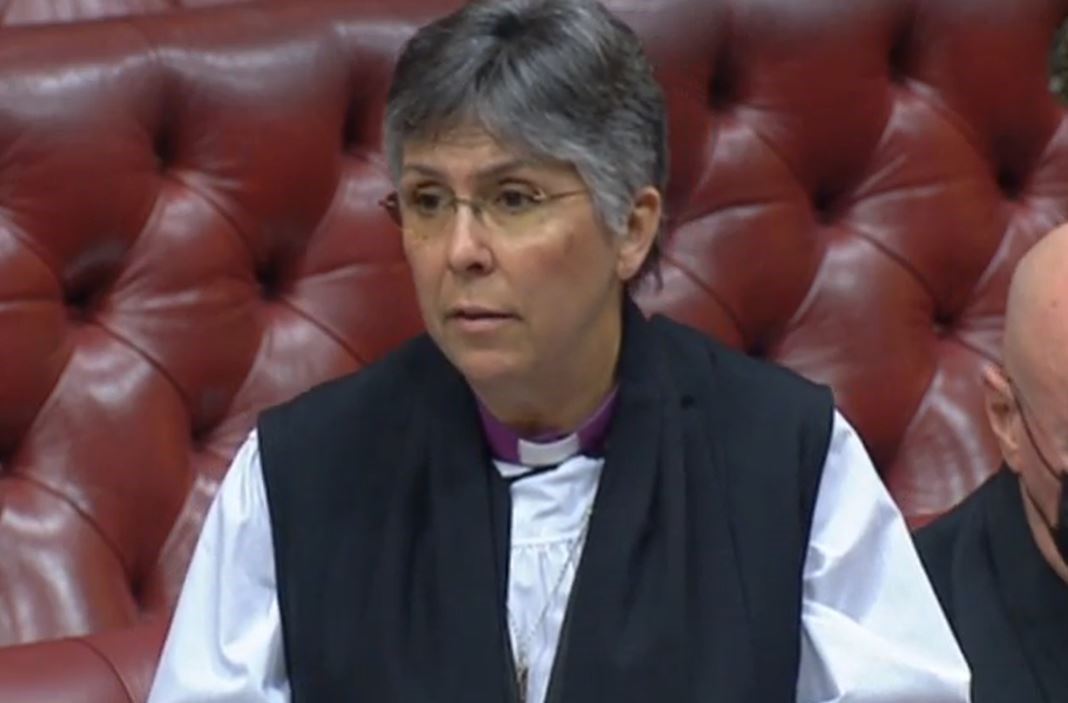
Bishop of Gloucester speaks in a debate on crime and rehabilitation

The Bishop of Gloucester spoke in a debate on crime, reoffending and rehabilitation on 30th June 2022:

The Lord Bishop of Gloucester: My Lords, I am very grateful to the noble Lord, Lord Farmer, for introducing this debate. His work is inspiring; I want to say “yes” to all that he has said and am sorry that I have only six minutes. I too welcome the noble and learned Lord, Lord Bellamy, and look forward to his maiden speech. I refer to my interests stated in the register as Anglican Bishop to Prisons and president of the Nelson Trust. Last week, I visited HMP Wakefield. In reflecting with the governor on long sentences, he said that he had asked a group of prisoners whether, if they had known the tariff for their crime, it would have been a deterrent. For all but one, the answer was no. Most crimes are rarely planned in a calculated way.

Earlier this month, the Independent Commission into the Experience of Victims and Long-Term Prisoners published a report with a comprehensive set of recommendations, holding together for the first time the perspectives of the offender and the victim. The report highlighted that the number of people in England and Wales given a prison sentence of more than 10 years has more than doubled in a decade, at an ever greater cost. Where is the evidence that greater severity equates to greater deterrence, or a safer society? We need to curb the unhelpful and inaccurate rhetoric about keeping the public safer through longer, tougher sentencing. What matters more than longer and longer sentences is how people are spending their time while in prison, in terms of not only education and purposeful work but meaningful interventions which prevent reoffending and someone else becoming another victim. Holding together justice and restoration is central to Christian theology; I believe it is vital for us to rediscover how those two dwell side by side.

Continue reading “Bishop of Gloucester speaks in a debate on crime and rehabilitation”

Bishop of Coventry on Freedom of Speech in Universities

On 28th June 2022 the House of Lords debated the Government’s Higher Education (Freedom of Speech) Bill, at its Second Reading. The Bishop of Coventry spoke in the debate:

The Lord Bishop of Coventry: My Lords, intense competition for students, jostling for promotion among lecturers, vigorous, often intense and sometimes rancorous debate, with dashes of sharp practice and occasional mob violence—not a preview of some future Office for Students report but a snapshot of the early academic career of Augustine of Hippo. One of his first publications was advice to lecturers and, significantly for this debate, he later asserted that “By force we can make no one believe.” I will make some general points about the Bill and then raise three more specific issues.

Timothy Garton Ash speaks of three “vetoes” that silence the ability of people to express themselves: shouting them down, the “heckler’s veto”; declaring what they say to be offensive, the “offensive veto”; and, in extreme cases, threatening to kill people, the “assassin’s veto”.

Sadly, it seems that we have seen each of these techniques in action within higher education, as some of the evidence submitted to the Bill Committee demonstrated.

Continue reading “Bishop of Coventry on Freedom of Speech in Universities”

Bishop of Guildford asks about freedom of religion in the Commonwealth

The Bishop of Guildford asked the following question on 28th June 2022, during a debate on the Commonwealth:

The Lord Bishop of Guildford: My Lords, as the Minister knows extremely well, this week marks a brief lull between the Commonwealth Heads of Government Meeting in Rwanda last week and the International Ministerial Conference on Freedom of Religion or Belief in London next week. Given the overlap between those two conferences, what progress has been made on this basic human right, not least given that three of the Commonwealth nations—India, Pakistan and Nigeria—are among the worst when it comes to protecting the rights, and even the lives, of Christians and those of other faiths and beliefs?

Continue reading “Bishop of Guildford asks about freedom of religion in the Commonwealth”

Bishop of Chelmsford welcomes Social Housing (Regulation) Bill and urges Government to go further

On 27th June 2022 the Bishop of Chelmsford spoke during the Second Reading debate of the Social Housing (Regulation) Bill:

The Lord Bishop of Chelmsford: My Lords, I also begin by congratulating the noble Viscount, Lord Camrose, on his excellent maiden speech. Clearly, he has a whole set of skills and experiences that will ensure that his contributions in this House will be highly valuable, as was apparent in his incisive and to the point speech, much of which I agree with and endorse.

Before I go any further, I declare my specific interest as the Church of England’s lead bishop for housing. Noble Lords will know that the Archbishops’ Commission on Housing, Church and Community has been actively working to envision how the Church, government and the nation might tackle the current housing crisis. Last year, the commission released its Coming Home report, which sets out in detail a reimagining of housing policy and practice centred on five core values, which are that housing should be “sustainable, safe, stable, sociable and satisfying.”

Continue reading “Bishop of Chelmsford welcomes Social Housing (Regulation) Bill and urges Government to go further”

Bishop of Blackburn makes his valedictory speech in debate on the Union of the United Kingdom

The Bishop of Blackburn, Rt Revd Julian Henderson, made his final speech to the House of Lords during a debate on the Union of the United Kingdom, on 23d June 2022:

The Lord Bishop of Blackburn: My Lords, I am grateful to the noble Lord, Lord Lisvane, for this opportunity to make a brief contribution to this debate on our union, although I have learned a new meaning of the word “brief” while I have been in your Lordships’ House: it does not always mean “short”. I am sorry if I disappoint the hopes of the noble Lord, Lord Strathclyde, about my valedictory speech.

My time in your Lordships’ House has been limited—just over two years—partly because it has been right for my female colleagues to take precedence in joining your Lordships’ House and partly because it has been constrained by the pandemic. There has been a lot to learn as well as to admire in a place of such expertise and wisdom, but I regret that I have not been able to become more involved in the serious business of your Lordships’ House.

Continue reading “Bishop of Blackburn makes his valedictory speech in debate on the Union of the United Kingdom”

Bishop of Blackburn on standards of behaviour and integrity in political life

On 23rd June 2022 the House of Lords debated a motion from Lord Morse, “That this House takes note of the impact on the democratic process of any reduction in the standards of behaviour and honesty in political life.”

The Lord Bishop of Blackburn: My Lords, I am grateful to the noble Lord, Lord Morse, for this debate because it gives us the opportunity to speak here about what the country is talking about: a general concern about behaviour and honesty in political life, and I trust, therefore, about the institution of Parliament and democracy. It raises the key question: are there standards and values that govern and guide our way of life and our dealing with one another? If so, what are they are where do they come from? Or is there a vacuum in which everyone decides what is right in their own eyes? I would argue that, without a moral framework, we are bound and dictated to by those who shout the loudest and make their voices heard. That is a dangerous path to go down.

Continue reading “Bishop of Blackburn on standards of behaviour and integrity in political life”

Bishop of Blackburn speaks on amendments to the Schools Bill

On 22nd June 2022, the House of Lords debated amendments to the Schools Bill (HL) in committee. The Bishop of Blackburn spoke in the debate:

The Lord Bishop of Blackburn: My Lords, I will speak briefly to the amendments in this group, of which Amendments 115, 117 and 119 were originally tabled by my right reverend friend the Bishop of St Albans, who is unable to be present in the Chamber today.

As he is absent, I will focus on the amendments tabled by the noble Baroness, Lady Garden, and the noble Lord, Lord Lucas, which also extend the relevant period in which a parent must comply with registration and provide information, as requested from a local authority, from 15 days to 28 days, 30 days or 30 school days respectively. I know my right reverend friend the Bishop of St Albans would have been happy to support these amendments, as do I, given their shared principle that giving parents sufficient breathing space to comply is helpful.

Continue reading “Bishop of Blackburn speaks on amendments to the Schools Bill”

Bishop of St Albans speaks in a debate on the Schools Bill (HL)

On 20th June 2022, the House of Lords debated amendments to the Schools Bill in committee. The Bishop of St Albans spoke in the debate:

The Lord Bishop of St Albans: My Lords, I rise to speak to six amendments standing in my name. Amendment 101 removes from the register any requirement to record the means by which a child is being educated—something that ought to be discretionary on the parents. It replaces it with a less intrusive requirement to record only those details that demonstrate that the child is receiving a suitable education in accordance with the existing duty on parents to secure compulsory education for their child or children.

Amendment 105 curbs the local authorities’ proposed power to contain within the register

“any other information that may be prescribed”—

it is very broad and open to abuse—solely to instances where the safeguarding of the child is a concern. Surely that is the point.

Continue reading “Bishop of St Albans speaks in a debate on the Schools Bill (HL)”