Bishop of Gloucester asks about compassionate release of prisoners

The Bishop of Gloucester received the following written answer on 25th March 2026:

The Lord Bishop of Gloucester asked His Majesty’s Government:

  • how many prisoners (1) applied for, and (2) were granted, early release on compassionate grounds in each of the past five years.
  • whether a three-month prognosis is required for a prisoner to be considered for early release on compassionate grounds.
Continue reading “Bishop of Gloucester asks about compassionate release of prisoners”

Bishop of Gloucester asks about prisoners in hospice care

The Bishop of Gloucester received the following written answer on 19th March 2026:

The Lord Bishop of Gloucester asked His Majesty’s Government how many prisoners were moved into a hospice in each of the past five years.

Continue reading “Bishop of Gloucester asks about prisoners in hospice care”

Bishop of Gloucester asks about regional disparities in the imprisonment of women

The Bishop of Gloucester received the following written answer on 12th March 2026:

The Lord Bishop of Gloucester asked His Majesty’s Government, in regard to the women’s local data resources published by the Prison Reform Trust, what steps they are taking to address the regional disparities in the use of imprisonment for women.

Continue reading “Bishop of Gloucester asks about regional disparities in the imprisonment of women”

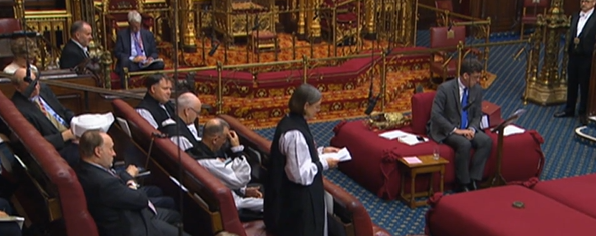
Bishop of Gloucester speaks in debate on prison conditions

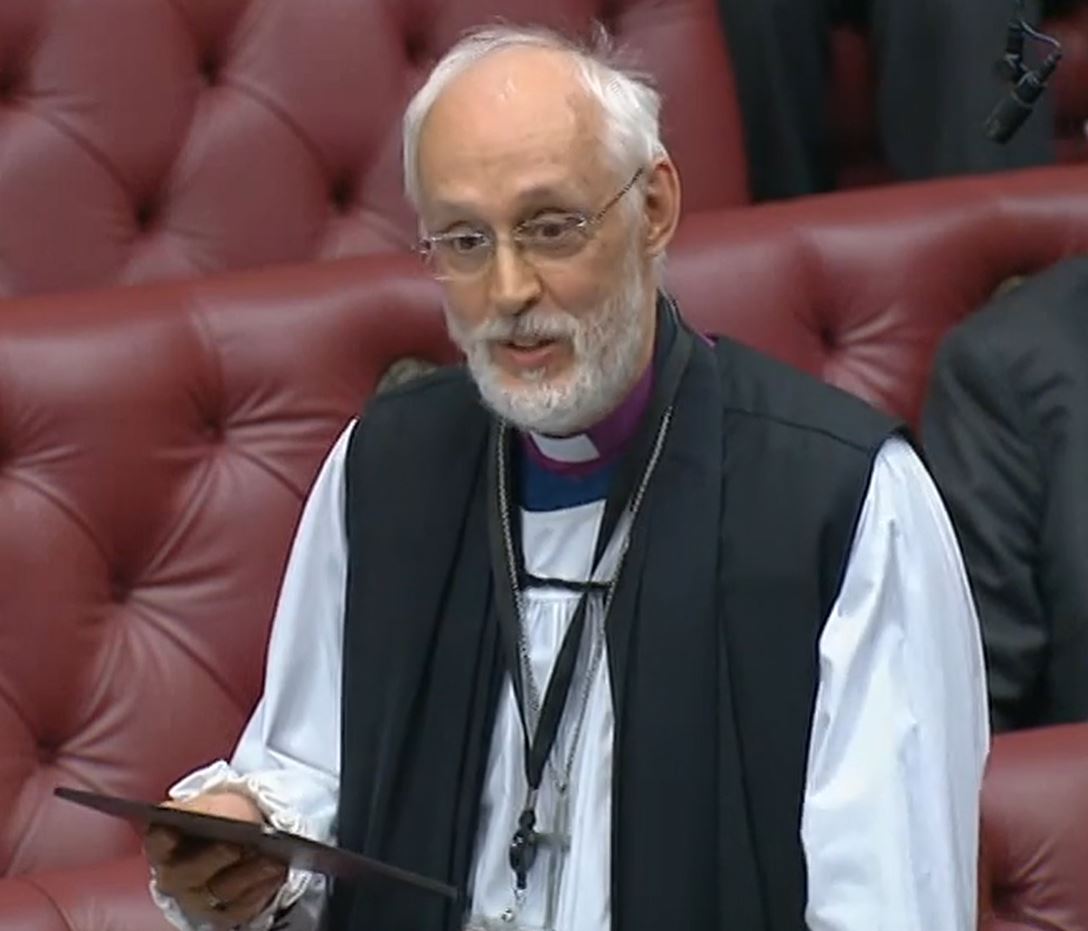
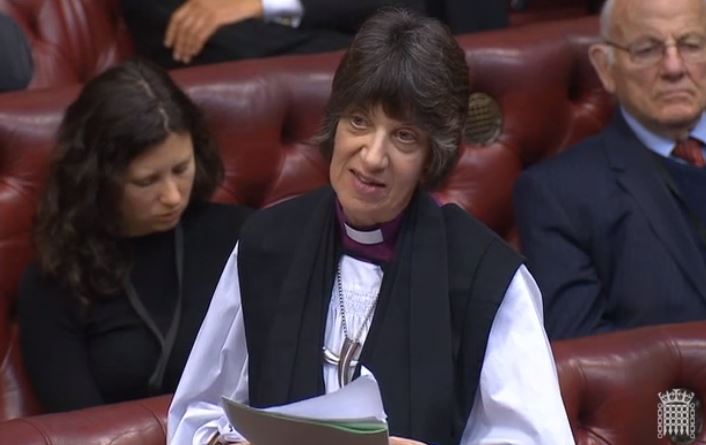
The Bishop of Gloucester took part in a debate on the Better Prisons: Less Crime Justice and Home Affairs Committee Report on 12th February 2026, advocating for reform of the conditions and culture inside prisons:

The Lord Bishop of Gloucester: My Lords, as Anglican Bishop for prisons, I wholeheartedly welcome this debate and this excellent report. It is also a privilege to follow two excellent maiden speeches.

I submitted evidence to the committee, and I will continue to bang the drum for reform. Better prisons will play a vital role, but they are not the end point or the complete answer to reducing reoffending. I agree with the reframing of this from rehabilitation, as rehabilitation implies that people were once at an acceptable place in life to which they can be rehabilitated, whereas for the majority of people in prison, this was never true in the first place.

Continue reading “Bishop of Gloucester speaks in debate on prison conditions”

Bishop of Gloucester asks about prisoner demographics and data

The Bishop of Gloucester received the following written answers on 26th January 2026:

The Lord Bishop of Gloucester asked His Majesty’s Government how many people of each ethnic group were in prison as of 30 September 2025 by religion.

Continue reading “Bishop of Gloucester asks about prisoner demographics and data”

Bishop of Gloucester asks about prisons and prisoners

The Bishop of Gloucester received the following written answers on 19th January 2026:

The Lord Bishop of Gloucester asked His Majesty’s Government how many and what proportion of (1) men, and (2) women, arriving in custody have self-declared as part of the basic custody screening interview that they have been in the care of local authority children’s services, in each year since 2016.

Continue reading “Bishop of Gloucester asks about prisons and prisoners”

Sentencing Bill: Bishop of Gloucester tables amendment defining the purpose of imprisonment

During a debate on the Sentencing Bill on 6th January 2025, the Bishop of Gloucester tabled her amendment to the bill, inserting a new clause which “would define the purposes of imprisonment in law and require the courts and the Secretary of State to have regard to the purposes of imprisonment:

The Lord Bishop of Gloucester: After Clause 4, insert the following new Clause—

“Purposes of imprisonment(1) Where a court is imposing sentence the court must have regard to the purposes of imprisonment.(2) The Secretary of State must have regard to the purposes of imprisonment when exercising the Secretary of State’s duties under this Act. 

(3) For the purposes of subsections (1) and (2) the purposes of imprisonment are—(a) the incapacitation of prisoners in order to restrict their ability to re-offend in the community,(b) the rehabilitation of prisoners under safe and decent conditions to reduce re-offending,(c) the deterrence of prisoners and others from committing further offences, and(d) the just punishment of prisoners, including provision to achieve justice for the victims of crime.”Member’s explanatory statement

This new clause would define the purposes of imprisonment in law and require the courts and the Secretary of State to have regard to the purposes of imprisonment.

My Lords, I am bringing back this amendment on Report as I do not think it was adequately addressed in Committee. Amendment 52, in my name and that of the noble Lord, Lord Moylan, would define in law the purposes of imprisonment and require the courts and the Secretary of State to have regard to the purposes of imprisonment.

Continue reading “Sentencing Bill: Bishop of Gloucester tables amendment defining the purpose of imprisonment”

Terminally Ill Adults (End of Life) Bill: Bishop of Gloucester supports amendments on prisons and prisoners

The Bishop of Gloucester spoke in support of amendments to the Terminally Ill Adults (End of Life) Bill focusing on healthcare for those in prison and safeguarding of prisoners under the bill on 12th December 2025:

The Lord Bishop of Gloucester: My Lords, I will speak to these amendments because I want to make a new point. A very vulnerable population that we must continue to remember is the prison population. Although we will deal with the prison population more fully in the group coming up, we must remember that this Bill currently does not exclude prisoners from being eligible. That means we must consider how each issue is likely to play out in a prison setting.

As we have heard extensively, these amendments deal with two main issues: first, access to primary care; and, secondly, how well that primary care physician knows the details of your medical history. The first is very closely related to inequalities and making sure that those who have worse access to care are not more likely to choose assisted dying. The prison population are therefore a key group that must be considered, since their health and access to healthcare are worse than that of the general population. That is evidenced by the recently published report by the Chief Medical Officer.

Continue reading “Terminally Ill Adults (End of Life) Bill: Bishop of Gloucester supports amendments on prisons and prisoners”

Sentencing Bill: Bishop of Leeds tables amendment on purpose of imprisonment

On 26th November 2025, the Bishop of Leeds spoke to the Bishop of Gloucester’s amendment to the Sentencing Bill, which would seek to give a statutory definition to the purpose of imprisonment:

The Lord Bishop of Leeds: My Lords, I shall speak to Amendment 45A in the place of the right reverend Prelate the Bishop of Gloucester, who, regrettably, is not able to be here today. It seems that in wider society there is a greater push for harsher punishment and longer sentences, and there is a tension with what the purpose of such punishment is. This amendment is designed to provide some elucidation on that. It would define in law the purposes of imprisonment and require the courts and the Secretary of State to have regard to the purposes of imprisonment.

Continue reading “Sentencing Bill: Bishop of Leeds tables amendment on purpose of imprisonment”

Bishop of Manchester asks about resourcing for prison chaplains

The Bishop of Manchester asked a question on better resourcing of prison chaplains during a discussion on the transition from youth to adult custody for prisoners on 3rd November 2025:

The Lord Bishop of Manchester: My Lords, the age when young people transfer from the youth system to the adult system is precisely the age when they are most trying to identify themselves and understand their faith and spirituality. Prison chaplains do an excellent job across the youth estate. Could the Minister give us some hints as to how they might be better supported and resourced to prepare young people at that time of transition, both in their lives and in the prison estate?

Continue reading “Bishop of Manchester asks about resourcing for prison chaplains”