Nationality and Borders Bill: Bishop of Durham tables amendment to restrict use of accommodation centres for families and vulnerable groups of asylum seekers

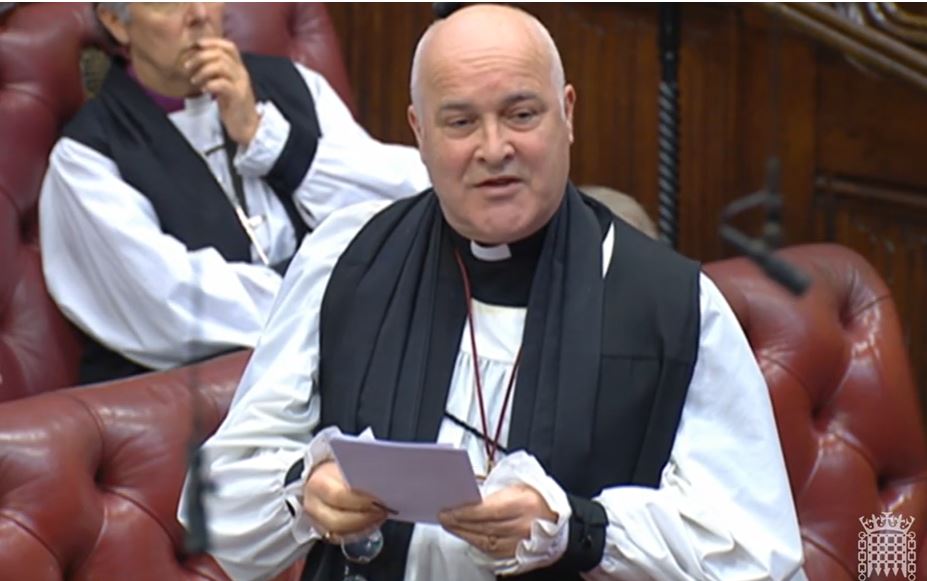
The Bishop of Durham tabled an amendment to the Nationality and Borders Bill on 28th February 2022, seeking to restrict the use of accommodation centres for asylum seekers falling under certain categories, such as families and vulnerable adults. The amendment was not moved to a vote, following a response from the government with more information on proposed accommodation:

The Lord Bishop of Durham: My Lords, I have tabled Amendment 29, with the noble Baroness, Lady Lister. I declare my interests in relation to RAMP and Reset, as set out in the register.

I have tabled this amendment again because in Committee we did not have as satisfactory a response to our questions as we had hoped on the basic details of what these accommodation centres will look like. We do not know how many or where these will be. We do not know how many people will be accommodated in each one. I am not assured that the previously terrible, and now still wanting, conditions provided at Napier will not be repeated. We are being asked to agree to the use of accommodation centres without any information or reassurances of what they will look like, where they will be, and so on. We can only go on what we see as existing provision on MoD sites. That makes me very concerned—I remind the House that I had the privilege of visiting Napier barracks recently—and gives me strong reason to call for their use to be restricted, so that the vulnerable groups set out in this amendment cannot be accommodated in them. I continue to believe that placing people seeking asylum in housing in communities is much better for everyone.

Continue reading “Nationality and Borders Bill: Bishop of Durham tables amendment to restrict use of accommodation centres for families and vulnerable groups of asylum seekers”
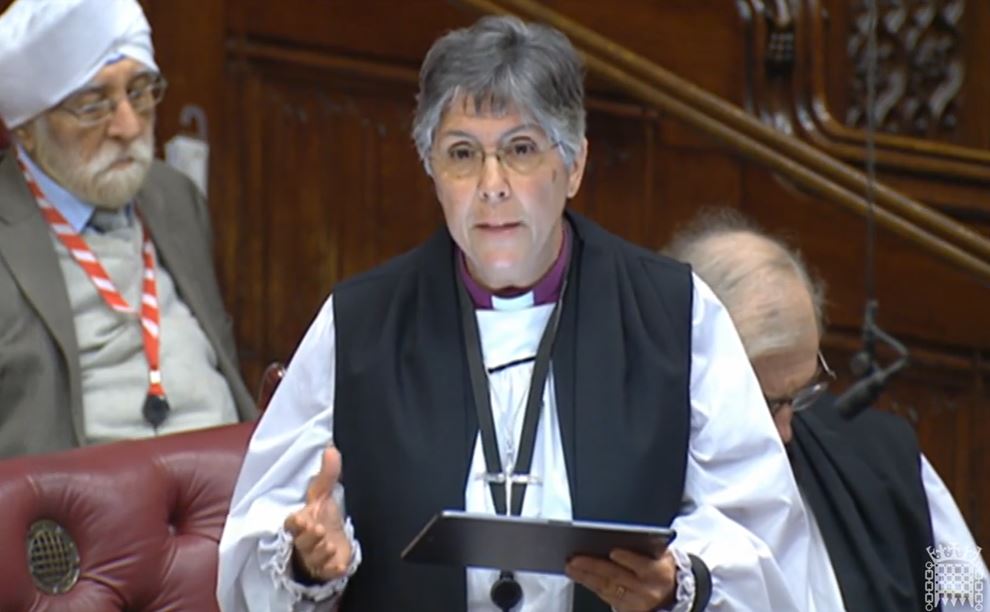
Nationality and Borders Bill: Bishop of Durham opposes differential treatment of refugees

On 28th February 2022, during a debate on the Nationality and Borders Bill, the Bishop of Durham spoke in support of an amendment to clause 11 of the bill tabled by Lord Kerr of Kinlochard, to remove the differentiation of refugees within the clause. The Bishop further expressed opposition to clause 11 in its entirety:

The Lord Bishop of Durham: My Lords, if the names had not been filled on Amendment 28 then I would have added my name to it. I remind the House of my interests as set out in the register, both in RAMP and Reset.

In Committee I laid out the understanding of the two groupings proposed and argued that almost no one will actually qualify as being in group 1. I had no repudiation offered to that argument. As the noble Lord, Lord Kerr, said, Ukraine is currently illustrating the problem precisely. I was also concerned in the response to the debate in Committee by some of the language of discretion within the two groupings.

We need a simpler, more efficient asylum system, and I continue to be convinced that what is proposed will provide a more complex, slower process. Fundamentally, I am with all those who oppose the two-group system, as it creates a fundamental injustice for fair treatment of all refugees, regardless of how they arrive.

Today, a letter signed by over 1,000 leaders from all the major faith communities of this country was delivered to the Prime Minister. I quote from that letter:

Continue reading “Nationality and Borders Bill: Bishop of Durham opposes differential treatment of refugees”

Nationality and Borders Bill: Bishop of Chelmsford supports amendment on citizenship

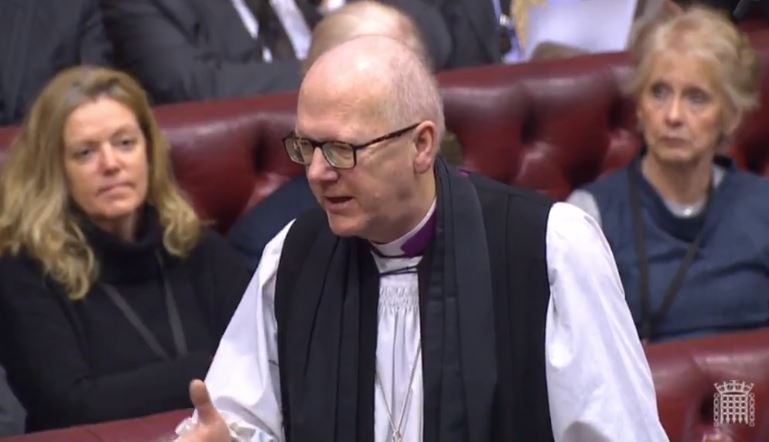
On 28th February 2022, the House of Lords debated the Nationality and Borders Bill in the first day of the report stage. The Bishop of Chelmsford spoke in support of an amendment tabled by Baroness D’Souza to remove clause 9 from the bill. Clause 9 would have, in limited cases, removed the existing requirement for the government to provide notification prior to removal of citizenship:

The Lord Bishop of Chelmsford: Thank you. My Lords, I am grateful for the suggestion that the House might like to hear from the Lords spiritual. I support the amendment in the name of the noble Baroness, Lady D’Souza, which proposes that Clause 9 should not stand part of the Bill. We debated this at some length in Committee. It is somewhat disappointing that the Government have not taken the opportunity to reconsider more fully. I will not delay the House by repeating the arguments, but I will briefly speak about trust.

Continue reading “Nationality and Borders Bill: Bishop of Chelmsford supports amendment on citizenship”

Building Safety Bill: Bishop of St Albans tables amendment

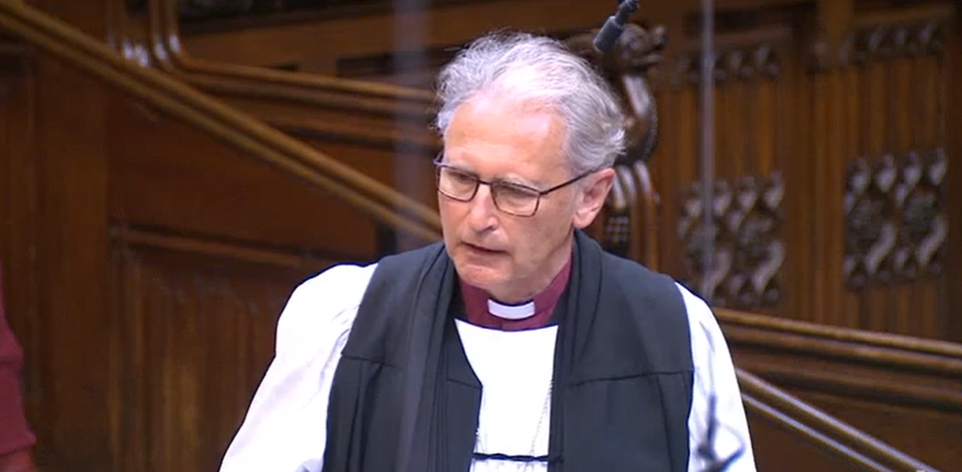
On 28th February the House of Lords debated the Building Safety Bill in the 3rd day of committee. The Bishop of St Albans spoke in support of his amendment 50A, which aims to strengthen tenants rights to consult with landlords over building safety, and require landlords to set up tenants associations to facilitate this:

The Lord Bishop of St Albans: My Lords, I rise to speak to Amendment 50A in my name and those of the noble Lords, Lord Blencathra and Lord Young of Cookham. Let me say how much I support the sentiments and intentions of the noble Lord, Lord Blencathra, who has done us a real service.

I, too, do not want to die over the details of this amendment. I hope that this will stimulate a really vigorous debate so that we can all work together on how we get these sorts of commitments in the Bill. I and others on my Benches want to work with the Government and others to achieve this. If someone else can turn up with much better solutions, that is great.

Throughout the cladding and fire safety crisis, we have heard many stories of landlords imposing outrageous and sometimes astronomical building safety charges on leaseholders and tenants. Often this has been done by managing agents acting on behalf of the freeholder. Leaseholders and tenants have reported a complete lack of accountability and transparency throughout this process and have been unable to challenge or even scrutinise the charges imposed on them.

Continue reading “Building Safety Bill: Bishop of St Albans tables amendment”

Nationality and Borders Bill: Bishop of Durham speaks in support of amendment on Chagossian citizenship

On 28th February 2022, the House of Lords debated the Nationality and Borders Bill in the first day of the report stage. The Bishop of Durham spoke in support of an amendment tabled by Baroness Lister of Burtersett, which would provide a pathway to British Citizenship for former residents of the Chagos Islands and their descendants. The amendment was approved in a vote.

The Lord Bishop of Durham: My Lords, I hold my hands up: I am one of those who, as the noble Baroness, Lady Jones of Moulsecoomb, mentioned earlier, did not know much about this issue before we started this debate. However, I followed it and pay tribute to the noble Baroness, Lady Lister, for the way in which she has led this. It is quite clear that it is completely unjust and needs to be dealt with. I hope that the Minister has noted that, while in most debates, many of us around this House and the noble Lord, Lord Horam, will not agree, we agree on this one completely—100%. There is no justification for anything other than accepting this amendment.

Hansard

Archbishop of York speaks about Russian invasion of Ukraine and urges prayer for peace

On 25th February 2022, the Archbishop of York made a speech in response to the Russian invasion of Ukraine, urging prayers for peace and swift action to support peacemaking:

The Lord Archbishop of York: My Lords, noble Lords may have seen that my most reverend friend the Archbishop of Canterbury and I have already spoken about the unprovoked attack on Ukraine as a great act of evil. This is indeed a dark hour for Europe. We have called on Anglican churches to make this coming Sunday a day of prayer for peace and on Tuesday encourage parishes to join the Anglican diocese in Europe in prayer at 6 pm, especially for those who minister and witness for peace in Ukraine itself, where we have chaplaincies and minister alongside other denominations and faith communities. We are all invited to join Pope Francis in making Ash Wednesday—next Wednesday—a day of fasting and prayer for peace.

Perhaps in the West we have taken peace for granted. The horrors being visited on Ukraine must be a wake-up call for us that peace is something you need to work at. What is happening in Ukraine is truly shocking but, sadly, it is not surprising. We have seen it coming. Ukraine now stands alone, unprotected by the treaties that protect us and allow us to believe that peace is a normal state of affairs—but it is not. Peace is a choice, a decision that we make each day about the way we live and about our responsibilities to and with our neighbour, be that in our family, in our community or between the nations of the world. We need the policies, the wisdom, the tenacity and the international resolve that will deliver it.

Continue reading “Archbishop of York speaks about Russian invasion of Ukraine and urges prayer for peace”

Building Safety Bill: Bishop of St Albans speaks in favour of amendments to protect leaseholders and social housing

On 24th February 2022, the House of Lords debated the Building Safety Bill in the second day of committee. The Bishop of St Albans spoke in favour of a number of amendments relating to leaseholder protections and the proposed building safety levy:

The Lord Bishop of St Albans: My Lords, I shall speak to Amendment 35. I was expecting others to speak to it first, but I shall address it briefly. I declare my interest as a vice-president of the Local Government Association. I, too, am an enthusiastic amateur and rise with great hesitation. I also apologise for arriving fractionally late and going in and out, but I have amendments about to run on the Judicial Review and Courts Bill, so I have been trying to balance things in two places.

Whenever a new tax is applied to an industry or business, it is extremely rare that a given organisation simply chooses to absorb that additional cost. In the overwhelming majority of instances, the tax will be passed on to the consumer as a price rise. Businesses rarely undermine their own bottom line when there is little competitive advantage for doing so and where the cost can be simply passed on to the consumer without hurting the demand for their product.

The market is such that there is a massive, chronic shortage of supply of homes in the UK. This undersupply means that, in reality, developers know that demand will not greatly suffer as a result of the building safety levy. They will not absorb the tax. I fear it will simply be priced on top of the cost of new properties. After all, this is the free market, and we cannot escape the fact that that is likely to be the consequence of the levy.

Continue reading “Building Safety Bill: Bishop of St Albans speaks in favour of amendments to protect leaseholders and social housing”

Elections Bill: Bishop of Coventry questions necessity of photo ID

On 23rd February 2022, the House of Lords debated the Elections Bill in its second reading. The Bishop of Coventry spoke in the debate, highlighting potential risks of the introduction of photo ID for voters:

The Lord Bishop of Coventry: My Lords, I too join in thanking the noble Lord, Lord Moore, for his subtle and penetrating speech. I do so as someone who originates from Sussex, albeit the western part.

I shall address just one aspect of this Bill—the introduction of photographic ID. Other noble Lords have already raised specific issues presented by this clause. I echo their concerns, and I question whether photo ID is consistent with the UK’s democratic heritage. The fundamental duty of government as we know it is to ensure that all citizens have access to the resources they need to play a full part in the democratic process. Any action that risks reducing democratic engagement, especially one which excludes a significant sector of society, needs the most careful consideration, and it should be based on very sound evidence.

Continue reading “Elections Bill: Bishop of Coventry questions necessity of photo ID”

Nationality and Borders Bill: Bishop of St Albans supports amendments to clause on modern slavery decision thresholds

During a committee debate on the Nationality and Borders Bill on 10th February 2022, the Bishop of St Albans spoke in support of amendments to clause 59 of the bill, relating to thresholds for assessing victims of modern slavery via the National Referral System. The amendments would seek to stop the threshold for assessment of modern slavery victims being raised above the standard of “suspect but cannot prove.”

The Lord Bishop of St Albans: My Lords, I shall speak to amendments 156A and 156B in the names of the noble Lord, Lord Alton of Liverpool, and the noble Baroness, Lady Prashar, to which I have added my name. I hope I can be fairly brief because much of the ground has been set out brilliantly by the noble Lord, Lord Alton, and I am very grateful for that.

The reality of Clause 59 is that raising the threshold—from “reasonable grounds” to believe that someone maybe a victim of modern slavery, to “is” such a victim—could lead to the national referral mechanism failing to identify victims of modern slavery, effectively shutting them out of the support that they so desperately need. That was picked up yesterday in our General Synod debate across the road, to which the right reverend Prelate the Bishop of Bristol has already alluded.

Continue reading “Nationality and Borders Bill: Bishop of St Albans supports amendments to clause on modern slavery decision thresholds”

Nationality and Borders Bill: Bishop of Bristol supports amendments on modern slavery

On 10th February 2022, the House of Lords debated the Nationality and Borders Bill in the 5th day of Committee. The Bishop of Bristol spoke in favour of two amendments:

  • An amendment to remove Clause 57 of the bill. Clause 57 would establish a deadline for potential victims of modern slavery to disclose that information, and would penalise late disclosure.
  • An amendment to remove clause 62 from the bill. Clause 62 “excludes from the national referral mechanism persons who have committed criminal offences as well as other offences relating to terrorism [and those who] claimed to be victims of terrorism in bad faith.” Hansard

The Lord Bishop of Bristol: My Lords, I have added my name to those noble Lords who oppose Clause 57 standing part. I am very grateful to the noble Lord, Lord Coaker, and others, who have already so eloquently made the case about concerns for this part of the Bill. As the Church of England’s lead bishop for modern slavery, I have had the privilege to sit with and listen to many charities, agencies and survivors of modern slavery, so it seemed appropriate to bring those conversations from the grass roots to your Lordships’ attention.

This is a clause which resonates deeply with the Church. Through the Clewer initiative, the Church of England is working across England with many partners to raise awareness of all aspects of modern slavery and to help support victims and vulnerable groups. This includes running training courses on county lines, producing apps which allow for reporting of suspected modern slavery cases in car washes and the farming sector, and working with many churches to raise up and equip volunteers in this area.

Continue reading “Nationality and Borders Bill: Bishop of Bristol supports amendments on modern slavery”