Bishop of Leeds – liberal international order not a natural given or inevitable right

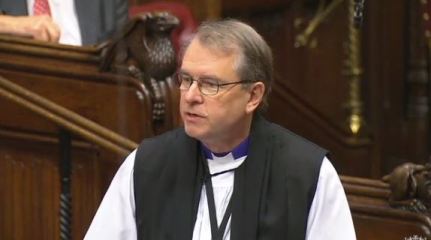
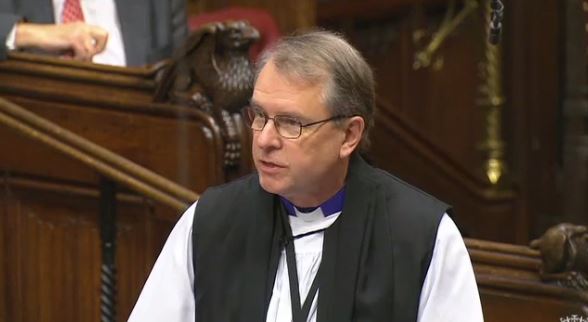
On 19th January 2017 Liberal Democrat Peer Lord Bruce of Bennachie led a debate “that this House takes note of challenges to the liberal international order posed by the development of populism and nationalism around the world.” The Bishop of Leeds, Rt Revd Nick Baines, spoke in the debate:

leeds-20117-bThe Lord Bishop of Leeds: My Lords, I am grateful for the opportunity to have a debate like this, which allows us to identify some of the more philosophical dynamics at play in contemporary political developments. The excellent Library note for this debate makes it clear that language matters, and that definition of terms is not incidental. Populism is clearly more than a movement of people who listen only to the facts that support the prejudices that they have already nurtured, but it can exploit assertive language in such a way as to obscure truth. This is what I wish to focus on here. Whereas others will discuss the importance of a rules-based international order, I want to say something about language in a post-truth or post-factual world, and pose a couple of questions about the assumptions we make regarding history. Continue reading “Bishop of Leeds – liberal international order not a natural given or inevitable right”

Bishop of Derby – populist politics is best understood as a mood, not a movement

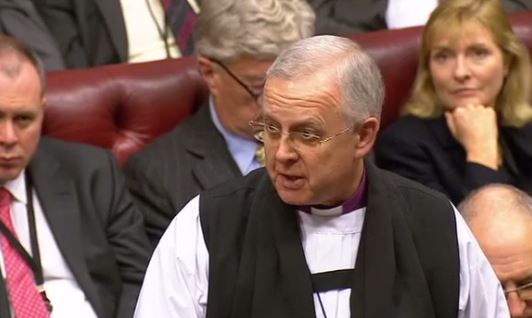
On 19th January 2017 Liberal Democrat Peer Lord Bruce of Bennachie led a debate “that this House takes note of challenges to the liberal international order posed by the development of populism and nationalism around the world.” The Bishop of Derby, Rt Revd Alastair Redfern, spoke in the debate:

derby-19117The Lord Bishop of Derby: My Lords, I too thank the noble Lord, Lord Bruce, for introducing this very important debate. I am not a professional politician, but I invite the House to look at the challenge and at the issues behind the case framed, very articulately, by the noble Lord.

First, I want to argue that populism is not a movement but a moment. One of the writers in the briefing for today talked about a thin ideology. It is not a detailed movement, as the noble Lord, Lord Bruce, said; it is a moment. Nietzsche, in the aptly named The Birth of Tragedy, talked about psychological bonding creating a headless movement—it is an expression of feeling, concern or anger, but it is headless. It is like a mood in the background and is really difficult to deal with. Just like President-elect Trump’s tweeting, it is technological chatter, but very difficult to deal with. It is a mood and not a movement. Those of us charged with a political task therefore have quite a challenge to know what we are getting hold of and how to react. Continue reading “Bishop of Derby – populist politics is best understood as a mood, not a movement”

Bishop of St Albans raises concerns about self-harm by young people

stalbans190117On 19th January 2017 Labour Peer Lord Hunt of King’s Heath asked Her Majesty’s Government “what is their assessment of Young Minds’ analysis published on 21 December 2016 that 64 per cent of Clinical Commissioning Groups are diverting new funding for children’s mental health services to other areas”. The Bishop of St Albans, Rt Revd Alan Smith, asked a follow up question:

The Lord Bishop of St Albans: My Lords, this is a very serious and growing problem. Recent research has shown over the last five years that the number of hospital admissions associated with children’s self-harm has grown by 93% among girls and 45% among boys. It seems extraordinary that when money is announced for mental health services it is then not spent. First, how many years will we wait until we need to ring-fence that money, because this is a really important issue? Secondly, to pick up on the previous but one question, will the Government commit to producing guidelines for schools and colleges about preventing and responding to self-harm, so that we have some practical things put in place? Continue reading “Bishop of St Albans raises concerns about self-harm by young people”

Church Commissioner questions: Israel/Palestine, human trafficking, prisons, social media, low carbon economy, tourism, lead theft

On 19th January 2017 the Second Church Estates Commissioner, Rt Hon Dame Caroline Spelman MP, answered questions in the House of Commons from MPs on Israel/Palestine, human trafficking, prisons, social media, low carbon economy, tourism and lead theft. The transcript is below:

spelman-190117b Continue reading “Church Commissioner questions: Israel/Palestine, human trafficking, prisons, social media, low carbon economy, tourism, lead theft”

Church Commissioners’ written answer: measures to tackle indebtedness

On 19th January 2017 the Second Church Estates Commissioner, Rt Hon Dame Caroline Spelman MP, answered a written question from Andrew Rosindell MP on measures to tackle indebtedness: 

Andrew Rosindell (Romford): To ask the right hon. Member for Meriden, representing the Church Commissioners, what work the Church of England is undertaking to tackle indebtedness. Continue reading “Church Commissioners’ written answer: measures to tackle indebtedness”

Church Commissioners’ written answer: Church window repairs

On 19th January 2017 the Second Church Estates Commissioner, Rt Hon Dame Caroline Spelman MP, answered a written question from Mike Wood MP, on repairing historic windows in churches:

Mike Wood (Dudley South): To ask the right hon. Member for Meriden, representing the Church Commissioners, what estimate the Church Commissioners have made of the potential cost of repairing historic windows in churches. Continue reading “Church Commissioners’ written answer: Church window repairs”

Higher Education and Research Bill: Bishop of Portsmouth moves amendment on support for students with disabilities

portsmouth-180117-bOn 18th January 2016, the House of Lords considered the Government’s Higher Education and Research Bill in Committee. The Bishop of Portsmouth spoke to propose an amendment on behalf of the Bishop of Ely about giving special consideration for those with disabilities within the criteria for approving and reviewing student protection plans. The amendment was withdrawn after the debate, following encouragement from the Minister that the issue deserved greater inspection. Below is his speech and a section of the Minister’s reply.

The Lord the Bishop of Portsmouth: My Lords, my colleague and right reverend friend the Bishop of Ely is unable to be in his place, but has asked me to bring before your Lordships Amendment 134A. I and he welcome the Minister’s assurances thus far for disabled students. It is very welcome that he intends to publish guidance to ensure that higher education institutions are best able to fulfil their duties to disabled students.

Continue reading “Higher Education and Research Bill: Bishop of Portsmouth moves amendment on support for students with disabilities”

Archbishop of York supports Neighbourhood Planning Bill

york-170117-cOn 17th January 2017, the Government’s Neighbourhood Planning Bill had its Second Reading in the House of Lords. The Archbishop of York, Most Revd and Rt Hon John Sentamu, spoke to express his support for the broad principles of the Bill.

The Archbishop of York My Lords, I hope I will not abuse the great privilege you have given me by allowing me, as the 24th speaker, to speak in the gap.

I support the Bill because of the three areas it covers: neighbourhood planning, local development plans and compulsory purchase. Continue reading “Archbishop of York supports Neighbourhood Planning Bill”

Archbishop of York asks Government about situation of those seeking asylum in the UK after Brexit

Archbishop of York – free trade must also be fair trade

york-170117-bOn 17th January, Viscount Ridley asked Her Majesty’s Government “what plans they have to celebrate the bicentenary of David Ricardo’s principle of comparative advantage, and the case for free trade”. The Archbishop of York, Most Revd and Rt Hon John Sentamu, asked a follow up question. 

The Archbishop of York Does the Minister agree that the principle of comparative advantage works only if trade is not only free but also fair? Continue reading “Archbishop of York – free trade must also be fair trade”