Archbishop speaks on banking reform, culture and practice

On 8th September 2016 the Bishop of St Albans, Rt Revd Alan Smith, led a debate in the House of Lords: “To ask Her Majesty’s Government what is their assessment of progress towards implementing the recommendations contained within the report of the Parliamentary Commission on Banking Standards, Changing banking for good.” The Archbishop of Canterbury, Most Rev & Rt Hon Justin Welby spoke in the debate, having previously served on the Parliamentary Commission on Banking Standards.

The Bishop of St Albans’ opening speech and the response of the Minister can be read here.  

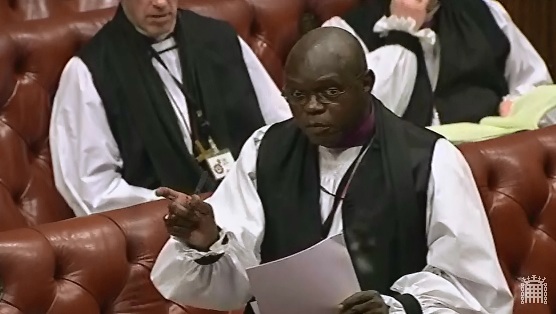
abcbankingstandardsThe Archbishop of Canterbury: My Lords, I add my congratulations to those of other noble Lords on the appointment of the noble Lord, Lord Ashton, as the Minister at DCMS. I have no doubt that we will come across each other again as “C”, “M” and “S” all seem to cover the Church in various forms. I should also say that I served on the Parliamentary Commission on Banking Standards and had the very good fortune to do so with the noble Baroness, Lady Kramer, from whom I learned a great deal. I am also chairman of the Church Commissioners, who were involved in seeking to buy some of the spin-off assets of the Royal Bank of Scotland.

I am grateful to the right reverend Prelate for arranging this debate. I agree entirely with his speech and indeed with the other four speakers that have been made before mine. I shall try to avoid repeating what they said. As we know, and as previous speakers have said, the key issue is banking culture. Culture comes from actions and decisions, and actions and decisions feed into culture. There is no doubt that changes introduced by the Government and the Bank of England have been extensive, and in many cases very effective. However, there are four linked areas, all of them around “too big to fail”, leading to what must be the long-term aim of ensuring that the Government do not have a contingent liability with respect to large banks that would result in them needing to provide support in the event of serious problems, as they had to do in 2008 at such cost. Continue reading “Archbishop speaks on banking reform, culture and practice”

Bishop of St Albans leads debate on banking reform

On 8th September 2016 the Bishop of St Albans, Rt Revd Alan Smith, led a debate in the House of Lords: “To ask Her Majesty’s Government what is their assessment of progress towards implementing the recommendations contained within the report of the Parliamentary Commission on Banking Standards, Changing banking for good.”

The Bishop’s opening speech is below, followed by the response of the Minister. Other members spoke in the debate, including the Archbishop of Canterbury (speech here) who had served on the Parliamentary Commission on Banking Standards.

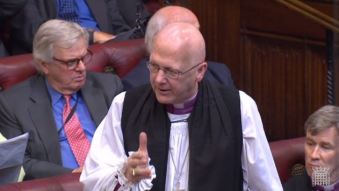
Bishop St Albans June 2015The Lord Bishop of St Albans: My Lords, I start this debate by saying how pleased I am to see the Minister responding today in his last time in his present role, although I look forward to working with him when he takes up his new duties at DCMS.

We are now three years on from the publication of the parliamentary commission’s report Changing Banking for Good. Thanks to the decisions made by this and previous Governments, our banking system is taking tentative but important steps along the road to recovery. We must not forget, however, the blunt summary in the report which laid out the scale of the problems with banks over the previous decade:

“Banks in the UK have failed in many respects. They have failed taxpayers, who had to bail out a number of banks including some major institutions, with a cash outlay peaking at £133 billion, equivalent to more than £2,000 for every person in the UK. They have failed many retail customers, with widespread product mis-selling. They have failed their own shareholders, by delivering poor long-term returns and destroying shareholder value. They have failed in their basic function to finance economic growth, with businesses unable to obtain the loans that they need at an acceptable price”.

Continue reading “Bishop of St Albans leads debate on banking reform”

Bishop of Derby speaks about importance to democracy of charities, trade unions and civil society

Derby 191115cOn 8th September 2016 Baroness Hayter of Kentish Town led a debate in the Lords: “That this House takes note of the role that charities, trade unions and civil society groupings play in a democracy, including the provision of advice and information to government, and of the case for regulating lobbying activities, including those undertaken by business and private interests.”

The Bishop of Derby, the Rt Revd Dr Alistair Redfern contributed to the debate:

The Lord Bishop of Derby: My Lords, I, too, want to thank the noble Baroness, Lady Hayter, and I want, in the nicest possible way, to take for granted what she said, because it was very important and I agree with it absolutely. I want to invite us to look at the last three words, “in a democracy”, as a very important context for this discussion and debate, not least for the role of charities, trade unions and civil society.

Democracy works through two very important elements. One, of course, is the offer of ideas and suggestions about what to do to best order society. It is about answers to problems. The lobbying industry and the contribution that charities make to that, as the noble and right reverend Lord, Lord Harries, and the noble Lord, Lord Griffiths, and others have shown, is very important—

“From our experience, here is the answer to this kind of question”. Continue reading “Bishop of Derby speaks about importance to democracy of charities, trade unions and civil society”

Bishop of St Albans questions government about executive pay

St Albans 2On 8th September 2016, the Bishop of St Albans, the Rt Revd Dr Alan Smith, asked Her Majesty’s Government “how they intend to address the gap between the remuneration of senior executives and their employees”. Baroness Neville-Rolfe responded for the Government. Her comments can be seen below, along with the follow up questions from other Members.

The Lord Bishop of St Albans: To ask Her Majesty’s Government how they intend to address the gap between the remuneration of senior executives and their employees.

Continue reading “Bishop of St Albans questions government about executive pay”

Archbishop asks Government to speed up process of bringing lone children with families in UK across from Calais Jungle camp

On 6th September 2016 Lord Roberts of Llandudno asked Her Majesty’s Government “what plans they have to speed up the reuniting of refugee children in the camps of Calais and Dunkirk with their families in the United Kingdom.” The Archbishop of Canterbury, Most Rev Justin Welby, asked a follow up question:

abccalaisqThe Archbishop of Canterbury: My Lords, the Question has been extremely specifically put about children who have families in this country; this is not about all unaccompanied children. My own diocese of Canterbury has taken on a staff member who is working in the Jungle, in co-ordination with a staff member taken on by the Catholic diocese of Arras. We are still having continual reports of delays for really quite young children who are not being brought across. Does the Minister not agree that where children—particularly young ones—have families in this country there is no reason why they should not be brought across within the day? Continue reading “Archbishop asks Government to speed up process of bringing lone children with families in UK across from Calais Jungle camp”

Archbishop of Canterbury pays tribute to departing Lord Speaker

abc-mcfall-2On 5th September 2016, the Archbishop of Canterbury, the Rt Hon. and Rt Rev. Justin Welby, paid tribute to the outgoing Lord Speaker and Deputy Lord Speaker, Baroness D’Souza and Lord Laming. Archbishop Justin also welcomed the new Lord Speaker, Lord Fowler, and the new Senior Deputy Lord Speaker, Lord McFall, to their roles.


Archbishop of Canterbury: My Lords, on behalf of the Lords spiritual I join in the tributes to the noble Baroness, Lady D’Souza, and to the noble Lord, Lord Laming. The noble Baroness, Lady D’Souza, has been a great friend to the Lords spiritual, who normally arrive with even more trepidation and less familiarity with the processes of a House such as this than anyone else coming here. She has been assiduous in seeing new bishops and advising them, and then advising them later when they did not quite make it—something that I appreciated on more than one occasion. She always did it with the greatest tact and courtesy and I think that we would all say that she was an encourager of great aptitude. Continue reading “Archbishop of Canterbury pays tribute to departing Lord Speaker”

Church Commissioners Written Answer: Children in Care

Caroline SpelmanOn 5th September 2016 the Second Church Estates Commissioner, Rt Hon Caroline Spelman MP, answered a written question from Graham Allen MP about the Church of England’s response to a report on abuse at Kendall House, Gravesend.


Mr Graham Allen (Nottingham North): To ask the right hon. Member for Meriden, representing the Church Commissioners, whether the Church of England plans to respond to the report by Professor Sue Proctor on abuse at Kendall House, Gravesend, published in July 2016. Continue reading “Church Commissioners Written Answer: Children in Care”

Church Commissioners written answer: Churches in Blackburn

Caroline SpelmanOn 5th September 2016 the Second Church Estates Commissioner, Rt Hon Caroline Spelman MP, answered a written question from Mark Hendrick MP about churches in the Diocese of Blackburn and the English Churches and Cathedrals Sustainability Review.

Mr Mark Hendrick (Preston): To ask the right hon. Member for Meriden, representing the Church Commissioners, which churches and personnel in Preston and the rest of the Diocese of Blackburn have participated in the English Churches and Cathedrals Sustainability Review. Continue reading “Church Commissioners written answer: Churches in Blackburn”

Bishop of Coventry asks Government about death penalty and religious freedom in Saudi Arabia

Bp Coventry May 2015On 29th July and 2nd August 2016 the Bishop of Coventry, Rt Revd Christopher Cocksworth, received written answers to questions of Government on capital punishment and religious freedom in Saudi Arabia:

The Lord Bishop of Coventry: To ask Her Majesty’s Government what representations they have made to the government of Saudi Arabia about the use of the death penalty against
minors. [HL1354]

To ask Her Majesty’s Government what representations they have made this year to the government of Saudi Arabia regarding the use of beheading and crucifixion as criminal punishments. [HL1355]

To ask Her Majesty’s Government what assessment they have made of the decision by the Specialised Criminal Court in Saudi Arabia to sentence Ali Mohammed Baqir Al-Nimr, Abdullah Al-Zaher and Dawood Al-Marhoon to death by crucifixion for seeking democratic reforms in that country. [HL1357] Continue reading “Bishop of Coventry asks Government about death penalty and religious freedom in Saudi Arabia”

Bishop of Coventry asks Government about violence against Hindus in Pakistan

Bp Coventry May 2015On 29th July 2016 the Bishop of Coventry, Rt Revd Christopher Cocksworth, received a written answer to a questions on violence against Hindus in Pakistan:

The Lord Bishop of Coventry: To ask Her Majesty’s Government what is their assessment of the current level of violence against Hindus in Pakistan.


Continue reading “Bishop of Coventry asks Government about violence against Hindus in Pakistan”