Archbishop of Canterbury asks about effects of AI generation on public confidence in vaccines

The Archbishop of Canterbury asked a question on the effects of AI generation on public confidence in vaccines on 9th July 2026:

The Lord Archbishop of Canterbury: My Lords, we know that public confidence in vaccines is essential if there is to be good uptake and if they are to be effective. What are the Government planning to do to ensure that there is public confidence in AI-generated vaccines, and have they considered involving community and faith groups in this? Those are key to ensuring public confidence in this area.

Continue reading “Archbishop of Canterbury asks about effects of AI generation on public confidence in vaccines”

Archbishop of Canterbury pays tribute to the late Lord Mackay of Clashfern

On 9th July 2026, the Archbishop of Canterbury joined in tributes to Lord Mackay of Clashfern, former Lord Chancellor, who had passed away on 7th July:

The Lord Archbishop of Canterbury: My Lords, from these Benches we echo the condolences and comments of the previous speakers. They have spoken so eloquently. Lord Mackay was kind, welcoming and generous in this House, and we on these Benches have been very grateful over the years for his gentle but persuasive advice and support.

A strict Sabbatarian and teetotaller in the best traditions of the Scottish Reformation, as we have heard, he would regularly refuse to work, travel or even give interviews that might be broadcast on a Sunday. He would regularly worship at the Free Presbyterian Church in Inverness, where he also served as an elder, and at All Souls Langham Place in my previous diocese of London.

Continue reading “Archbishop of Canterbury pays tribute to the late Lord Mackay of Clashfern”

Archbishop of Canterbury leads debate on impact of AI on human relationships

The Archbishop of Canterbury led a debate on the role and impact of artificial intelligence on society and human relationships on 5th June 2026:

The Lord Archbishop of Canterbury: My Lords, I wish to thank the usual channels for allowing me to hold this debate today and the parliamentary staff who have enabled it to happen.

In the Bible, the writer of the Book of Hebrews says of human beings:

“You made them a little lower than the angels; you crowned them with glory and honour and put everything under their feet”.

God created human beings in His own image, with glory and honour—each and every one of us, regardless of who we are or what we do. We carry an inherent dignity and immeasurable value. This is not in spite of our weakness, vulnerabilities or limitations but in many ways because of and through them. God made us to be relational beings, in need of Him and in need of others, not sufficient on our own.

Continue reading “Archbishop of Canterbury leads debate on impact of AI on human relationships”

Archbishop of Canterbury asks about support for NHS staff dealing with cases of miscarriage and infant loss

The Archbishop of Canterbury asked a question on support for NHS staff working in maternity care during a discussion on baby loss and birth trauma on 18th May 2026:

The Lord Archbishop of Canterbury: My Lords, baby loss can be one of the most difficult experiences for any person, but especially for NHS staff who work in or around maternity and neonatal care settings. Can the Minister outline for us what specific support is in place in the NHS for staff who experience baby loss that recognises this additional need?

Continue reading “Archbishop of Canterbury asks about support for NHS staff dealing with cases of miscarriage and infant loss”

Terminally Ill Adults (End of Life) Bill: Archbishop of Canterbury restates principled opposition to bill

The Archbishop of Canterbury also spoke in the final debate on the Terminally Ill Adults (End of Life) Bill on 24th March 2026, reiterating her opposition to the bill and the need for a different approach to scrutiny and debate should the bill return to the House:

The Lord Archbishop of Canterbury: My Lords, I shall briefly make some reflections. It is a great privilege to follow my friend, the noble Baroness, Lady Rafferty; I thank her for her contribution. I recognise the enormous amount of work that has gone into this Committee stage. I am grateful to the noble and learned Lord, Lord Falconer, for meeting me; I thank him for the time that he has given me.

Noble Lords will know that I oppose the Bill in principle, both as a priest and as a nurse, but it is clear that some things unify us. Whether we support the Bill or oppose it, we are unified by the fact that we want people to die in a dignified, pain-free and compassionate way, with the least possible fear. I also believe that we are unified in the belief that there needs to be investment in palliative care now. I welcome the new modern framework for palliative care that the Government have introduced, but recognise that financial investment still needs to occur.

Continue reading “Terminally Ill Adults (End of Life) Bill: Archbishop of Canterbury restates principled opposition to bill”

Crime and Policing Bill: Archbishop of Canterbury speaks in debate on abortion law

The Archbishop of Canterbury spoke during a debate on the proposed clause 208 of the Crime and Policing Bill on 18th March 2026, which would seek “to add the requirement of DPP consent for the institution of the criminal proceedings in Clause 208 against a woman acting in relation to her own pregnancy and reduces the limitation period for the offence,”, opposing the clause and supporting amendments on the safeguarding of under-18s accessing abortion services:  

The Lord Archbishop of Canterbury: My Lords, many noble Lords will know that the Church of England’s view on abortion is one of principled opposition, recognising that there can be limited conditions under which abortion may be preferable to any available alternatives. This is based on the belief of the infinite worth and value of every human life, however old or young, and including life not yet born. The infinite value of human life is a fundamental Christian principle that underpins much of our legal system and has shaped existing laws on abortion. All life is precious. We therefore need to recognise that women confronted with the very complex and difficult decision to terminate a pregnancy deserve our utmost understanding, care and practical support as they face what is often a heart-wrenching decision.

However, I cannot support Clause 208. Though its intention may not be to change the 24-week abortion limit, it undoubtedly risks eroding the safeguards and enforcement of those legal limits and, inadvertently, undermining the value of human life.

Continue reading “Crime and Policing Bill: Archbishop of Canterbury speaks in debate on abortion law”

Votes: Crime and Policing Bill

On 18th March 2026, the House of Lords debated the Crime and Policing Bill, including amendments on protest, terrorism, and abortion. Bishops took part on votes on several amendments:

Continue reading “Votes: Crime and Policing Bill”

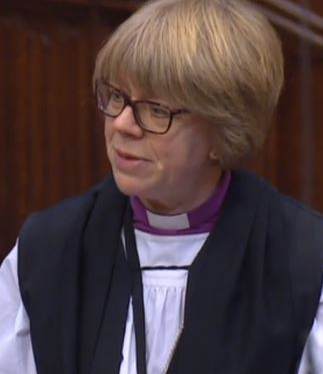
Archbishop of Canterbury introduced

On 5th February 2026, the Archbishop of Canterbury, who had previously sat in the House of Lords as Bishop of London, was reintroduced to the House and took her seat on the Bishops Benches:

Continue reading “Archbishop of Canterbury introduced”

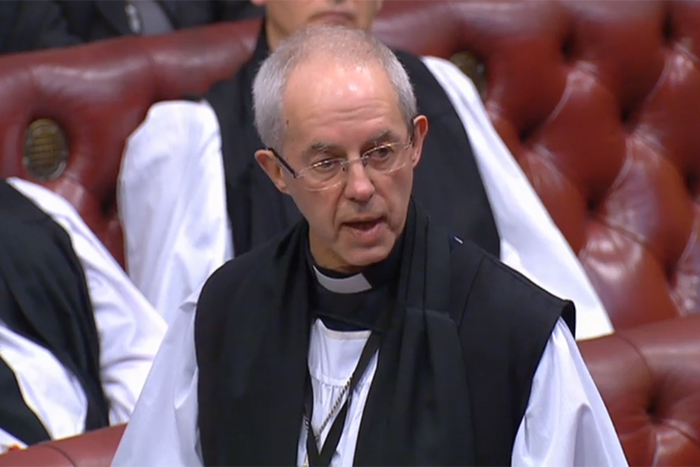
Archbishop of Canterbury makes valedictory speech on the need for safe, stable, and affordable housing

On 5th December 2024, the Archbishop of Canterbury made his valedictory speech in the House of Lords during a debate on housing:

The Lord Archbishop of Canterbury: My Lords, it is often said and it is a cliché to say it—but hey, I am the Archbishop still—that if you want to make God laugh, make plans. On that basis, next year, I will be causing God more hilarity than anyone else for many years, because the plans for next year were very detailed and extensive. If you pity anyone, pity my poor diary secretary, who has seen weeks and months of work disappear in a puff of a resignation announcement.

The reality, which I wish to start with—then pay some thanks, and then talk about housing—is that there comes a time, if you are technically leading a particular institution or area of responsibility when the shame of what has gone wrong, whether one is personally responsible or not, must require a head to roll. There is only, in this case, one head that rolls well enough. I hope not literally: one of my predecessors in 1381, Simon of Sudbury, had his head cut off and the revolting peasants at the time then played football with it at the Tower of London. I do not know who won, but it certainly was not Simon of Sudbury.

The reality is that the safeguarding and care of children and vulnerable adults in the Church of England today is, thanks to tens of thousands of people across the Church, particularly in parishes, by parish safeguarding officers, a completely different picture from the past. However, when I look back at the last 50 or 60 years, not only through the eyes of the Makin report, however one takes one’s view of personal responsibility, it is clear that I had to stand down, and it is for that reason that I do so.

Next, I want to say thank you to so many people in the House. In these 12 years, I cannot think of a single moment when I have come in here and the hair on the back of my neck has not stood up at the privilege of being allowed to sit on these Benches. It has been an extraordinary period, and I have listened to so many debates of great wisdom, so many amendments to Bills that have improved them, so much hard work.

Continue reading “Archbishop of Canterbury makes valedictory speech on the need for safe, stable, and affordable housing”

Archbishop of Canterbury asks about financial support for Ukraine’s resistance to Russian invasion and for the UK armed forces

The Archbishop of Canterbury asked a question on financial support for those battling the Russian invasion of Ukraine and for the UK’s own armed forces on 5th December 2024:

The Lord Archbishop of Canterbury: My Lords, I have made two visits to Ukraine, one earlier this year, and many of my colleagues have visited as well. Having seen the very sharp deterioration in civilian morale, we know that external support from the NATO powers, particularly the United Kingdom, makes a significant difference. We are seeing the northern NATO countries not only giving verbal support but actively preparing for the risk of conflict in order to deter it. The situation on the ground will not wait for the SDR. What steps are the Government taking to indicate, by their actions as well as by their words, ahead of the SDR, that we are deeply committed financially to the support of Ukraine, not only by giving weapons but by renewing our Armed Forces?

Continue reading “Archbishop of Canterbury asks about financial support for Ukraine’s resistance to Russian invasion and for the UK armed forces”