
 On Wednesday 17 December 2014, the Second Church Estates Commissioners, the Rt Hon. Sir Tony Baldry MP, answered written questions from Robin Walker MP about grants available for church repairs, and from Chi Onwurah MP about the savings being made from the new Parliamentary Q&A system.
Continue reading “Second Church Estates Commissioner answers questions on Grants available for Churches and about the savings made from the new Parliamentary Q&A System”
Bishop of St Albans asks Government about data on violence against women
On 17th December 2014 the Bishop of St Albans, Rt Rev Alan Smith, received a written answer to a question on violence against women:
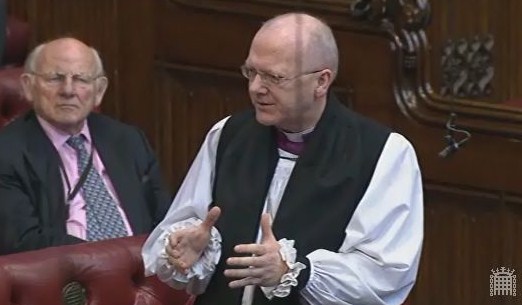 The Lord Bishop of St Albans: To ask Her Majesty’s Government what plans they have to improve the standardisation of comprehensive and analysable data on violence against women.[HL3284] Continue reading “Bishop of St Albans asks Government about data on violence against women”
Bishop of St Albans calls for more evidence to be collected to assist in prevention of sex-selection abortion
On 16th December 2014, Baroness Knight of Collingtree asked Her Majesty’s Government what action they intend to take following the First Reading of the Abortion (Sex-Selection) Bill in the House of Commons on 4 November. The Bishop of St Albans, the Rt Revd Alan Smith, asked a supplementary question:
The Lord Bishop of St Albans: My Lords, given that many are concerned that we may not be protecting the most vulnerable in our society in this area, we need to understand the full extent of sex-selection abortion in this country, if indeed it is taking place. We need to collect and collate data. In the light of that, will the Minister tell the House what Her Majesty’s Government are doing to require the registration of the gender of foetuses using forms such as HSA4 or something similar so that we can actually have the evidence?Bishop of Chester speaks during question time on dog licensing
On 16th December 2014, Lord Hoyle asked Her Majesty’s Government whether they have any plans to reintroduce a dog licensing fee. The Bishop of Chester, the Rt Revd Peter Forster, asked a supplementary question:
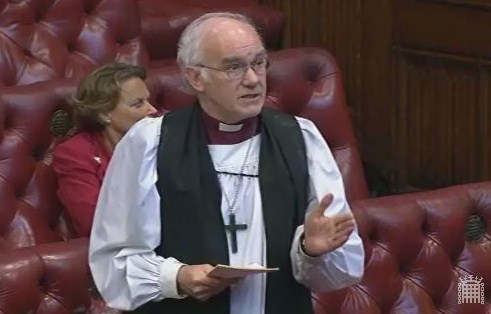 The Lord Bishop of Chester: My Lords, I am one of those who wear a dog collar in this House—and for the privilege of doing so I have to be licensed. But as far as I am aware, no fees have been paid. Might I suggest that enough is enough?
Lord Mackenzie of Framwellgate (Non-Afl): My Lords, the right reverend Prelate has stolen my thunder, in a sense. I was going to ask: because of the increasing number of dangerous dog incidents, would it not be worth having a look at licensing the owners? Continue reading “Bishop of Chester speaks during question time on dog licensing”
Bishop of St Albans – Underage Marriage (Written Answer)
On 16th December 2014, the Bishop of St Albans, the Rt Revd Alan Smith, received an answer to a written question on under-age marriages.
The Lord Bishop of St Albans: To ask Her Majesty’s Government what steps they are taking to protect girls who come to the United Kingdom already in under-age marriages. [HL3558]
The Parliamentary Under-Secretary of State for Schools (Lord Nash): Local authorities, with the help of other organisations as appropriate, have a duty to make enquiries under section 47 of the Children Act 1989 if they have reasonable cause to suspect that a child is suffering, or is likely to suffer, significant harm. A belief that a girl may have been involved in an under-age marriage should lead to such an assessment.
Where a local authority encounters concerns about a child’s welfare that constitute, or may constitute, an offence against a child, social workers should discuss the case with the police at the earliest opportunity. Offences may have been committed by the girl’s parents, or by her ‘husband’. Legislation that came into force earlier in 2014 means that forced marriage is now a criminal offence. Continue reading “Bishop of St Albans – Underage Marriage (Written Answer)”
Archbishop of York speaks and votes during Report Stage of Social Action, Responsibility and Heroism Bill
On 15th December 2014, the Archbishop of York, the Most Revd and Rt Hon. John Sentamu, spoke during the Report Stage of the Government’s Social Action, Responsibility and Heroism Bill. He asked the Minister whether the legislation was the right tool for encouraging social action and volunteering in communities. He also voted in a division of the House, on Lord Lloyd’s amendment to remove Clause 2 (“Social Action”) from the Bill. The amendment was not accepted.
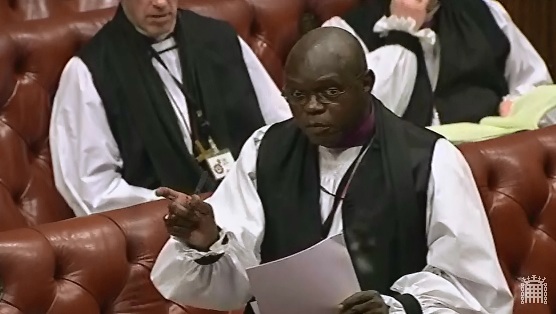 The Archbishop of York: My Lords, I am puzzled. Will the noble Lord tell us whether it is ever worthy to use a statute as a means of giving assurance? I thought that a statute was to state the law, not to assure somebody somewhere. That would be okay. It would be an amazing way of—you know what I mean. Continue reading “Archbishop of York speaks and votes during Report Stage of Social Action, Responsibility and Heroism Bill”
Archbishop of York highlights risks to financial stability of higher education system
On 15th December 2014, Lord Sharkey asked Her Majesty’s Government what is their assessment of the Higher Education Commission’s report Too Good to Fail: The Financial Sustainability of Higher Education in England. The Archbishop of York, the Most Rev. and the Rt Hon. John Sentamu, asked a supplementary question:
The Archbishop of York: My Lords, will the noble Baroness tell us how, in the light of this report, she hopes to mitigate the risks to financial sustainability? Those are very big risks. Can she tell us how she will mitigate them? Forget the canoes.
Baroness Williams of Trafford: My Lords, the Government have asked HEFCE to monitor this situation, particularly in the light of the cap being lifted in 2016. That is a very important point.
(via Parliament.uk)
Bishop of Southwark Introduced to Lords
On 15th December 2014 the Rt Revd Christopher Chessun, Bishop of Southwark, was Introduced to the House of Lords and took his seat. Continue reading “Bishop of Southwark Introduced to Lords”
Marriage and Cohabitation Rights – Bishop of Sheffield speaks on Bill
On 12th December 2014 the House of Lords debated the Cohabitation Rights Bill, a private member’s bill introduced by Lord Marks of Henley-on-Thames. The Bishop of Sheffield, Rt Rev Steven Croft spoke in the debate, celebrating the commitment made by couples entering marriage or civil partnership and advising caution over conferring similar rights to cohabiting couples in the way the Bill proposes. His speech is reproduced in full below. Continue reading “Marriage and Cohabitation Rights – Bishop of Sheffield speaks on Bill”
Church of England Week in Westminster, 8th – 12th December 2014
Welcome to the Church of England’s weekly round-up of activity in Parliament.
 This week, bishops in the House of Lords spoke in debates about the Childcare Payments Bill, the Modern Slavery Bill, economic leadership for cities, female genital mutilation, global development goals and the Cohabitation Rights Bill.
They also asked questions about British nationals abroad, domestic violence, child poverty, mesothelioma research funding, forced marriage and hunger in Britain.
Bishops also voted on amendments to the Criminal Justice and Courts Bill, during the ping-pong stage of the Bill’s consideration.
In the House of Commons, the Second Church Estates Commissioner, the Rt Hon Sir Tony Baldry MP, answered questions about the maintenance of cathedrals, church repairs, bat damage in churches and general election hustings Continue reading “Church of England Week in Westminster, 8th – 12th December 2014”
 The Church of England in Parliament
You must be logged in to post a comment.