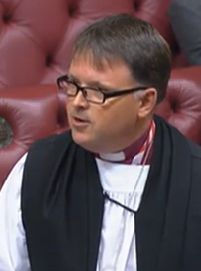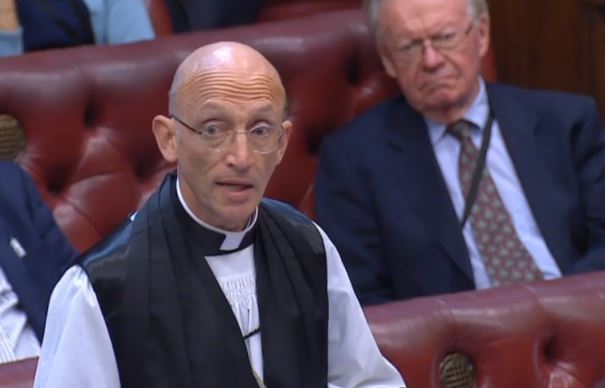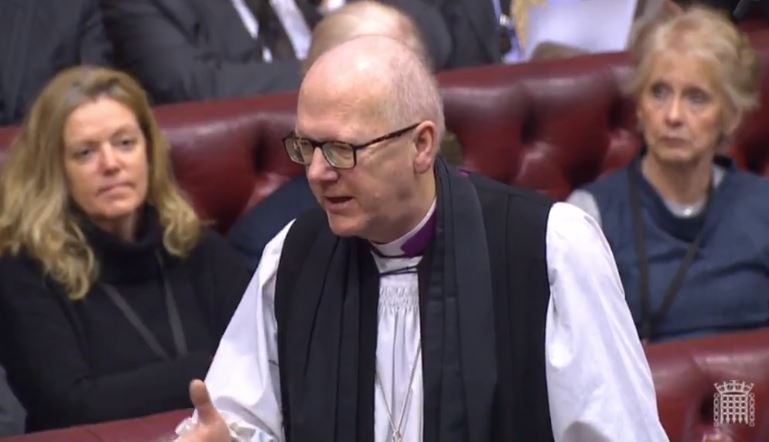
Bishop of Lichfield speaks on impact of community tensions and the importance of interfaith work

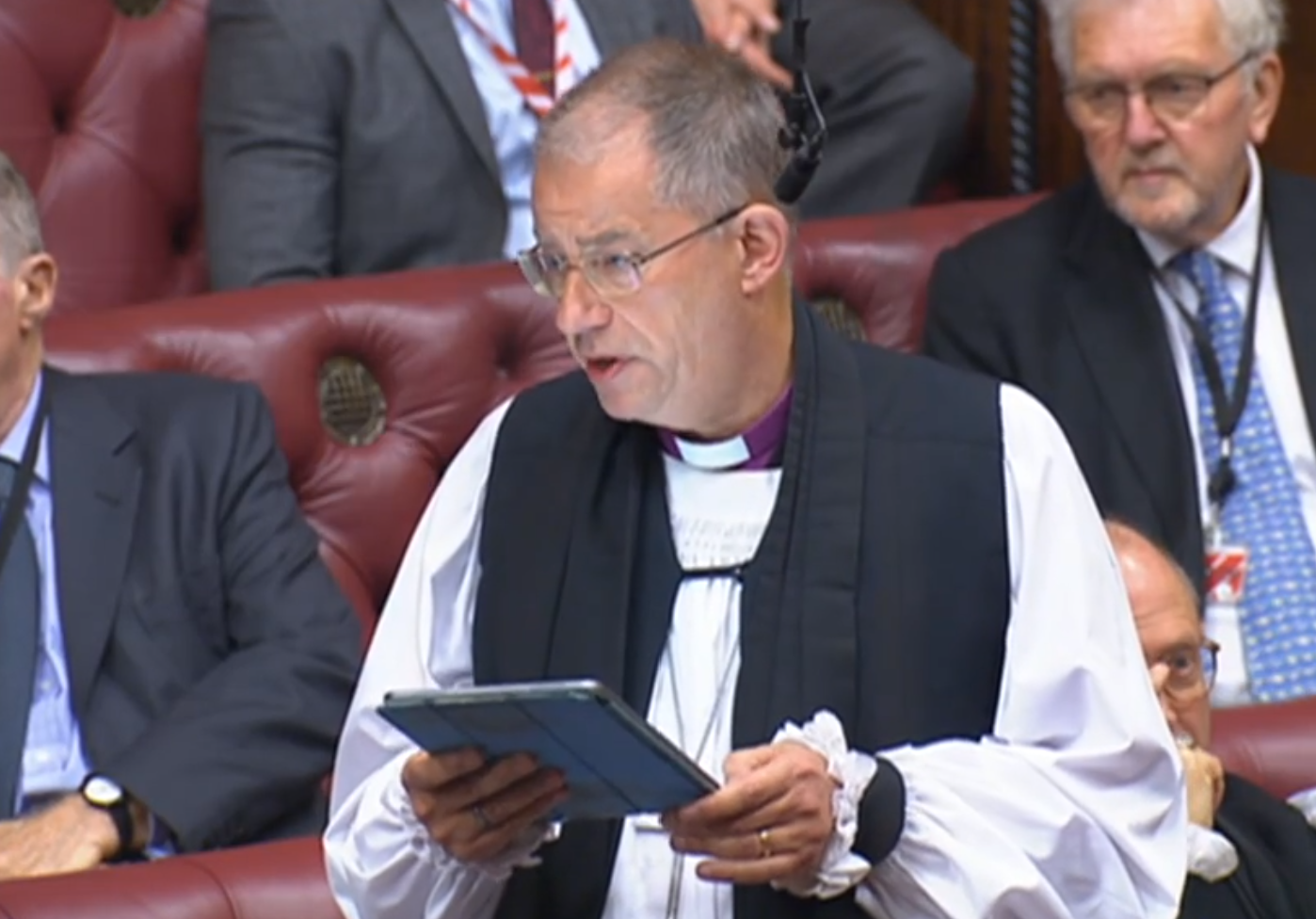
On 6th December 2024, the Bishop of Lichfield spoke in the Archbishop of York’s debate on social cohesion, highlighting the impact of community tensions, exacerbated by global events, on faith communities and particularly Jewish and Muslim communities in the UK:

The Lord Bishop of Lichfield: My Lords, I am sure that on these Benches and more widely, all of us as Bishops will register and take to heart the searching and challenging words of the noble Baroness, Lady Berridge, and I thank her for them. We recognise the urgency and centrality of independent scrutiny in the life of our Church.

The UK is home to communities that are richly diverse and in which people of different cultures, beliefs and faiths live alongside one another. Social cohesion acts as the bridge between those differences. It enables us to live well together, providing resilience to communities when faced with adversity and enabling us to coexist peacefully, but as demonstrated by the riots this summer, this kind of social cohesion can no longer be taken for granted. The consequences of growing divisions should not be underestimated, and we must not ignore the increasing threat of erosion that the social cohesion binding us together faces.

Continue reading “Bishop of Lichfield speaks on impact of community tensions and the importance of interfaith work”

Bishop of Bristol highlights importance of community and interfaith relations in promoting social cohesion

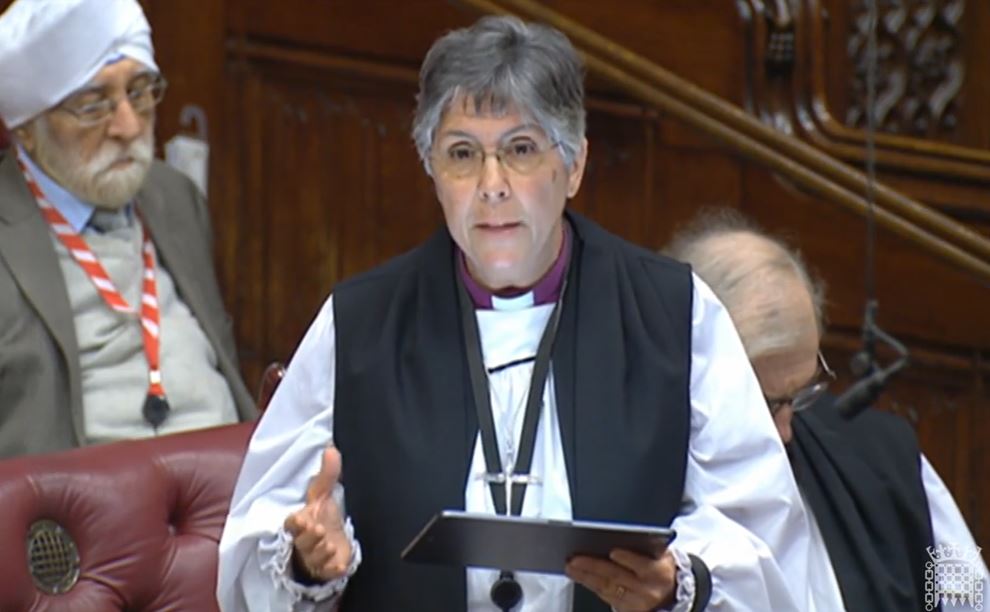
The Bishop of Bristol spoke in the Archbishop of York’s debate on social cohesion on 6th December 2024, raising local examples from the city of Bristol and the importance of community and interfaith outreach:

The Lord Bishop of Bristol: My Lords, I too am grateful to the most reverend Primate for securing this debate and setting its tone. I am also very grateful to the noble Lord, Lord Sharma, for his impressive speech, and look forward to many more contributions from him in this Chamber. I am glad to follow the noble Lord, Lord Elliott, and realise that there is more that unites us than divides us. Indeed, there are overlaps with many of the contributions from the Benches opposite in what I am about to say, because I want to speak of a particular place and of particular people.

I begin with Liverpool, as the noble Lord, Lord Elliott, mentioned. It was David Sheppard who, as Bishop of Liverpool, ordained me deaconess in Liverpool Cathedral and helped me to understand the stresses that port cities experience as global trade and human migration patterns shift. Port cities absorb, endure or thrive on the consequent change. Bishop David and his Archbishop and Free Church colleagues were well aware that social unrest was a symptom of the impact of felt injustice and a stimulus to work to create justice and peace. “Better together” was their theme and their motto in a city divided on economic, racial and religious grounds.

Continue reading “Bishop of Bristol highlights importance of community and interfaith relations in promoting social cohesion”

Bishop of London raises impact of COVID-19 pandemic and health inequalities on during debate on social cohesion

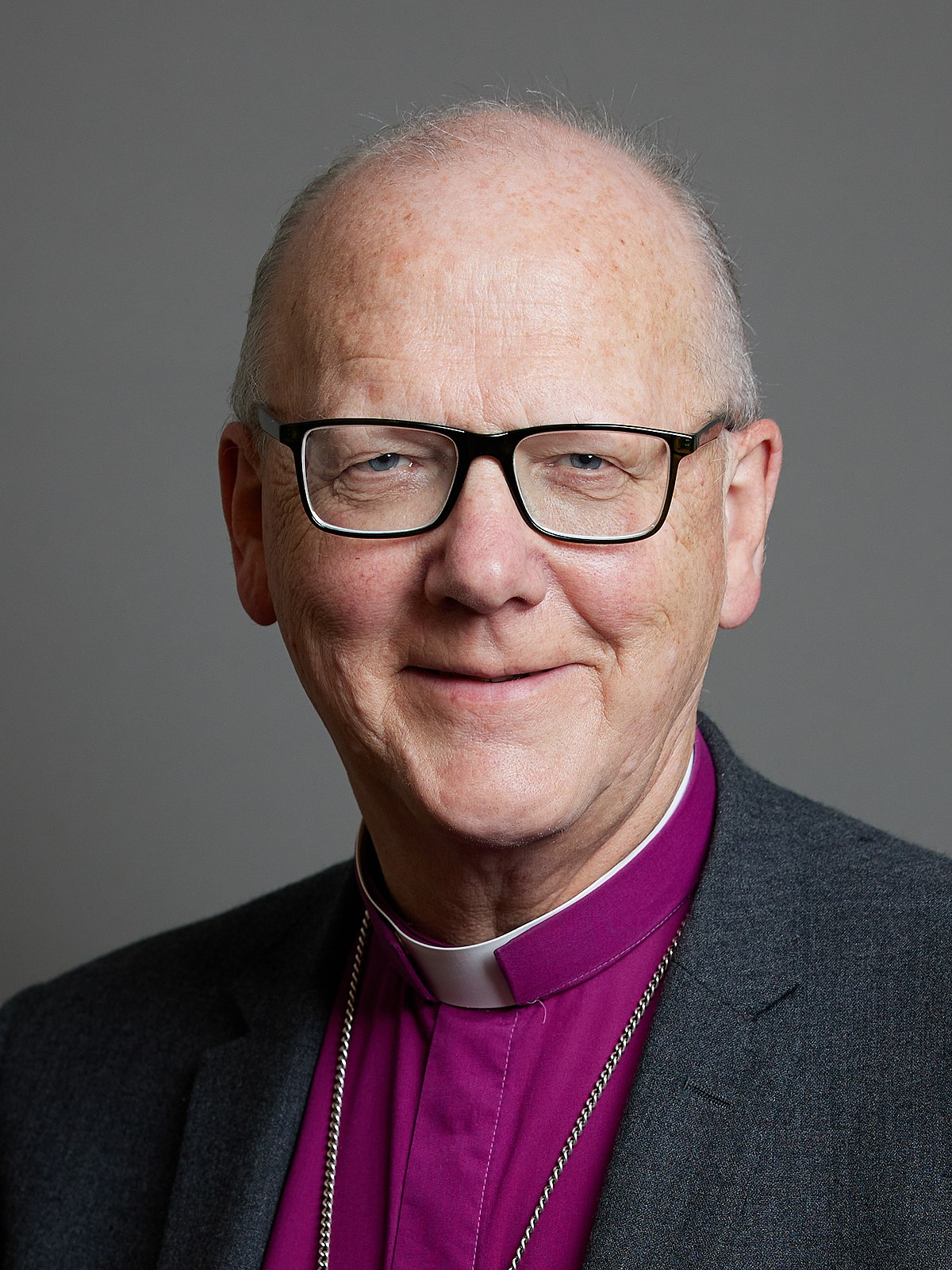
The Bishop of London spoke in the Archbishop of York’s debate on social cohesion on 6th December 2024, speaking on the impact of the COVID-19 pandemic and the effects of widespread health inequalities in the UK:

The Lord Bishop of London: My Lords, I declare my interests as set out in the register, particularly as a commissioner on the National Preparedness Commission. I am glad to be taking part in this debate today. It is a privilege to follow the noble Baroness, Lady Bottomley, and I look forward to the maiden speech of the noble Lord, Lord Sharma, who has much to offer this House. I have the privilege of being Bishop of London, and I can assure the noble Lord, Lord Lilley, that London is full of great diversity of political views. I extend an invitation to him to come and see where we wrestle with some of our Christian faith and politics.

The riots over the summer were a wake-up call to us all to prioritise community cohesion. There is much to be said about this, and I echo much of what my friend the most reverend Primate has already said. I am going to focus my remarks on two issues which are central to this topic but are particularly related to health, although they have a much wider application, and those two topics are trust and partnership.

First, on trust, as the most reverend Primate indicated, we have much to do to improve trust within the Church of England. Not least, we must ensure we have a greater survivor focus and introduce independent safeguarding and mandatory reporting. I join my friend the most reverend Primate in apologising for the shocking failures that the Makin report highlighted.

Continue reading “Bishop of London raises impact of COVID-19 pandemic and health inequalities on during debate on social cohesion”

Archbishop of York leads debate on social cohesion

The Archbishop of York led a debate on Social Cohesion and Community during Periods of Change on 6th December 2024:

The Lord Archbishop of York: That this House takes note of the importance of social cohesion and strong, supportive community life during periods of change and global uncertainty.

My Lords, on Monday 29 July this year, just before 11.50 am, police officers were called to a property in Southport, where children attending a dance school had been appallingly and ferociously attacked by a man with a knife. Three of the children—Elsie Dot Stancombe, Alice Dasilva Aguiar and Bebe King —died. Many others sustained terrible injuries, and a whole community and many families were devastated and traumatised.

Understandably, horror and anguish convulsed not just Southport but the whole country. Rumours quickly circulated on the internet that the man to blame for this attack was an asylum seeker who had arrived in the UK illegally and was on the MI6 watch-list. This was not true. As a reporter put it a few days later, once lit, the torch paper of disinformation burned quickly. Although this rumour was quickly debunked, in the days that followed, as we know, riots broke out all over our country.

Continue reading “Archbishop of York leads debate on social cohesion”

Bishop of Lincoln asks about child poverty

The Bishop of Lincoln received the following written answer on 6th December 2024:

The Lord Bishop of Lincoln asked His Majesty’s Government whether they plan to introduce legally binding, time-constrained targets to eliminate child poverty as part of the Child Poverty Strategy.

Continue reading “Bishop of Lincoln asks about child poverty”

Bishop of London speaks in debate on new healthcare roles

The Bishop of London took part in a debate on the upcoming review of the Physician and Anaesthetist Associate Roles on 5th December 2024, highlighting the need for clarity and trust in the healthcare system:

The Lord Bishop of London: My Lords, it is good to participate in this important debate and I am grateful to the noble Baroness, Lady Bennett, for having secured it. I declare my entry in the register of interests, specifically that I was formerly the Government’s Chief Nursing Officer.

This is clearly a complex issue, and I join other noble Lords in welcoming the Government’s recently announced review of the physician associates and anaesthetist associates. In building an NHS fit for the future, it is right that the right people with the right training and the right competence undertake the right roles. Over the last 20 years, we have seen an expanding of roles to release medical staff to do what only they can do; for example, the development of nurse-led assessment, advanced nurse practitioners and nurse prescribing, and the expansion of the role of pharmacists. In some sense, the development of physician associates and anaesthetist associates is part of this change. However, any change in role and the healthcare workforce needs to be carefully implemented and regulated. Therefore, I welcome the regulation of physician associates and anaesthetist associates, but I too question whether their regulation should take into account the outcome of this review, rather than moving ahead at present.

The main points I will make are around clarity and trust. Noble Lords will often hear me speak in this place about the essential commodity of trust in healthcare and the health of the nation. Research carried out by Healthwatch found that the public awareness of physician associate roles is mixed, particularly among older people, who are less likely to know the difference between a PA and a GP. Clear information needs to be given to people about the healthcare worker they are seeing, and they need to be reassured that they are competent and working to clear standards.

Continue reading “Bishop of London speaks in debate on new healthcare roles”

Bishop of St Albans speaks in debate on housing, highlighting the needs of rural communities

On 5th December 2024, the Bishop of St Albans also spoke in a debate on housing, emphasising the effects of the housing crisis on rural areas:

The Lord Bishop of St Albans: My Lords, I too thank the noble Baroness, Lady Warwick of Undercliffe, for securing this important debate. I declare my interests as president of the Rural Coalition and vice-president of the LGA. I offer my thanks to the most reverend Primate the Archbishop of Canterbury for his valedictory speech. During his tenure, he has been a champion of housing, and we have already referred to the Coming Home report, which is pertinent both to today’s debate and to His Majesty’s Government, with their very good and ambitious targets to build more housing. I hope we can assist the Government in achieving that.

Homelessness and rough sleeping are on the rise. Government statutory homelessness figures, released last week, reveal that 159,380 children are now homeless and living in temporary accommodation, a 15% increase in a year and the highest figure since records began in 2004. More particularly, the November 2023 CPRE report on the state of rural housing showed that rural homelessness has increased by 20% since 2021 and 40% since 2018-19.

Continue reading “Bishop of St Albans speaks in debate on housing, highlighting the needs of rural communities”

Archbishop of Canterbury makes valedictory speech on the need for safe, stable, and affordable housing

On 5th December 2024, the Archbishop of Canterbury made his valedictory speech in the House of Lords during a debate on housing:

The Lord Archbishop of Canterbury: My Lords, it is often said and it is a cliché to say it—but hey, I am the Archbishop still—that if you want to make God laugh, make plans. On that basis, next year, I will be causing God more hilarity than anyone else for many years, because the plans for next year were very detailed and extensive. If you pity anyone, pity my poor diary secretary, who has seen weeks and months of work disappear in a puff of a resignation announcement.

The reality, which I wish to start with—then pay some thanks, and then talk about housing—is that there comes a time, if you are technically leading a particular institution or area of responsibility when the shame of what has gone wrong, whether one is personally responsible or not, must require a head to roll. There is only, in this case, one head that rolls well enough. I hope not literally: one of my predecessors in 1381, Simon of Sudbury, had his head cut off and the revolting peasants at the time then played football with it at the Tower of London. I do not know who won, but it certainly was not Simon of Sudbury.

The reality is that the safeguarding and care of children and vulnerable adults in the Church of England today is, thanks to tens of thousands of people across the Church, particularly in parishes, by parish safeguarding officers, a completely different picture from the past. However, when I look back at the last 50 or 60 years, not only through the eyes of the Makin report, however one takes one’s view of personal responsibility, it is clear that I had to stand down, and it is for that reason that I do so.

Next, I want to say thank you to so many people in the House. In these 12 years, I cannot think of a single moment when I have come in here and the hair on the back of my neck has not stood up at the privilege of being allowed to sit on these Benches. It has been an extraordinary period, and I have listened to so many debates of great wisdom, so many amendments to Bills that have improved them, so much hard work.

Continue reading “Archbishop of Canterbury makes valedictory speech on the need for safe, stable, and affordable housing”

Archbishop of Canterbury asks about financial support for Ukraine’s resistance to Russian invasion and for the UK armed forces

The Archbishop of Canterbury asked a question on financial support for those battling the Russian invasion of Ukraine and for the UK’s own armed forces on 5th December 2024:

The Lord Archbishop of Canterbury: My Lords, I have made two visits to Ukraine, one earlier this year, and many of my colleagues have visited as well. Having seen the very sharp deterioration in civilian morale, we know that external support from the NATO powers, particularly the United Kingdom, makes a significant difference. We are seeing the northern NATO countries not only giving verbal support but actively preparing for the risk of conflict in order to deter it. The situation on the ground will not wait for the SDR. What steps are the Government taking to indicate, by their actions as well as by their words, ahead of the SDR, that we are deeply committed financially to the support of Ukraine, not only by giving weapons but by renewing our Armed Forces?

Continue reading “Archbishop of Canterbury asks about financial support for Ukraine’s resistance to Russian invasion and for the UK armed forces”

Bishop of London asks about leadership in heathcare

The Bishop of London asked a question on leadership and productivity in the healthcare service on 5th December 2024:

The Lord Bishop of London: My Lords, productivity is now often spoken of in relation to the National Health Service, which the Minister mentioned in his Answer to the Question. The Health Foundation looked at NHS productivity and identified maintaining morale and motivating the workforce as key to it. Alongside essential things such as targets, what effort are the Government making to continue softer leadership, including listening to the workforce and fostering good industrial relations?

Continue reading “Bishop of London asks about leadership in heathcare”