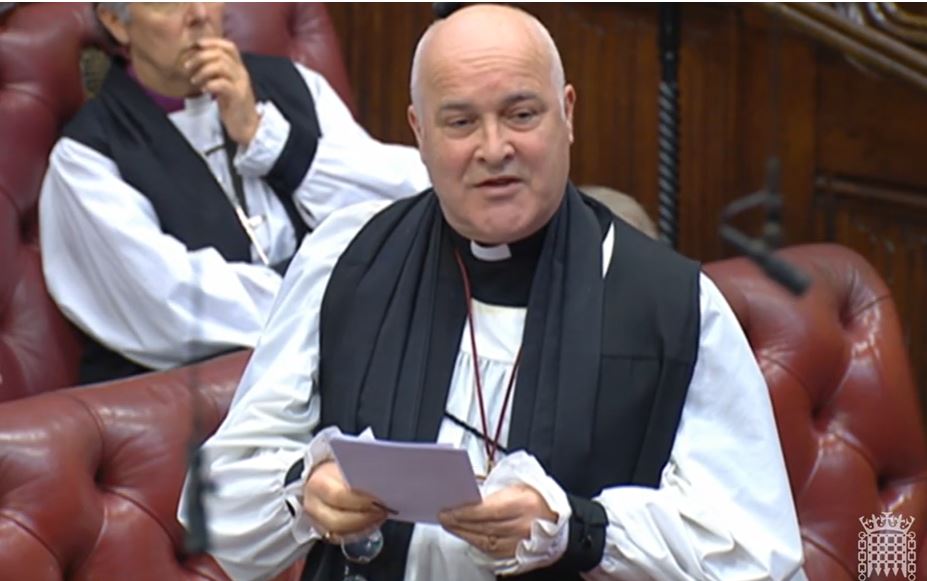
The Bishop of Oxford asked a question on improving and building public trust in AI, during a discussion on introducing legislation for regulation of artificial intelligence on 10th February 2025:
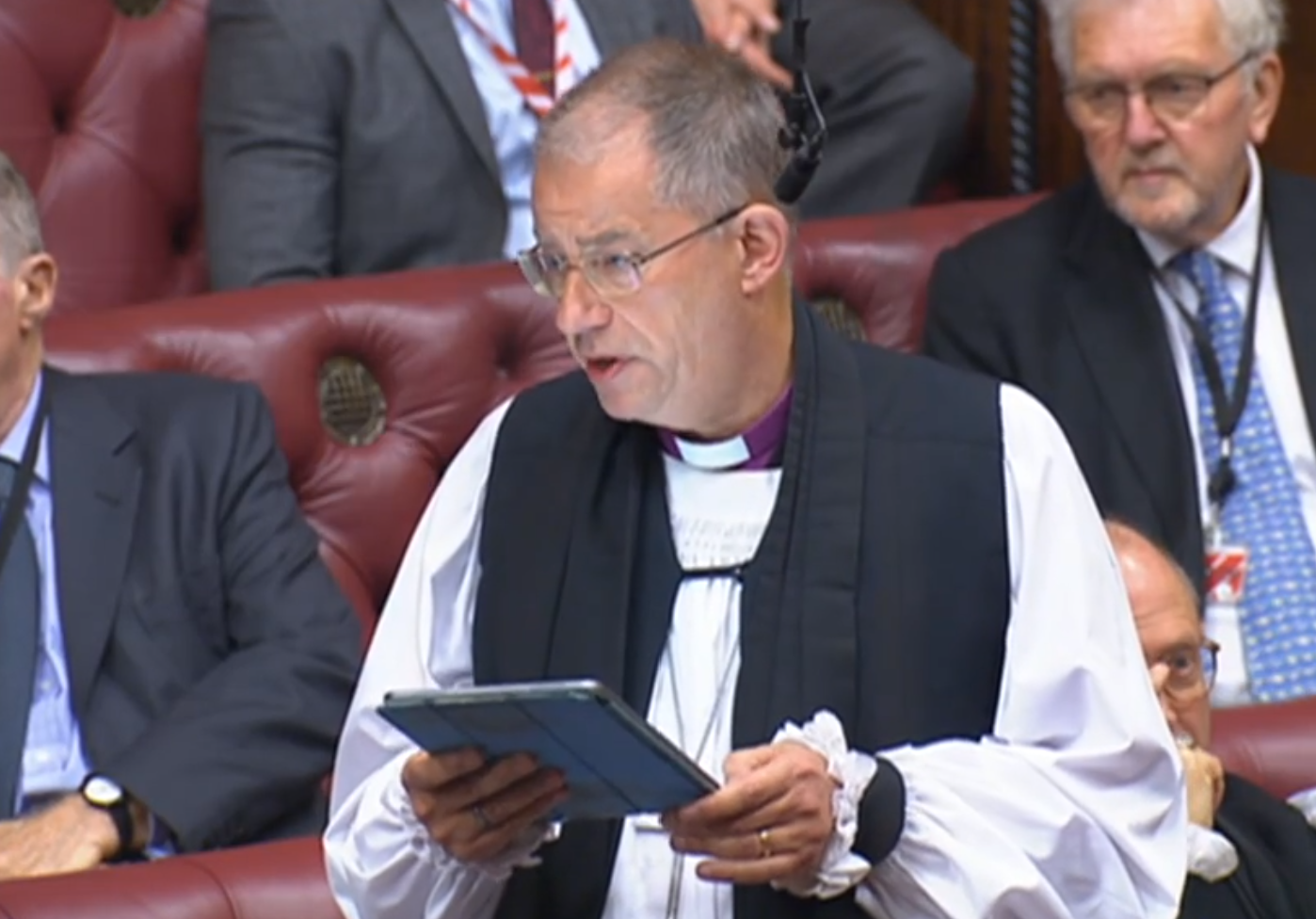
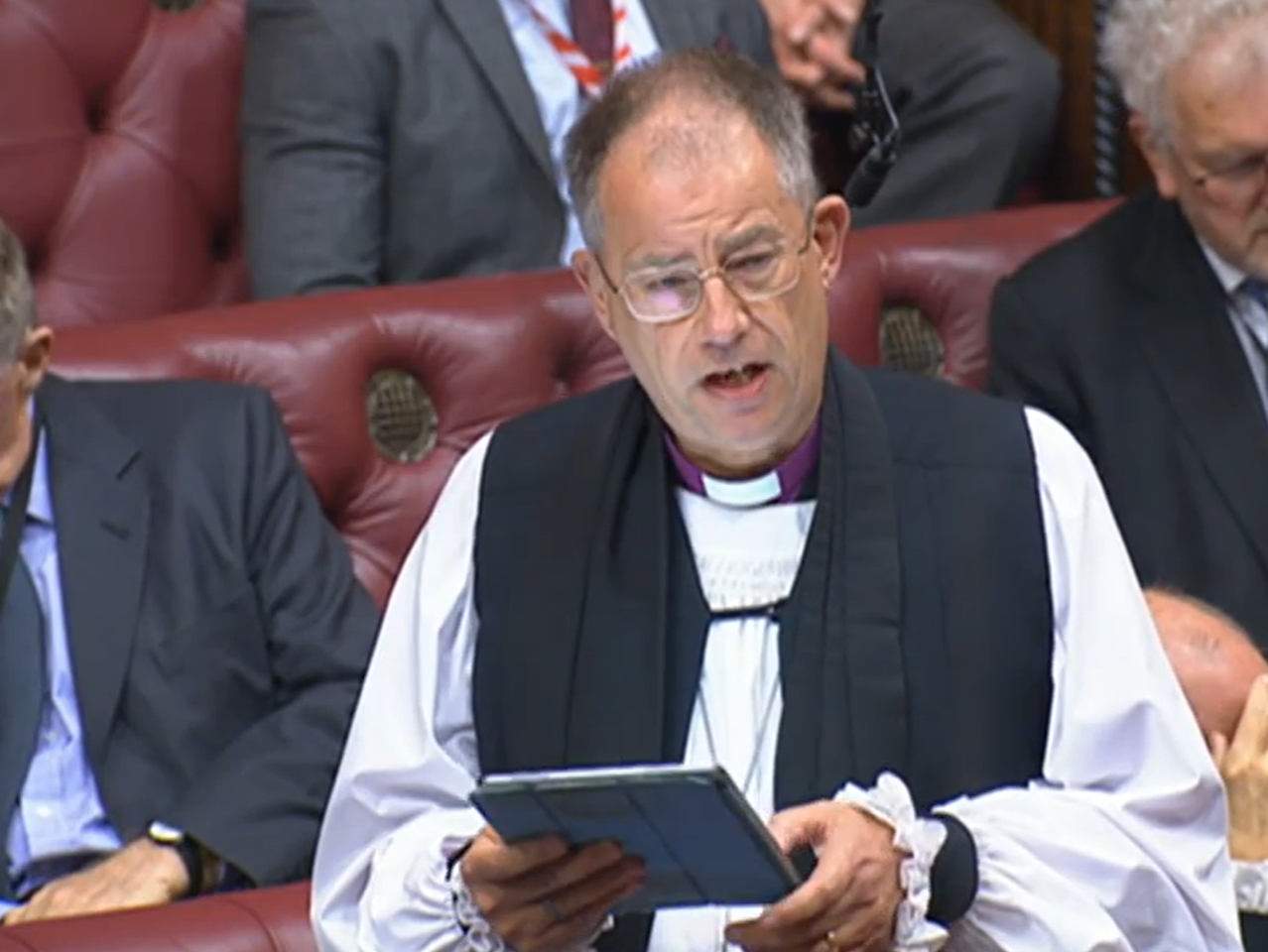
The Lord Bishop of Oxford: My Lords, according to the Government’s own recent survey, 43% of the public trust that the impact of AI will be positive, but 33% believe it will be negative. Given this very narrow gap and the critical importance of building trust in embracing new technologies, what specific steps are the Government planning to take to improve that public trust as they embed AI in the nation’s most trusted institutions, not least in the NHS?
The Bishop of St Albans received the following written answers on 11th October 2024:
The Lord Bishop of St Albans asked His Majesty’s Government, following the finding in the Internet Matters report The new face of digital abuse: Children’s experiences of nude deepfakes, published on 22 October, that nearly half a million children have encountered AI deepfake nudes online, what plans they have to ban apps that create deepfake nudes.
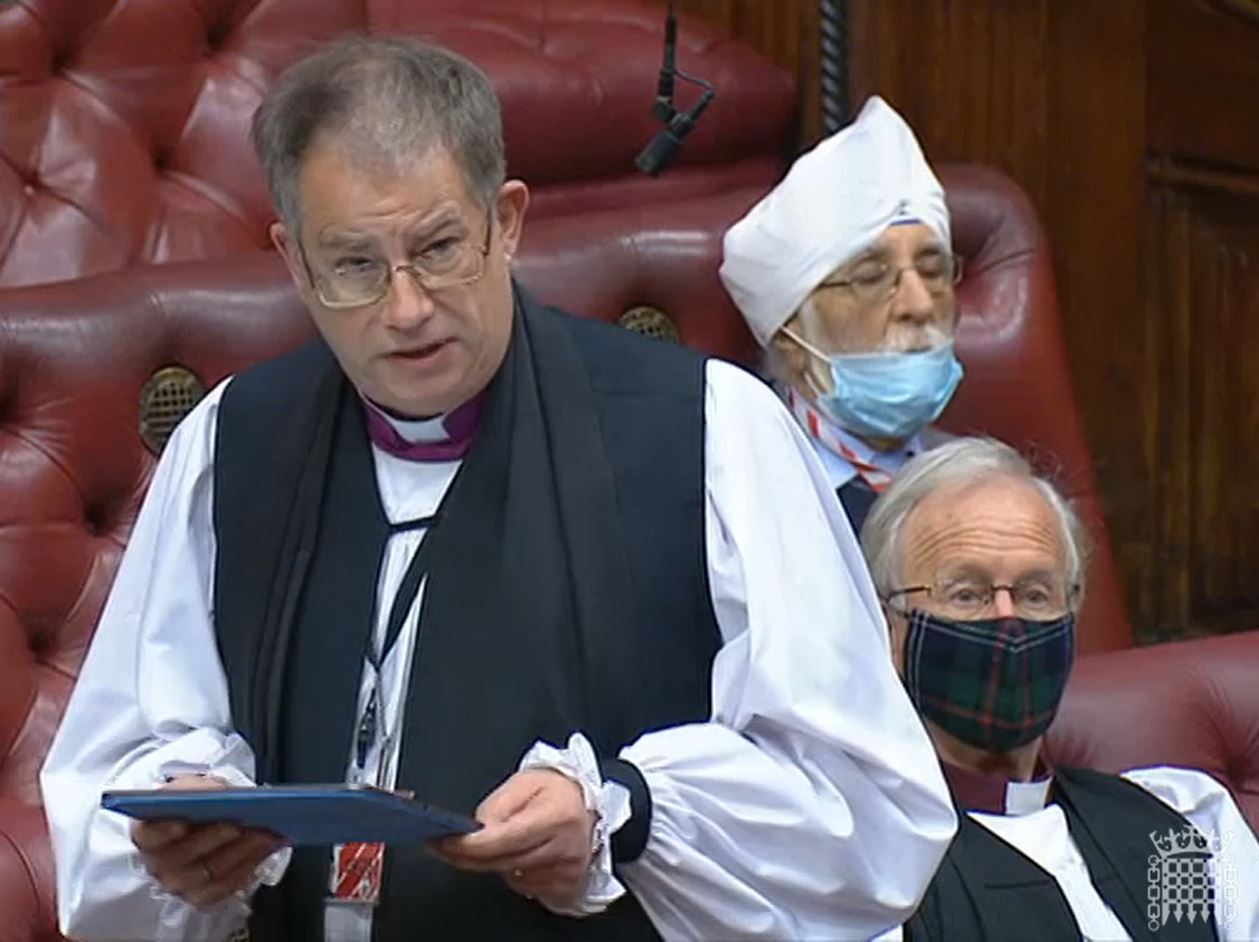
On 19th July 2024, the Bishop of Oxford spoke on developments in science and technology during the debate on the King’s Speech, encouraging the government to consider the potential risks of certain new technologies, particularly to children and security:
The Lord Bishop of Oxford: My Lords, it is a privilege to contribute to this debate. I congratulate the new Ministers and express appreciation to the noble Baroness, Lady Barran, and to the noble Baroness, Lady Jolly, for her valedictory speech. There is much to commend in the gracious Speech.
A few weeks ago, Pope Francis addressed the leaders of the G7 on the risks and opportunities of artificial intelligence. Francis spoke of the way in which AI arises from God-given human potential. He spoke of the excitement at the possibilities that these powerful tools bring, of the risks of greater inequalities and impersonation, and of the need for deep and humane wisdom and ethics and the right political leadership. I encourage noble Lords to read his address but also, if they have a moment, to watch the 10 minutes before his address. Pope Francis demonstrated a deep humanity, not only in his words but in the way he went right around the room, embracing each of the G7 leaders and lightening for a moment the heavy burdens that each carried.
The Bishop of St Albans received the following written answers on 9th May 2024:
The Lord Bishop of St Albans asked His Majesty’s Government whether they have made an assessment of the impact of emerging artificial intelligence capacities on the necessity for foreign language learning.
Baroness Barran (Con, DfE): Studying a language can be extremely rewarding and exciting for children and young people. It can provide insight into other cultures and open the door to travel and employment opportunities. Whilst Artificial Intelligence (AI) can be useful in enhancing the experience of learning a language, and this should be explored further, it should not be seen as a replacement.
The Bishop of Oxford received the following written answers on 23rd April 2024:
The Lord Bishop of Oxford asked His Majesty’s Government whether they give third parties access to national pupil data or learner records, and whether they charge a fee for any such access.
Baroness Barran (Con, DfE): The department will only share pupil, or learner, level data with others where it is lawful, secure and ethical to do so. Where these conditions are met and data is shared, the department do not charge any fee.
The Bishop of Newcastle spoke in a debate on report from the Artificial Intelligence in Weapon Systems Committee, highlighting the need for AI systems to be viewed with caution, and the importance of public confidence in future developments:
The Lord Bishop of Newcastle: My Lords, I am grateful to the noble Lord, Lord Lisvane, for his opening summary of this important report and to the noble Lord, Lord Stevens, for his remarks just delivered, reminding us of the maritime context of this debate as well. I also thank those involved in the creation of the report. Perhaps this alone is worth noting: AI did not produce this report; human beings did.
My friend the right reverend Prelate the former Bishop of Coventry was a member of the committee producing the report and he will be delighted that it is receiving the attention it deserves. He is present today, and I hope he does not mind me speaking on his behalf in this regard.
On 22nd March 2024, the Bishop of Worcester spoke in a debate on the Artificial Intelligence (Regulation) Bill (a private members bill tabled by Lord Holmes of Richmond), supporting the aims of the bill and calling for robust approach to AI regulation:
The Lord Bishop of Worcester: My Lords, I guarantee that this is not an AI-generated speech. Indeed, Members of the House might decide after five minutes that there is not much intelligence of any kind involved in its creation. Be that as it may, we on these Benches have engaged extensively with the impacts and implications of new technologies for years—from contributions to the Warnock committee in the 1980s through to the passage of the Online Safety Bill through this House last year. I am grateful to the noble Lord, Lord Holmes, for this timely and thoughtful Bill and for his brilliant introduction to it. Innovation must be enthusiastically encouraged, as the noble Baroness, Lady Moyo, has just reminded us. It is a pleasure to follow her.
That said, I will take us back to first principles for a moment: to Christian principles, which I hope all of good will would want to support. From these principles arise two imperatives for regulation and governance, whatever breakthroughs new technologies enable. The first is that a flourishing society depends on respecting human dignity and agency. The more any new tool threatens such innate dignity, the more carefully it should be evaluated and regulated. The second imperative is a duty of government, and all of us, to defend and promote the needs of the nation’s weak and marginalised —those who cannot always help themselves. I am not convinced that the current pro-innovation and “observe first, intervene later” approach to AI get this perennial balance quite right. For that reason, I support the ambitions outlined in the Bill.
On 13th February 2024, during a discussion on the proliferation of AI being used to create intimate images without consent, the Archbishop of York raised a point of clarification on the difference between malicious and non-malicious sharing of these images:
The Lord Archbishop of York: My Lords, it would be very helpful if the Minister could explain. If I heard him correctly, he said that sharing has a six month ban but for malicious sharing it could be up to two years. Could he explain what non-malicious use would be?
The Bishop of Oxford spoke on the topics of Artificial Intelligence and the climate during the King’s Speech debate on 13th November 2023:
The Lord Bishop of Oxford: My Lords, it is a privilege, as ever, to take part in the debate on the most gracious Speech. I thank the Minister for his clear introduction and pay tribute to the noble Lord, Lord Gascoigne, and the right reverend Prelate the Bishop of Norwich for their gracious and eloquent maiden speeches. It is particularly good to welcome the right reverend Prelate the Bishop of Norwich to this House with his considerable expertise, as he has demonstrated, on the environment and climate change.
I warmly welcome the Prime Minister’s ambition to build a better future for our children and grandchildren and to deliver the change the country needs. It seems to me, as to so many, that so great are the challenges we face that this or any Government will need deeper humility combined with greater practical wisdom to lead the nation forward.
On 24th July 2023, the Bishop of Oxford spoke in a debate about the ongoing development of advanced artificial intelligence, associated risks and potential approaches to regulation within the UK and internationally:
The Lord Bishop of Oxford: My Lords, I declare my interest as a member of two recent select and scrutiny committees on AI, and as a founding board member of the Centre for Data Ethics and Innovation.
Together with others, I congratulate the noble Lord, Lord Ravensdale, on this debate, and it is a pleasure to follow the noble and gallant Lord, Lord Houghton.
We are at a pivotal moment in the development of AI. As others have said, there is immense potential for good and immense potential for harm in the new technologies. The question before us is not primarily one of assessing risk and developing regulation. Risk and regulation must both rest on the foundation of ethics. My fundamental question is: what is the Government’s view on the place of ethics within these debates, and the place of the humanities and civil society in the development and translation of ethics?



 The Church of England in Parliament
You must be logged in to post a comment.