Financial Services and Markets Bill: Archbishop of Canterbury supports amendments on financial safety

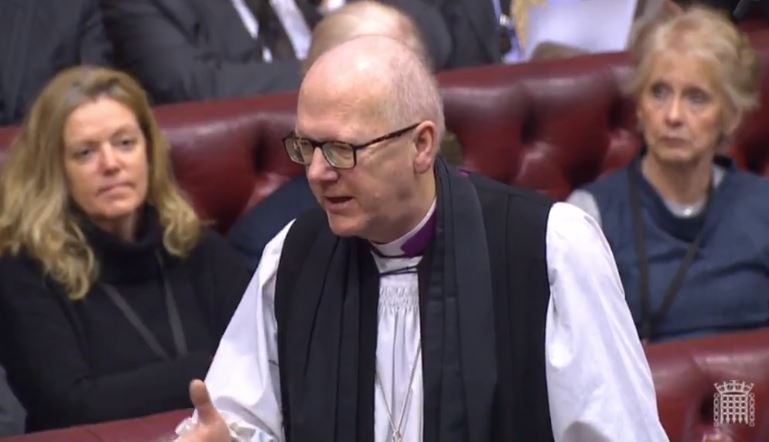
On 21st March 2023, the House of Lords debated the Financial Services and Markets Bill in committee. The Archbishop of Canterbury spoke in support of amendments tabled by Baroness Kramer which stressed the importance of the lessons learned from the 2008 financial crash:
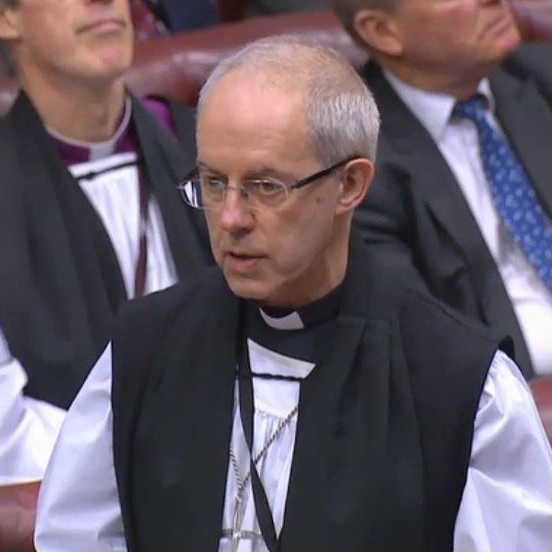
The Lord Archbishop of Canterbury: My Lords, I have added my name to Amendments 241C and 241D tabled by the noble Baroness, Lady Kramer, and wish to speak briefly in support of them here. I am particularly grateful to the noble Baroness, Lady Noakes, who made some very helpful and powerful points.

As the noble Baroness, Lady Kramer, said, this marks 10 years since the publication of the Changing Banking for Good report from the parliamentary commission, on which I sat with her. The two amendments to which I have added my name are probing amendments to stress the importance of not forgetting the lessons of 2008-09, because people and sectors entirely can have very short memories.

As the noble Baroness has explained, the amendments seek to prevent alteration to two elements of the banking reform Act 2013 by statutory instrument without proper debate in Parliament, and to prevent changes which go against the recommendations of the parliamentary commission. Our memories have certainly been refreshed this week. If the debate on this group had been held when it was first scheduled two or three weeks ago, I think we would have had a very different reception. If one is grateful for anything in the present crisis, it is that we have been so warmly reminded of why we need a clear memory.

Continue reading “Financial Services and Markets Bill: Archbishop of Canterbury supports amendments on financial safety”
Bishop of St Albans asks about health of the banking sector

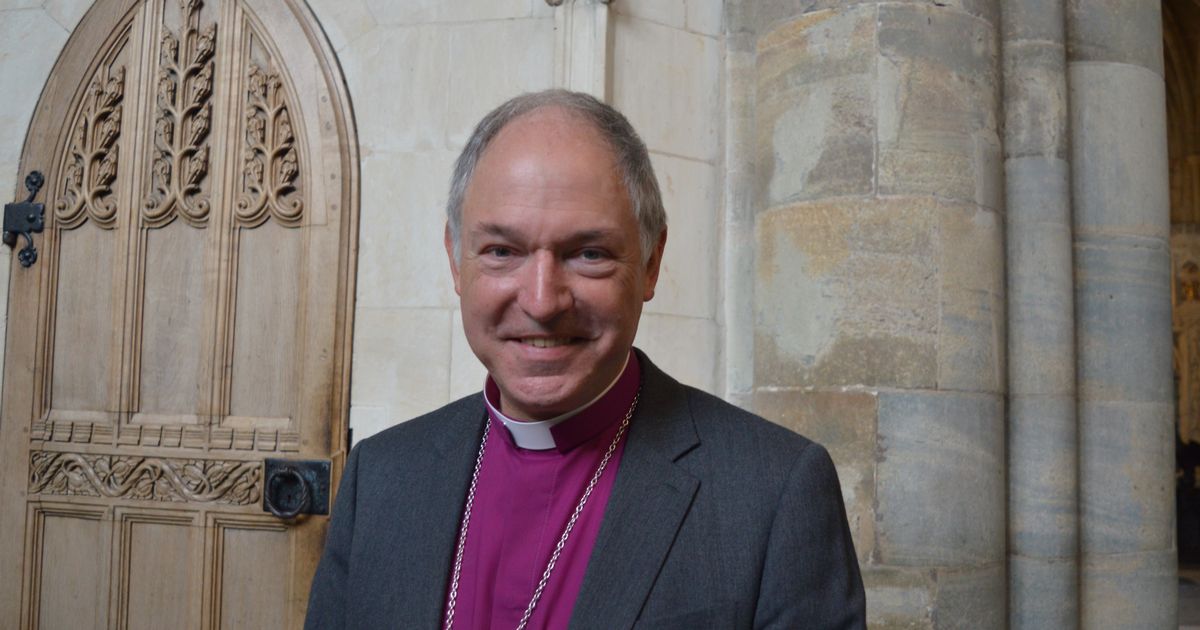
The Bishop of St Albans tabled a question on the health of the British banking sector on 21st March 2023:

The Lord Bishop of St Albans: To ask His Majesty’s Government what assessment they have made of the health of the British banking sector, following the challenges faced by overseas banks.

Baroness Penn (Con): The UK Government welcome the steps taken to support financial stability on Sunday by the Swiss authorities relating to Credit Suisse. This follows the sale on 13 March of Silicon Valley Bank UK to HSBC after the resolution of its US parent. No other UK banks have been materially affected by these actions. The Governor of the Bank of England has confirmed that, in his view:

“The wider UK banking system remains safe, sound, and well capitalised.”

Continue reading “Bishop of St Albans asks about health of the banking sector”

Bishop of Exeter asks about closure of bank branches in Devon

The Bishop of Exeter received the following written answer on 14th March 2023:

The Lord Bishop of Exeter asked His Majesty’s Government how many bank branches in Devon closed in (1) 2018, (2) 2019, (3) 2020, (4) 2021, and (5) 2022.

Baroness Penn (Con): The Government believes that all customers, wherever they live, should have appropriate access to banking services. Nonetheless, decisions on opening and closing branches are a commercial issue for banks and building societies. The Government does not intervene in these decisions nor make direct assessments of these branch networks. Based on constituency level data published by LINK there are over 650 ATMs and more than 80 bank branches in the county of Devon.

Continue reading “Bishop of Exeter asks about closure of bank branches in Devon”

Financial Services and Markets Bill: Archbishop of Canterbury stresses importance of serving the common good

On 10th January 2023, the House of Lords debated the Financial Services and Markets Bill in it’s second reading. The Archbishop of Canterbury spoke in the debate, highlighting the need for good practice and quality of service in the finance industry:

The Lord Archbishop of Canterbury: My Lords, this year marks the 10th anniversary of the final report of the Parliamentary Commission on Banking Standards, Changing Banking for Good. I declare my interest having served on that commission, and I welcome the presence in this debate of the noble Baroness, Lady Kramer, who also served, as did the current Lord Speaker. I also welcome the maiden speeches of three noble Lords today: the noble Lords, Lord Ashcombe and Lord Remnant, and the noble Baroness, Lady Lawlor.

We need to remember that the extraordinary crisis in 2008—which led to the various commissions, reports and changes in regulations, including the financial services Act 2013, in which the Parliamentary Commission on Banking Standards played a part—caused huge and ongoing crises. While welcoming the Bill very strongly, I join some of the hesitations mentioned by the noble Lords, Lord Hunt, Lord Sharkey and Lord Vaux. It has been estimated that the financial services industry, and particularly the major banks, have an effective subsidy as a result of the implicit government guarantee that they receive, which is worth approximately £30 billion a year. If there is £30 billion a year going spare, many other industries and not a few churches would welcome that very warmly. However, that subsidy, which is at the risk of the taxpayer, as we saw in 2008 and 2009, is what gives the result of the banks having heavy social obligations; we must look carefully at that when the Bill reaches Committee, as has already been said. The issues of inclusion, stability and access at all levels, especially for micro-businesses, are very important, not least for levelling up.

Continue reading “Financial Services and Markets Bill: Archbishop of Canterbury stresses importance of serving the common good”

Bishop of St Albans asks about access to cash in rural areas

The Bishop of St Albans received the following written answer on 21st December 2022:

The Lord Bishop of St Albans asked His Majesty’s Government:

  • what steps they are taking to ensure that cash access remains viable in the most remote parts of the UK.
  • further to the introduction of shared banking hubs in larger towns in the UK, what assessment they have made of level of cash access those in the most rural areas can expect to have in the future.
  • what steps they are taking to support people who rely solely on cash to (1) access cash, and (2) access digital banking alternatives to cash.

Lord Harlech (Con): The government recognises that while the transition towards digital banking and payments brings many opportunities, cash continues to be used by millions of people across the UK, including those who may be in vulnerable groups.

The government is currently taking legislation to protect access to cash across the UK through Parliament as part of the Financial Services and Markets Bill 2022. The legislation will establish the Financial Conduct Authority (FCA) as the lead regulator for access to cash with responsibility and powers to seek to ensure reasonable provision of withdrawal and deposit facilities.

Continue reading “Bishop of St Albans asks about access to cash in rural areas”

Bishop of St Albans asks about support for vulnerable elderly people using online financial services

On 30th November 2021, the Bishop of St Albans asked a question on the support and education available for elderly people accessing online financial services:

The Lord Bishop of St Albans: My Lords, with increasing numbers of bank branches being closed on high streets and the impact of Covid, the elderly vulnerable are having to negotiate the choppy waters of online banking like everybody else, in an environment where there are large numbers of online scams and frauds. What are Her Majesty’s Government doing to offer training and resources to try to protect the elderly vulnerable as they engage with online financial services?

Continue reading “Bishop of St Albans asks about support for vulnerable elderly people using online financial services”

Bishop of Southwark asks about access to cash for vulnerable groups

During a debate on cash infrastructure in the UK on 20th July 2023, the Bishop of Southwark asked a question on the use of cash by vulnerable groups such as the elderly, those with mental health issues, and those on low incomes:

The Lord Bishop of Southwark: My Lords, the data tells us that cash usage is higher among higher age groups, those with mental health issues, those on lower incomes and other categories. Does the Minister agree that what works in terms of digital payments for some groups in society and proves financially viable for major banking institutions simply does not work for large numbers of people in a diocese of 3 million such as Southwark, and many others?

Continue reading “Bishop of Southwark asks about access to cash for vulnerable groups”

Bishop of St Albans asks about HSBC, China and Hong Kong democracy campaigners

On 30th December the Bishop of St Albans received a written answer to questions on HSBC, China and democracy campaigners in Hong Kong:

The Lord Bishop of St Albans: To ask Her Majesty’s Government what assessment they have made of the relationship between HSBC Bank and the Chinese Communist Party. [HL11375]
The Lord Bishop of St Albans: To ask Her Majesty’s Government what representations they have made to HSBC Bank following that bank’s suspension of the bank accounts of pro-democracy campaigners from Hong Kong. [HL11376] Continue reading “Bishop of St Albans asks about HSBC, China and Hong Kong democracy campaigners”

Bishop of St Albans asks Government about access to cash withdrawal services in rural areas

On 22nd October 2019 the Bishop of St Albans, Rt Revd Alan Smith, asked the Government “what assessment they have made of the impact on rural communities of the decision by Barclays Bank to end cash withdrawal services from the Post Office”. The bishop then asked a follow-up question:

Lord Bishop of St Albans: I beg leave to ask the Question in my name on the Order Paper and declare my interest as president of the Rural Coalition.

The Parliamentary Under-Secretary of State, Department for Business, Energy and Industrial Strategy and Northern Ireland Office (Lord Duncan of Springbank): My Lords, the Government are disappointed by the withdrawal of Barclays from the renegotiated banking framework. None the less, the new banking framework will enable customers to access their cash from 27 high street banks. The Government will continue to ensure that communities receive support and have choice about how they manage their finances.

Lord Bishop of St Albans: I thank the Minister for his reply. Rural communities rely on access to finance, but in many rural areas where there is poor broadband or weak mobile signal, online banking is impossible. This is a fundamental issue for our rural areas. What representations have Her Majesty’s Government made to Barclays Bank, and what will we do if other banks decide to follow its lead? Continue reading “Bishop of St Albans asks Government about access to cash withdrawal services in rural areas”

Bishop of Birmingham speaks about banking reform

Birminghamsizedebate171219bOn 3rd September 2019 the Bishop of St Albans  led a debate on a motion to ask the Government “what assessment they have made of the implementation of the recommendations of the Parliamentary Commission on Banking Standards and the opportunities for further banking reform”. The Bishop of Birmingham, Rt Revd David Urquhart, also made a contribution:

Lord Bishop of Birmingham: My Lords, I am grateful to my right reverend friend for leading this debate and I welcome the Minister to his new role. I want to focus on the recommendations in the original report—the references in paragraph 138 of the summary, volume 1—which looked at culture change. The response of the banking industry to that challenge came through a report produced by Sir Richard Lambert, which said that if the banks didn’t face up to this, there will be further intervention, regulation and direction. As a result, the UK Banking Standards Board was set up in 2015. I declare my interests in that I am a founder member of that board and also part of the ad hoc Financial Exclusion Committee which has been referred to already.

Continue reading “Bishop of Birmingham speaks about banking reform”