Church Commissioners’ questions – climate change and open church buildings

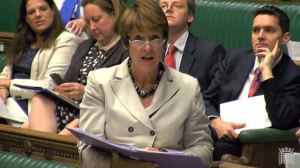
On 10th September 2015 Caroline Spelman, the Second Church Estates Commissioner, answered two oral questions in the House of Commons,on climate Change and open and sustainable churches.  

Climate Change

Kerry McCarthy (Bristol East) (Lab): What steps the Church Commissioners are taking to support the Church of England’s international efforts to tackle climate change. [901256]

Spelman CCQs June 2015 1The Second Church Estates Commissioner (Mrs Caroline Spelman): The Church of England, along with the wider Anglican Communion, is actively tacking climate change in four ways: assessing its investment strategy and, where necessary, divesting in the context of our climate change policy; actively engaging with public policy; attending the forthcoming Paris conference; and encouraging its parishes to reduce their carbon footprint and their parishioners to do the same. Continue reading “Church Commissioners’ questions – climate change and open church buildings”

‘We cannot shirk our responsibility to be a force for good in the world’, Bishop of Worcester tells Peers

“We cannot shirk our responsibility to be a force for good in the world. The type of challenges highlighted by this debate can be managed only in partnership with others—working to win hearts and minds, as well as being involved in any defence initiatives.” – Bishop of Worcester, 2/7/15

On Thursday 2nd July 2015 the Lords debated a motion moved by Lord Ashdown of Norton–sub-Hamdon ‘that this House takes note of the United Kingdom’s role in addressing global challenges posed by terrorism, conflict, climate change and mass migration’. The Bishop of Worcester, Rt Revd John Inge, spoke in the debate.

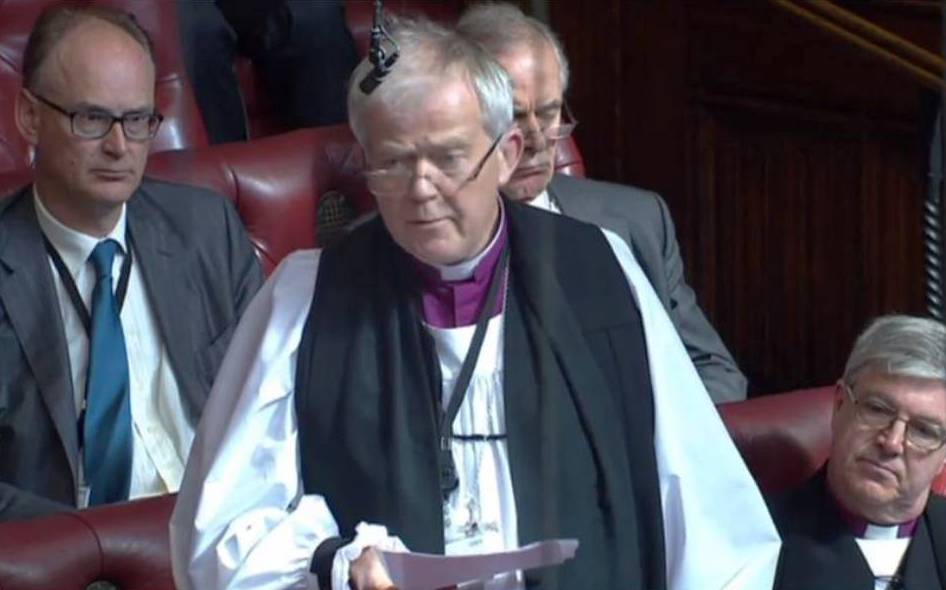
The Lord Bishop of Worcester: My Lords, I begin by expressingmy profound sadness in the wake of the recent horrific terrorist attacks. A student from the University of Worcester was killed in Tunisia, which brought home to people locally that these problems are not “out there”. It demonstrated very clearly the connectivity, of which the noble Lord, Lord WorcesterAshdown, spoke so eloquently.

What should our response be to the unprecedented times described so well by the noble Lord? While recognising that we have faced more difficult times, as the First World War commemorations remind us, we need to hold on to the strategic objectives that have underpinned British foreign policy since 1945 but adapt them for these new circumstances. We need to recognise that, although we live in an unprecedentedly connected world, it remains fractured and broken, and we need to work ever harder in partnership with others for the global common good. Continue reading “‘We cannot shirk our responsibility to be a force for good in the world’, Bishop of Worcester tells Peers”

Bishop of Salisbury asks Government about commitment to climate finance over next five years

On 30th June 2015 the Bishop of Salisbury, Rt Revd Nick Holtam, received a written answer to a question on the Government’s future climate finance plans.

SalisburyThe Lord Bishop of Salisbury: To ask Her Majesty’s Government what plans they have to address the issue of climate finance at the forthcoming United Nations Climate Change conference in Paris; and whether they plan to commit the United Kingdom to budgeting for climate finance arrangements up to 2020. [HL656] Continue reading “Bishop of Salisbury asks Government about commitment to climate finance over next five years”

Government welcomes Lambeth Declaration on Climate Change – reply to Bishop of Salisbury

On 23rd June 2015 the Bishop of Salisbury, Rt Revd Nicholas Holtam, received a written answer from Government that welcomed the Lambeth Declaration on Climate Change and the role of churches and faith communities in making a difference.

SalisburyThe Lord Bishop of Salisbury To ask Her Majesty’s Government what is their response to the Lambeth Declaration on Climate Change, signed by the leaders of the United Kingdom’s Christian and other faith communities and launched on 17 June. [HL655]

Continue reading “Government welcomes Lambeth Declaration on Climate Change – reply to Bishop of Salisbury”

Bishop of Salisbury makes first speech in the House of Lords – Environment and Climate Change

“Every parish priest and bishop knows what it is to care for the whole community. It is a great aim for the Government, as set out at the start of Her Majesty’s gracious Speech, to, “legislate in the interests of everyone in our country” and, “adopt a one-nation approach”. The success of that will be one of the measures by which the Government are judged.

The role of the Lords spiritual is distinctive and, we hope, helpful to the workings of this House. We are non-partisan in a political process. Our underlying concern is with the integration of beliefs and values that guide what we do, make our spirituality and animate us as human beings. We take the long view when the pressures are often to the short term.” – Bishop of Salisbury, 2/6/15

On 2nd June 2015 the Bishop of Salisbury spoke for the first time in the House of Lords. In his address, which came during the debate on the Queen’s Speech, he spoke of his background in the Church of England, his diocese, and his interest in the environment, climate change and energy. The full text is below and can also be watched online here.

Salisbury

Continue reading “Bishop of Salisbury makes first speech in the House of Lords – Environment and Climate Change”

Bishop of St Albans asks Government about progress made at UN Climate Change Conference

On 7th January 2015 the Bishop of St Albans, Rt Rev Alan Smith, asked an oral question of Government about the recent UN Climate Change Conference. The exchanges, including supplementary questions from Peers, are below:

Climate Change: UN Conference

Question

Asked by The Lord Bishop of St Albans

Bishop of St Albans

To ask Her Majesty’s Government what assessment they have made of the agreement reached at the United Nations climate change conference in Lima in December 2014. Continue reading “Bishop of St Albans asks Government about progress made at UN Climate Change Conference”

Make 2015 a year of action on development and climate change, Bishop of Birmingham urges

The following letter, co-signed by the Bishop of Birmingham and leaders of other faiths, appeared in The Times newspaper on 6th January 2015:

A year for progress

Sir, This year will provide a once-in-a-generation opportunity: in September world leaders decide on new goals for sustainable development and in December a new climate treaty.

Continue reading “Make 2015 a year of action on development and climate change, Bishop of Birmingham urges”

Bishop of Sheffield calls for creative communication of post-2015 development goals

“The threat of climate change, the desire for sustainable growth, digital communications and the movements of peoples have all contributed to this sense of one world and the desire for a good globalisation. It is a vision profoundly rooted in the Judaeo-Christian vision of the world: a family of diverse nations, cherishing peace, seeking justice, nurturing wisdom and looking for the flourishing of all.”

14.03.27 Bishop of SheffieldOn 11th December 2014, Labour Peer Lord McConnell of Glenscorrodale led a take-note debate in the House of Lords on the case for establishing new global development goals in 2015. The Bishop of Sheffield, the Rt Revd Steven Croft, took part in the debate. He paid tribute to the Government’s role in the continuing international dialogue and noted the significant achievements made through the Millennium Development Goals. He challenged all stakeholders in the post-2015 process to think creatively about how best to communicate these successes, in order to engage more people in the process. He noted that the Church, through the Anglican Communion is a key partner in international development. He commended the work of Christian Aid on the process and highlighted four key priorities identified by the agency – tackling climate change, a stand-along goal on gender justice, increased capacity to respond to natural disasters, and a focus on global inequality and a fairer global economic system.
Continue reading “Bishop of Sheffield calls for creative communication of post-2015 development goals”

Bishop of Chester presses Government on carbon capture during Infrastructure Bill debate

On 10th November 2014, the Bishop of Chester, the Rt Revd Peter Forster, took part in the Report Stage of the Government’s Infrastructure Bill. He asked the Minister a number of questions regarding the UK’s carbon reduction commitment, carbon capture by power stations, and the UK’s strategy for oil and gas extraction. The amendments that the Bishop spoke to were withdrawn following the brief debate.

14.03 Bishop of ChesterThe Lord Bishop of Chester: My Lords, can I ask the Minister when she responds to comment on two points? First, if we are now to be committed in this legally strengthened way to the maximum economic exploration of our oil and gas reserves, how do the Government see that to be compatible with the commitment under the Climate Change Act to reduce our emissions to only 20% of the 1990 level by 2050 without also having a strategy for carbon capture and storage, which I think lies behind the amendment?

Secondly, the amendment refers to the economic extraction of our hydrocarbons—I have never yet heard any reliable estimate of what the additional cost will be of having carbon capture and storage on a typical power station, be it a coal station or a gas station. What level of increase per kilowatt hour—in a unit that can be easily understood—is anticipated if carbon capture and storage is required on such stations? That impacts on what is economically recoverable. Continue reading “Bishop of Chester presses Government on carbon capture during Infrastructure Bill debate”

Bishop of St Albans questions government on the Green Climate Fund

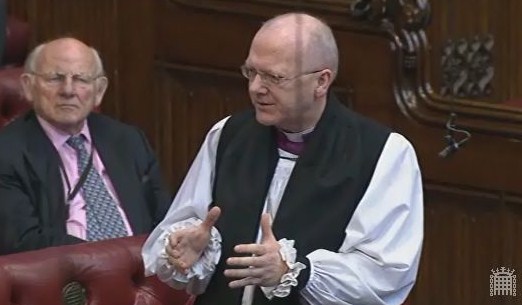
On 27th October 2014, the Bishop of St Albans, the Rt Revd Alan Smith, asked an oral question in the House of Lords:

Bishop of St AlbansThe Lord Bishop of St Albans: To ask Her Majesty’s Government what plans they have to pledge funding to the Green Climate Fund.

The Parliamentary Under-Secretary of State, Department of Energy and Climate Change (Baroness Verma): My Lords, the UK recognises the importance of a successful initial resource mobilisation process, and is keen for the fund to become operational as soon as possible. We aim to pledge at the initial Green Climate Fund pledging meeting arranged for 19 and 20 November, ahead of the United Nations climate change negotiations at the start of December. We are a strong supporter of the Green Climate Fund, because we see it as a key new vehicle for helping developing countries adapt to climate change and follow low-carbon development paths.

The Lord Bishop of St Albans: I thank the Minister for her reply, and I am grateful for all that the Government are doing in this important area. So far, 10 countries, I think, have pledged contributions to the Green Climate Fund, but despite his warm words recently in New York the Prime Minister was not among those offering to make a pledge. Can we have some information about how much Her Majesty’s Government intend to pledge, and can we know what else we shall put on the table, if we are to have credibility at the discussions in December in Lima?

Baroness Verma: My Lords, the UK is committed to scaling up climate finance, and we have already committed £3.87 billion from our International Climate Fund between 2011 and 2016. The first £1.76 billion of this has already been committed from the International Climate Fund, and is expected to achieve the following lifetime results. However, the right reverend Prelate is right that we need to encourage all member states to come up to the mark and ensure that they are all contributing. This is a very important area. The UK is absolutely committed, and the Prime Minister has made that very clear. He will announce his pledge in November.

(via Parliament.uk)