Bishop of Norwich asks about economic impact of current conflict in the Middle East

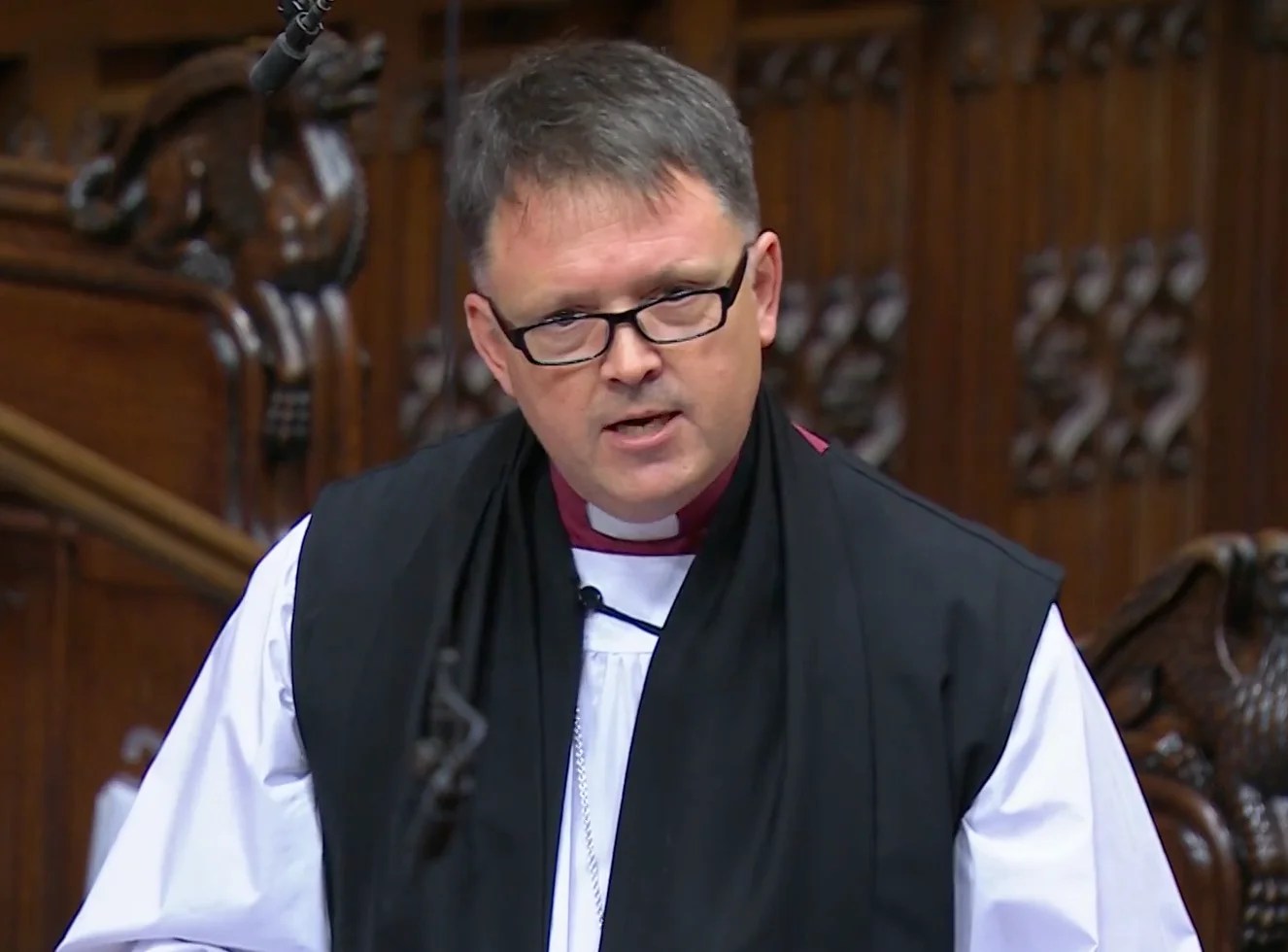
The Bishop of Norwich asked a question on the impact of the current conflict in the Middle East, following a government statement on the economic impact of the situation on 26th March 2026:

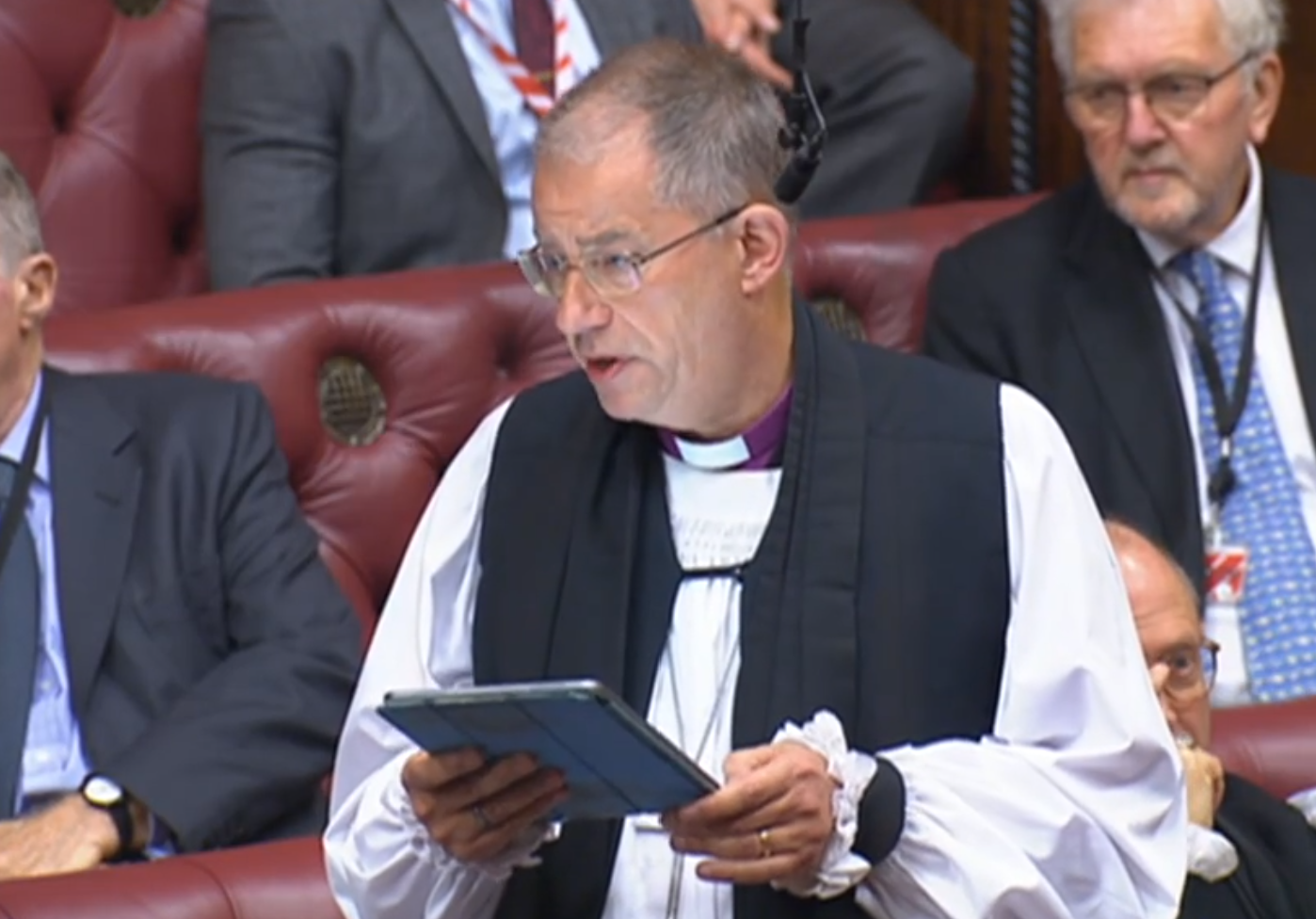
The Lord Bishop of Norwich: My Lords, I welcome this Statement and join the Chancellor speaking in the other place in paying tribute to our Armed Forces. In particular, I welcome support for those families and households hardest hit; however, I share the concern of the noble Baroness, Lady Kramer, for small businesses, and extend that with a question around what we are doing to support the charitable sector: for example, from my recent experience, in the transport costs associated with food banks, in heating warm hubs and so on. We have a responsibility to care for those who care for others, and I ask what the Government are doing to support that work.

Continue reading “Bishop of Norwich asks about economic impact of current conflict in the Middle East”
Bishop of Oxford asks about UK Steel Industry

The Bishop of Oxford asked a question on high energy costs in response to a government statement on the UK steel industry on 23rd March 2026:

The Lord Bishop of Oxford: My Lords, for seven years I was privileged to be the Bishop of Sheffield, and I am familiar with the complex ecology of south Yorkshire, articulated by the noble Lord, Lord Fox. For those seven years, each year I was the guest of the Cutlers Company, who would invite a Minister, always from London and normally the Chancellor. In those years it was the coalition and Conservative Governments. The script followed by the speakers from the Cutlers Company, who did not mince their words, was always the same. It was about the neglect of the manufacturing industry by government and, in particular, high energy costs. This seems to me to be the key to the next chapter in this strategy.

Continue reading “Bishop of Oxford asks about UK Steel Industry”

Bishop of Norwich asks about energy transition plans for businesses

The Bishop of Norwich received the following written answer on 26th February 2026:

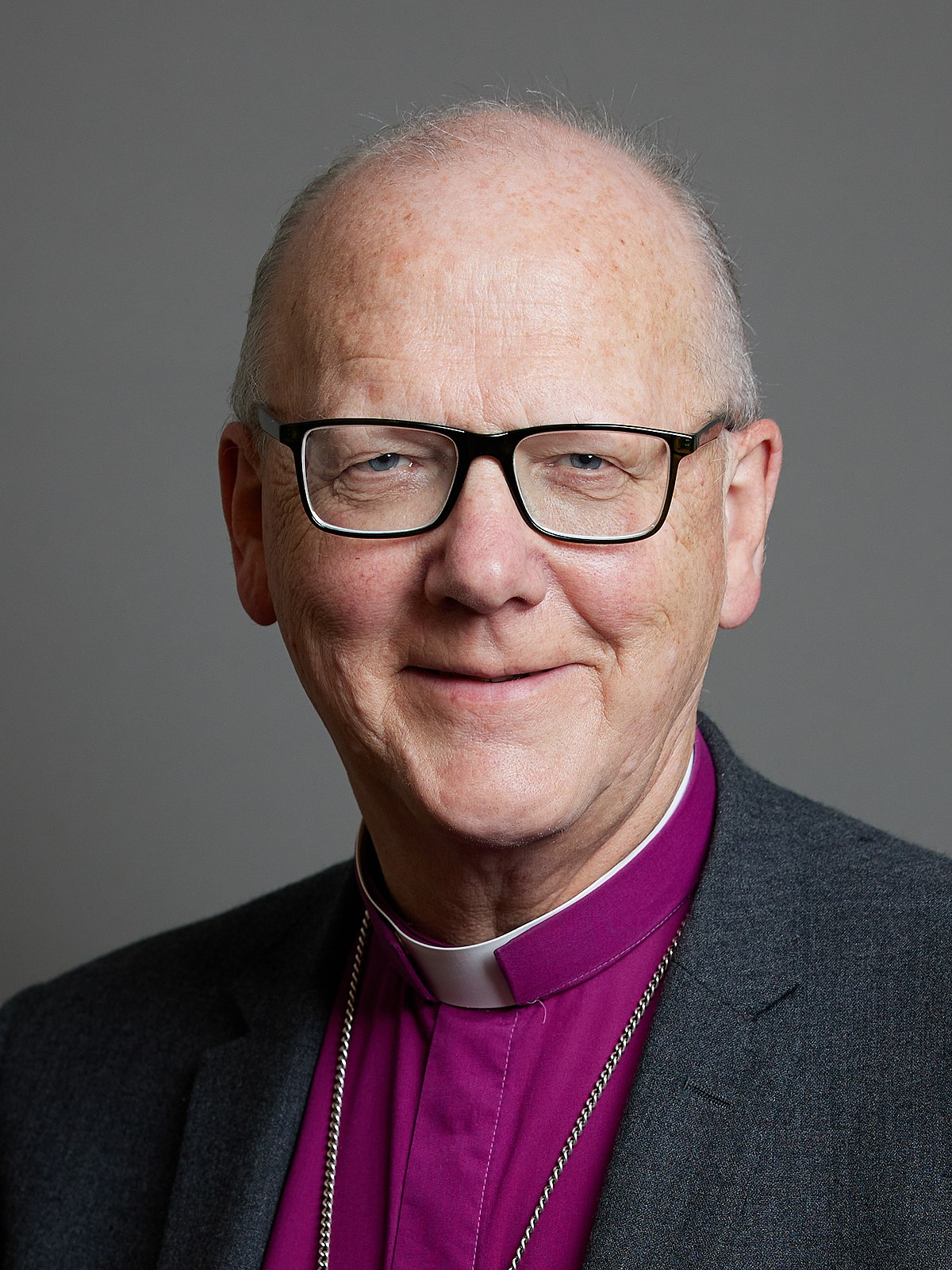
The Lord Bishop of Norwich asked His Majesty’s Government what progress they have made towards mandating UK-regulated financial institutions and FTSE 100 companies to implement transition plans aligned with the Paris Agreement; and what timetable they intend to set for introducing such requirements.

Continue reading “Bishop of Norwich asks about energy transition plans for businesses”

Bishop of Norwich asks about inclusion of civil society and faith organisations in path to net zero

The Bishop of Norwich tabled a question on government steps to include civil society and faith-based organisations in work to reach net zero emissions by 2050 on 8th January 2026:

The Lord Bishop of Norwich: To ask His Majesty’s Government what steps they are taking to include civil society and faith-based organisations in work to reach net zero emissions by 2050.

Lord Whitehead (Lab, DESNZ): Our recently published Energising Britain plan sets out how we will work with communities so that everyone can benefit from our clean energy superpower mission. It highlights how we are already engaging people and local organisations to design and deliver climate and nature policies that reflect people’s needs and views. The plan also outlines new ways to collaborate, including an annual “Energising Britain” event and the Youth for Climate and Nature panel.

Continue reading “Bishop of Norwich asks about inclusion of civil society and faith organisations in path to net zero”

Church Commissioners Questions: National Church Governance Measure, Identity Sexuality Relationships and Marriage, Support for Christians in the Occupied Palestinian Territories, Vicars (Rural Parishes), Solar Power (Churches)

On 27th November 2025, the Leader of the House of Commons, Sir Alan Campbell MP, gave the following answers to questions from MPs:

National Church Governance Measure

Danny Kruger MP (Reform, East Wiltshire) asked: 2. What guidance the Church Commissioners have received from the Charity Commission on changes proposed under the draft National Church Governance Measure.

Sir Alan Campbell MP (Lab, Tynemouth): I am sorry that the Second Church Estates Commissioner, my hon. Friend the Member for Battersea (Marsha De Cordova), is unwell; we wish her a swift recovery. She will be listening, and if my answers fall short, I am sure that she will follow up on them with Members.

Continue reading “Church Commissioners Questions: National Church Governance Measure, Identity Sexuality Relationships and Marriage, Support for Christians in the Occupied Palestinian Territories, Vicars (Rural Parishes), Solar Power (Churches)”

Bishop of Hereford asks about sustainable hydrogen fuel sources

The Bishop of Hereford asked a question on sustainable sources of hydrogen fuel on 19th November 2025, during a discussion on the hydrogen and fuel cell energy industry in the UK:

The Lord Bishop of Hereford: My Lords, we accept that the use of hydrogen is to help us to reduce our carbon footprint but recognise that there are a variety of different ways by which that hydrogen can be generated, some of which are environmentally damaging. What steps are His Majesty’s Government taking to ensure that the hydrogen used across UK industry is sourced sustainably and in ways that will reduce CO2 emissions, not increase them?

Continue reading “Bishop of Hereford asks about sustainable hydrogen fuel sources”

Bishop of Norwich asks about energy and environment

The Bishop of Norwich received the following written answers on 1st September 2025:

The Lord Bishop of Norwich asked His Majesty’s Government what support will be available to schools to decarbonise following the closure of the Public Sector Decarbonisation Scheme.

Continue reading “Bishop of Norwich asks about energy and environment”

Bishop of Norwich calls for community-based approach to energy innovation

The Bishop of Norwich spoke in a debate on the National Policy Statement for Energy on 9th July 2025, stressing the need for a community-based approach to energy innovation:

The Lord Bishop of Norwich: My Lords, I am grateful to the Minister for his introduction, as there are many things within these documents to praise. 

They set out a positive direction for future energy infrastructure, which broadly aligns with clean power by 2030 and net zero by 2050. Although I—and, I am sure, many others—welcome a whole-system approach to energy infrastructure planning, delivery has remained fragmented. Let us hope, to coin a phrase, that the wind might now change.

I have just come from the mass climate lobby outside, in Parliament Square. I am not usually someone who joins such events but, for me, it is vital for us to hear the Climate Coalition and the great many people who are raising this issue of climate change and nature loss, because it seems to be slipping down political agendas. Some of the coalition’s aims are to cut bills, back UK jobs and secure a greener, fairer future for all. Another is to restore nature to create a safer and healthier future. With these aims still fresh in my mind from the crowd outside, my remarks will address three areas: first, the cost of connection and district heating networks, especially for those organisations that create the warp and weft of community life; secondly, the capacity of the grid to receive the quantity of renewable energy that we need produced; and, thirdly, mitigating the impact of infrastructure projects on people, nature and landscapes.

Continue reading “Bishop of Norwich calls for community-based approach to energy innovation”

Bishop of St Albans asks about energy costs and global warming

The Bishop of St Albans received the following written answers on 12th April 2025:

The Lord Bishop of St Albans asked His Majesty’s Government, following the publication in Environmental Research Letters on 31 March of Reconsidering the macroeconomic damage of severe warming, what assessment they have made of the finding that global warming will have a significant negative impact on the size of the global economy.

Continue reading “Bishop of St Albans asks about energy costs and global warming”

Bishop of Manchester asks about net zero targets and biomass capture

The Bishop of Manchester asked a question on the impact of new oil projects on net zero targets, and a question on the viability of carbon capture and storage, on 12th February 2025:

The Lord Bishop of Manchester: Perhaps I might make it a bit wider, to avoid putting the Minister in a difficult situation. We have heard that there are a number of projects that have previously been approved to a certain stage and—at the risk of a pun—are in the pipeline. Have the Government made any estimate of the impact that schemes in this sort of pipeline will have on the UK being able to meet its net-zero targets?

Continue reading “Bishop of Manchester asks about net zero targets and biomass capture”