
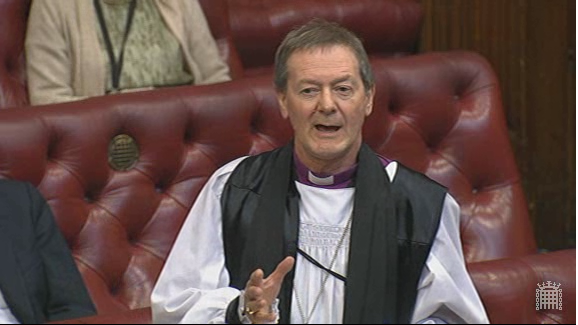
The Bishop of St Albans spoke during Lord Singh of Wimbledon’s debate on relations with the Sikh community following the publication of government documents regarding British involvement in planning the attack on the Golden Temple.
He focussed his remarks on the positive role that the Sikh community has played and continues to play in British society. He welcomed the lack of violent or radical response from the community in light of the publication of the documents, but warned of the danger that it could happen. He called for a wider inquiry into the broader relations between the UK and Indian governments at the time.
The Lord Bishop of St Albans: My Lords, the noble Lord, Lord Singh, has spoken eloquently of the terrible events that took place 30 years ago.
For some seven years in the 1990s, I was privileged to live in Walsall in the West Midlands, in a very multicultural area where I was then working and ministering. I not only counted among my friends a Sikh family living next door to me, but I also paid many visits to the local Guru Nanak temple and received wonderful hospitality there. Even then, some 10 years after the events of Operation Blue Star, Operation Sundown and Operation Woodrose, I was aware of how large these tragedies loomed not just in the imaginations but in the families of my neighbours. Continue reading “Bishop of St Albans On Relations With Sikh Community”
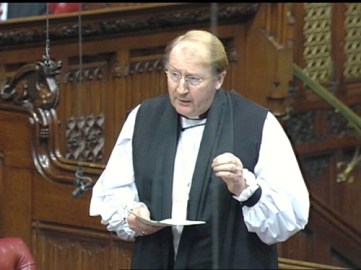 On the 9th May 2013 the Bishop of Exeter, the Rt Revd Michael Langrish responded to the Queen’s Speech addressing his remarks to devolution, community cohesion, and the need to address the increasing London-centric bias of policy making. Bishop Michael used the Church of England as an example of a way to successfully balance competing interests to create a sense of cohesion and mutual belonging in our society.
 The Church of England in Parliament
You must be logged in to post a comment.