Bishop of St Albans asks about capital punishment in Iran

The Bishop of St Albans received the following written answer on 12th February 2025:

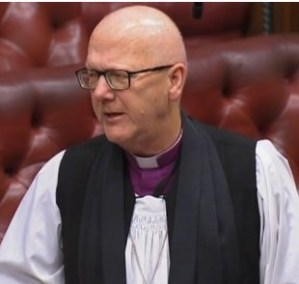
The Lord Bishop of St Albans asked His Majesty’s Government what representations they intend to make to the government of Iran concerning the execution sentences of Behrouz Ehsani and Mehdi Hassani.

Continue reading “Bishop of St Albans asks about capital punishment in Iran”

Bishop of St Albans asks about status of political prisoner in Iran

The Bishop of St Albans received the following written answer on 23rd January 2025:

The Lord Bishop of St Albans asked His Majesty’s Government what representations, if any, they intend to make to the government of Iran concerning the execution sentence of Pakhshan Azizi.

Continue reading “Bishop of St Albans asks about status of political prisoner in Iran”

Bishop of Ely asks government to engage with Archbishop’s office and church contacts on laws criminalising homosexuality in Uganda

On 5th July 2023, the Bishop of Ely asked that the Foreign, Commonwealth & Development Office utilise contacts available within the Archbishop of Canterbury’s Office and the wider church to engage with people in Uganda on the country’s recent institution of the death penalty for homosexuality:

The Lord Bishop of Ely: My Lords, I thank the Minister for his reference to the most reverend Primate the Archbishop of Canterbury’s letter to the Archbishop of Uganda, and for hearing us, as Bishops, say how much we deplore what has been decided by the Archbishop of Uganda in support of this ignoble law. In the light of the most reverend Primate the Archbishop’s intervention, and all that has been said about engaging with civil society, will the FCDO engage with the Archbishop’s office and make use of the Church’s contacts to offset some of the very conservative religious engagement from other countries in Uganda and engage with people on the ground in Uganda to seek to change this abhorrent law?

Continue reading “Bishop of Ely asks government to engage with Archbishop’s office and church contacts on laws criminalising homosexuality in Uganda”

Bishop of Worcester asks about contradictory nature of the death penalty

The Bishop of Worcester asked a question on the problematic nature of the judicial death penalty during a debate on capital punishment and UK membership of the Council of Europe on 2oth February 2023:

The Lord Bishop of Worcester: My Lords, in view of the comments to which the noble Baroness, Lady Chakrabarti, has drawn attention, does the Minister agree that there is something deeply ironic about a society condemning the taking of a person’s life, and in order to demonstrate exactly how strongly it does so, doing exactly that through a judicial killing?

Continue reading “Bishop of Worcester asks about contradictory nature of the death penalty”

Bishop of St Albans asks about recent executions in Saudi Arabia

The Bishop of St Albans asked about the government response to human rights issues in Saudi Arabia on 16th March 2023, following a Commons Urgent Question on the execution of Hussein Abo al-Kheir and other recent executions in the country:

The Lord Bishop of St Albans: My Lords, the whole House acknowledges the contribution the Minister makes in this important area, but there are real concerns as to whether His Majesty’s Government are as intent on addressing these issues. Saudi is part of the Arab Charter on Human Rights 2004, but the problem is enforcement. Even the statute brought in 2014 does not enable enforcement. What representations are His Majesty’s Government making to the wider Arab world to work with colleagues to nudge Saudi in a new direction and stop this extraordinary range of executions, which do not seem to be abating at all?

Continue reading “Bishop of St Albans asks about recent executions in Saudi Arabia”

Bishop of St Albans asks Government to help strengthen human rights and the rule of law in Bahrain

On 8th July 2020 Baroness D’Souza asked the Government “what representations they will make to the Government of Bahrain regarding the imprisonment and possible execution of individuals including Mohamed Ramadan and Hussain Moosa, and the reported use of torture to extract their confessions.” The Bishop of St Albans, Rt Revd Alan Smith, asked a follow-up question:

The Lord Bishop of St Albans [V]: My Lords, the Minister has assured the House that representations have been made to the authorities in Bahrain expressing our complete and utter opposition to the death penalty. Has he also reiterated our opposition to the use of torture to extract confessions? Will Her Majesty’s Government review their existing package of reform assistance to Bahrain to see what further support can be offered to strengthen human rights and the rule of law in Bahrain? Continue reading “Bishop of St Albans asks Government to help strengthen human rights and the rule of law in Bahrain”

Bishop of St Albans asks Government about deportations to countries where death penalty might be used

On 13th November 2018 the Bishop of St Albans, Rt Revd Alan Smith, received a written answer to a question on the death penalty:

The Lord Bishop of St Albans: To ask Her Majesty’s Government how many individuals have been deported from the UK to countries where people can be sentenced to death without a death penalty assurance being sought since 2001. Continue reading “Bishop of St Albans asks Government about deportations to countries where death penalty might be used”

Bishop of St Albans asks Government how often it has sought death penalty assurances for British nationals

On 9th October 2018 the Bishop of St Albans, Rt Revd Alan Smith, received a written answer to a question on death penalty assurances for British or former British citizens:

The Lord Bishop of St Albans: To ask Her Majesty’s Government, further to the statement by Baroness Williams of Trafford on 24 July, how many times in the last 20 years they have decided not to seek death penalty assurances for British or former British citizens; and what were the details of any such cases. Continue reading “Bishop of St Albans asks Government how often it has sought death penalty assurances for British nationals”

Bishop of Coventry asks Government about freedom of religion and belief and use of the death penalty across the Commonwealth

On Wednesday 15th November 2017 the Bishop of Coventry, Rt Revd Christopher Cocksworth, received written answers to five questions about freedom of religion and belief and use of the death penalty across the Commonwealth: 

The Lord Bishop of Coventry:

(i) To ask Her Majesty’s Government what assessment they have made of the number of Commonwealth countries that retain apostasy laws.

(ii) To ask Her Majesty’s Government what assessment they have made of the number of Commonwealth countries that retain some form of blasphemy law.

(iii) To ask Her Majesty’s Government what assessment they have made of the number of Commonwealth countries that retain the death penalty.

(iv) To ask Her Majesty’s Government what is their strategy for protecting freedom of religion or belief across the Commonwealth.

(v) To ask Her Majesty’s Government what percentage of funds currently allocated under the Magna Carta Fund aim to protect or strengthen freedom of religion or belief across the Commonwealth. Continue reading “Bishop of Coventry asks Government about freedom of religion and belief and use of the death penalty across the Commonwealth”

Archbishop asks Government to press Saudi Arabia to stop executions

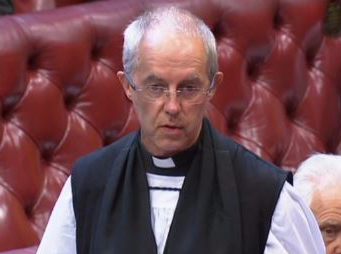
O17.06.22 ABCLords2n 18th July 2017, Lord Dholakia asked Her Majesty’s Government what representations they have made to the Government of Saudi Arabia about the imminent execution of fourteen people, including two juveniles. The Archbishop of Canterbury, the Rt Revd. Justin Welby, asked a follow-up question. Below is his question and its ministerial response.

The Archbishop of Canterbury: My Lords, as the noble Lord said a few moments ago, we have heard some very balanced and judicious answers, with considerable condemnation and very clear statements. However, surely the depth of our relationship with Saudi Arabia in trade and finance, and the presence of many Saudi Arabians in this country—the long-standing way in which we have been together through war and peace—would indicate that we have the options for significantly more leverage than mere condemnation. I wonder what other measures the Government are taking which involve action as well as condemnation, particularly over this question.

Continue reading “Archbishop asks Government to press Saudi Arabia to stop executions”