
On Monday 15th January 2018 the House of Lords heard the repeat of a Government statement on the National Security Capability Review. The Bishop of Leeds, Rt Revd Nick Baines, asked a follow up question:
 The Lord Bishop of Leeds: My Lords, would the Minister agree with me that it is important in any public statement that the people of this country are properly apprised of the fact that, if we say yes to and prioritise some elements of our defence capability, we are inevitably saying no to others, and that we are given a proper appraisal of what our capability actually is? In this country, particularly in some of our newspapers, we still hear statements that imply almost that Britannia still rules the waves. Our rhetoric and prioritising ought to match the reality of the situation in which we find ourselves. Continue reading “Bishop of Leeds calls for honesty and transparency over UK’s defence capabilities”
 The Lord Bishop of Portsmouth: My Lords, one of the duties in which I take particular pleasure is chairing the governors at Ripon College, Cuddesdon, just outside Oxford, a theological college at which men and women are prepared for ministry. It is known by those associated with it more colloquially as a vicar factory. Notices around the college remind the residents that, after night prayer or Compline, they are expected to abide by what is known as the great silence. It is not, I suspect, adhered to with the same severity as in years past. Indeed, one has a sense that the silence masks all kinds of feverish activity, all of it associated with theology, of course.
 The Lord Bishop of Coventry: My Lords, I join others in commending the noble Lord, Lord Soley, for securing this debate and for framing it in this way. He made it clear that UK defence forces exist not only for the protection and promotion of immediate British interests but to contribute to global peace, stability and security. The scale of that task has obvious implications for the size of the defence budget and its distribution.
 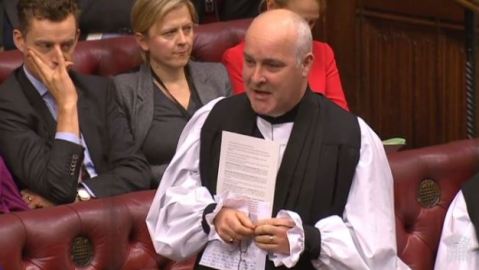 On 24th April 2017, the Bishop of Chelmsford, the Rt Revd Stephen Cottrell, received a written answer to a question on the UN Conference to Negotiate Ban on Nuclear Weapons.
 On 21st March 2017 the Government’s Armed Forces Act (Continuation) Order 2017 was laid before Parliament with a motion to approve. The Bishop of Leeds, the Rt Revd Nick Baines spoke in the debate, commenting on the UK’s relationship with Russia.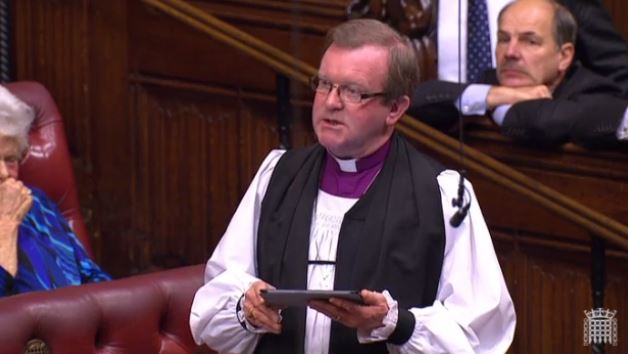
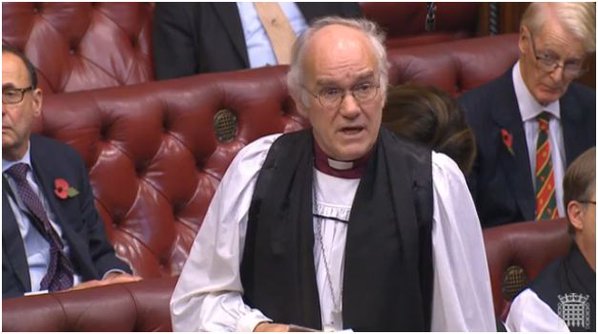
 On the 9th January 2017, the Bishop of Portsmouth, Rt Revd Christopher Foster, led a short debate in the Lords, to ask the Government “what is their assessment of the role of the Armed Forces Covenant in ensuring that those who serve or who have served in the Armed Forces, and their families, are treated with fairness and respect.” Earl Howe, the Minister of State for the Ministry of Defence, responded on behalf of the Government. Both their speeches are reproduced below in full. The speeches of other Members in the debate can be read

 The Church of England in Parliament
You must be logged in to post a comment.