On 2nd March 2022, the House of Lords debated the Nationality and Borders Bill in its second day of the report stage. Votes were held on amendments to the bill, in which Bishops took part.

On 2nd March 2022, the House of Lords debated the Nationality and Borders Bill in its second day of the report stage. Votes were held on amendments to the bill, in which Bishops took part.
On 1st March 2022, the House of Lords debated the Health and Care Bill in the first day of the report stage. Votes were held on amendments to the bill, in which Bishops took part:
On 28th February 2022, the House of Lords debated the Nationality and Borders Bill in the first day of the report stage. Votes were held on amendments to the bill, in which Bishops took part:
During a debate on amendments to the Nationality and Borders Bill on 28th February 2023, the Bishop of Durham spoke in favour of several amendments:
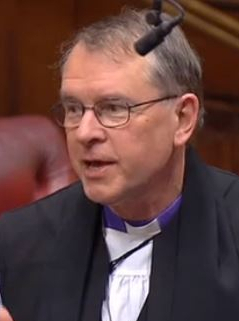
The Lord Bishop of Durham: My Lords, I fully support the amendment from the noble Baroness, Lady Stroud, and my noble and right reverend friend behind me here supports it as well. I will speak to the amendment from the noble Lord, Lord Coaker, and the two amendments from the noble Baroness, Lady Hollins, which I fully support.
We may have 125,000 asylum seekers but let me focus on two. This is why I support both amendments. One is an asylum seeker who lives in my area who heard from the Home Office within the first three weeks of arrival then heard nothing for 12 months, in spite of inquiry after inquiry. That is why we need a code of practice. That is why we need better ways of working. It beggars belief what that says to him about how he is seen in our society and by our society. That is, of course, told time and again.
Continue reading “Nationality and Borders Bill: Bishop of Durham supports amendments proposed to ensure well-being and fair treatment of refugees and asylum seekers”The Bishop of Durham asked a question on proposed higher education reforms in response to a government statement on 28th February 2022:
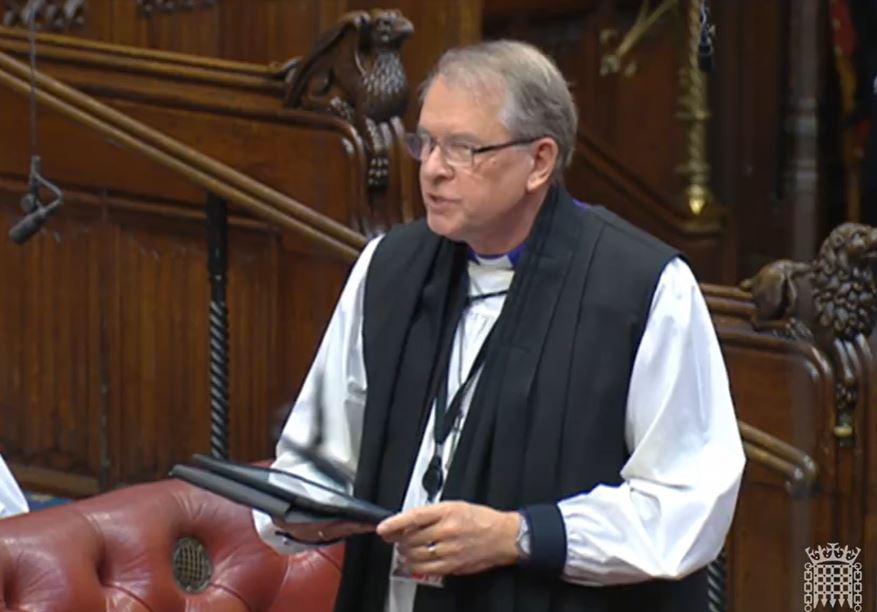
The Lord Bishop of Durham: My Lords, I declare my interest as chair of the National Society. I thank the Minister for what is a very significant Statement, with wide-ranging implications for higher and further education, social mobility and the economy, current and potential students, and the future of many communities. A number of the policy ambitions are welcome, such as the higher technical qualifications. My concern, and hence my question, is about the unintended potential consequences of some of the proposals. What steps are the Government taking to ensure that these proposed reforms actively increase opportunities for students from disadvantaged backgrounds who aim at professional careers in our vital public and community services, or in fields such as the creative industries, which seem to fall outside the high-quality and high-cost criteria for intended increases in strategic investment described in the consultation documents?
Continue reading “Bishop of Durham responds to statement on higher education reform”On 28th February 2022, during a debate on the Nationality and Borders Bill, the Bishop of Durham spoke in support of an amendment to clause 11 of the bill tabled by Lord Kerr of Kinlochard, to remove the differentiation of refugees within the clause. The Bishop further expressed opposition to clause 11 in its entirety:
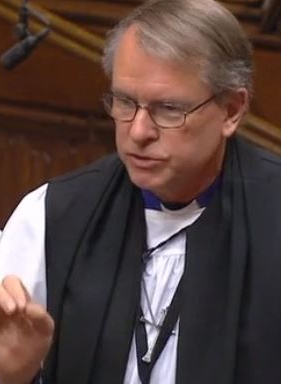
The Lord Bishop of Durham: My Lords, if the names had not been filled on Amendment 28 then I would have added my name to it. I remind the House of my interests as set out in the register, both in RAMP and Reset.
In Committee I laid out the understanding of the two groupings proposed and argued that almost no one will actually qualify as being in group 1. I had no repudiation offered to that argument. As the noble Lord, Lord Kerr, said, Ukraine is currently illustrating the problem precisely. I was also concerned in the response to the debate in Committee by some of the language of discretion within the two groupings.
We need a simpler, more efficient asylum system, and I continue to be convinced that what is proposed will provide a more complex, slower process. Fundamentally, I am with all those who oppose the two-group system, as it creates a fundamental injustice for fair treatment of all refugees, regardless of how they arrive.
Today, a letter signed by over 1,000 leaders from all the major faith communities of this country was delivered to the Prime Minister. I quote from that letter:
Continue reading “Nationality and Borders Bill: Bishop of Durham opposes differential treatment of refugees”On 28th February 2022, the House of Lords debated the Nationality and Borders Bill in the first day of the report stage. The Bishop of Durham spoke in support of an amendment tabled by Baroness Lister of Burtersett, which would provide a pathway to British Citizenship for former residents of the Chagos Islands and their descendants. The amendment was approved in a vote.
The Lord Bishop of Durham: My Lords, I hold my hands up: I am one of those who, as the noble Baroness, Lady Jones of Moulsecoomb, mentioned earlier, did not know much about this issue before we started this debate. However, I followed it and pay tribute to the noble Baroness, Lady Lister, for the way in which she has led this. It is quite clear that it is completely unjust and needs to be dealt with. I hope that the Minister has noted that, while in most debates, many of us around this House and the noble Lord, Lord Horam, will not agree, we agree on this one completely—100%. There is no justification for anything other than accepting this amendment.
On 28th February 2022, the Bishop of Durham asked a question about the UK’s plans to support Ukrainian refugees fleeing conflict, and to assist other European countries in providing that support:
The Lord Bishop of Durham: My Lords, I have every sympathy for the Minister trying to defend the indefensible. He has to do that; that is his job. However, what are we going to say to Poland and Moldova and all the other neighbouring countries about how we will take our share of those who will arrive in the first instance into their country but who they cannot support entirely on their own because they will need the support of other countries to the west, including ourselves?
Lord Sharpe of Epsom (Con): I thank the right reverend Prelate for his sympathy. I do not know, unfortunately, what conversations will be had with those neighbouring countries, but they must, by definition, be ongoing.
The Bishop of Durham asked a question regarding alternative interpretations of the Refugee Convention on 28th February 2022, in response to a debate on the government’s policy on migration and asylum:
The Lord Bishop of Durham: Can the noble Baroness offer us any other examples of alternative interpretations of the refugee convention worldwide? If not, on what basis does she believe the Government are entitled to do so in reference to Clause 11 of the Bill we will discuss later?
Continue reading “Bishop of Durham asks about government’s interpretation of the refugee convention”On 22nd February 2022, the House of Lords debated a motion ‘That the Report from the Select Committee Divisions: pass-readers; Sessional select committees; Participation of eligible members in oral statements and repeated urgent questions (6th Report, HL Paper 152) be agreed to.’ A vote was held on an amendment to the motion, in which a Bishop took part.
 The Church of England in Parliament
You must be logged in to post a comment.