Schools Bill: Bishop of Bristol speaks on amendments in committee

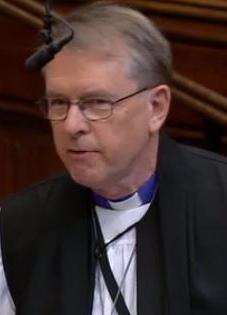
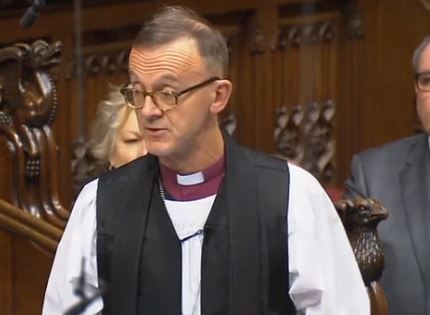
On 13th June the House of Lords continued to debate the Government’s Schools Bill in committee. The Bishop of Bristol spoke in the debate, on behalf of the Bishop of Durham:

The Lord Bishop of Bristol: My Lords, I speak in place of my colleague, the right reverend Prelate the Bishop of Durham, who unfortunately cannot be present today. I declare his interest as chair of the National Society.

I rise briefly to welcome Amendment 40 in this group, which offers real clarity on the issue. We welcome the recognition it shows that the religious body must be involved in giving an interim trustee notice to the proprietor of an academy school with a religious character. We are grateful for the Minister’s continued work on this and hope this might provide a little encouragement at this point.

Continue reading “Schools Bill: Bishop of Bristol speaks on amendments in committee”

Bishop of Exeter asks about education in the South West

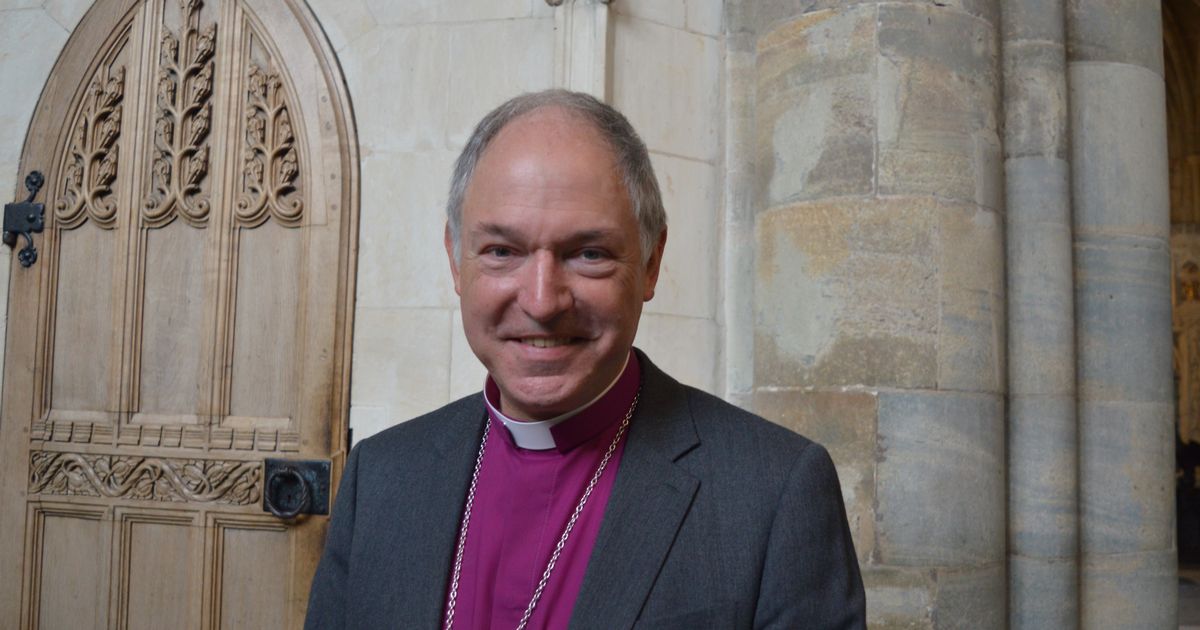
The Bishop of Exeter received the following written answer on 6th June 2022:

The Lord Bishop of Exeter asked Her Majesty’s Government what assessment they have made of the finding in the report by the University of Exeter Social Mobility in the South West, published on 28 April, that “the South-West has the worst educational outcomes for disadvantaged young people in the country, and low social mobility compared with other areas”; and what steps they are taking to address these problems.

Continue reading “Bishop of Exeter asks about education in the South West”

Bishop of Durham asks about early education

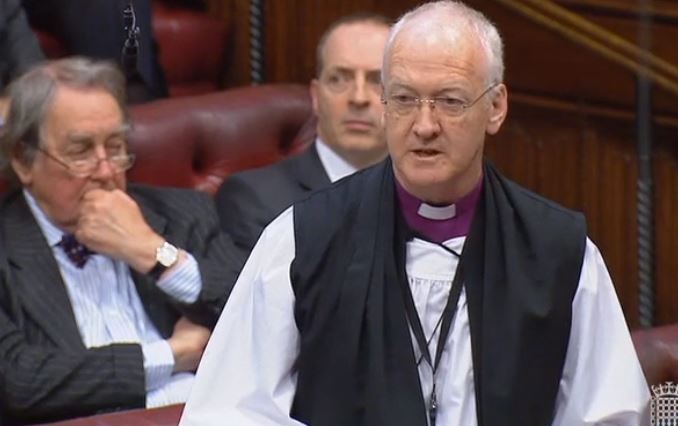
The Bishop of Durham asked a question regarding the Special Educational Needs and Disabilities Review on 30th March 2022:

The Lord Bishop of Durham: My Lords, I declare my interest as chair of the National Society, which leads the Church of England’s education work.

I hope the Minister will be pleased to hear that, in response to yesterday’s Green Paper, the Church of England has established a national network for SENCOs at primary and secondary levels, partly to get their opinions on how we should respond but also to offer development in future. However, I want to continue to pursue the early years question. Understandably, this is about education and social care. The first 1,001 days of life are the most crucial. Nothing here refers to the development of family hubs and the work of health visitors in the pre-two context, where some discernment ought to be available. Can the Minister comment on the join-up between the development of family hubs and the really early years?

Continue reading “Bishop of Durham asks about early education”

Bishop of Worcester asks about the Schools White Paper

The Bishop of Worcester asked a question concerning Church of England schools and the government’s Schools White Paper on 29th March 2022:

The Lord Bishop of Worcester: My Lords, I echo the noble Lord, Lord Storey, in his thanks for the White Paper. In doing so, I declare my interest as president of the Woodard Corporation. In expressing gratitude, I appreciate in particular how the White Paper recognises the vital role the Churches have played in the educational landscape of this country for more than 200 years and that it sets out how the role needs to continue to be enabled in the future development of the school system. I will focus on two questions regarding the move towards the fully academised educational landscape set out in the White Paper and invite the Minister to agree that it requires two key things.

Continue reading “Bishop of Worcester asks about the Schools White Paper”

Skills and Post 16 Education Bill: Bishop of Leeds speaks in debate

On 24th March 2022, the House of Lords debated commons amendments to the Skills and Post 16 Education Bill. The Bishop of Leeds spoke on behalf of the Bishop of Durham regarding provision for universal credit claimants:

The Lord Bishop of Leeds: My Lords, this House carried an amendment in the name of the right reverend Prelate the Bishop of Durham, who cannot be in his place today, concerning universal credit conditionality—this has been referred to several times—but it was not accepted when the Bill was considered in the other place.

If the Government are to achieve their levelling-up ambitions and enable individuals to secure better-paid employment with improved prospects, then it is essential to achieve greater integration of the support provided for skills development and training by the Department for Education and the Department for Work and Pensions.

Continue reading “Skills and Post 16 Education Bill: Bishop of Leeds speaks in debate”

Votes: Post 16 Skills and Education Boll

On 24th March 2022, the House of Lords debated commons amendments to the Post 16 Skills and Education Bill. Votes were held on amendments, in which a Bishop took part.

Continue reading “Votes: Post 16 Skills and Education Boll”

Bishop of Coventry asks about T-Levels

The Bishop of Coventry asked a question on acceptance of T-Levels by higher education institutions on 24th February 2022:

The Lord Bishop of Coventry: To ask Her Majesty’s Government what assessment they have made of the acceptance of T Levels by Higher Education institutions for candidates for admission to universities via the Universities and Colleges Admissions Service (UCAS) in the current application cycle.

Baroness Barran (Con): My Lords, we recently published a list of higher education providers that will accept T-levels. Some 118 higher education providers, of which 78 are English universities, have so far agreed to accept applications from T-level students. This overall figure has increased from 75 since December last year, and we expect it to continue to grow.

Continue reading “Bishop of Coventry asks about T-Levels”

Church Commissioner Questions: church buildings, racial inequality, freedom of religion or belief, parenting and marriage, gay and lesbian Christians, Christians in the Middle East, church schools

On 27th January 2022 MPs asked the Second Church Estates Commissioner, Andrew Selous MP, answered questions in the House of Commons chamber:

Churches and Cathedrals: Sustainability

Jerome Mayhew (Broadland) (Con)

What assessment the Church of England has made of the steps needed to put the maintenance of churches and cathedrals on a sustainable basis. (905258)

The Second Church Estates Commissioner (Andrew Selous): The Church estimates that over the next five years at least £1.14 billion of maintenance and repairs are needed for churches and cathedrals. The Church is very grateful that 550 churches and cathedrals have already benefited from the culture recovery fund, but there remains an urgent need for predictable and sustainable sources of funding, which enable us to keep skilled builders and craft people in work.

Continue reading “Church Commissioner Questions: church buildings, racial inequality, freedom of religion or belief, parenting and marriage, gay and lesbian Christians, Christians in the Middle East, church schools”

Archbishop leads debate on freedom of speech

“When people are too scared to express their genuinely held and legally protected beliefs, that is very dangerous for democracy.”

On 10th December 2021 in the House of Lords the Archbishop of Canterbury held a debate on freedom of speech. His opening and closing remarks are below, and the full debate including the contributions of Peers and the Opposition and Government response, can be read in Hansard, here.

Moved by The Archbishop of Canterbury: That this House takes note of contemporary challenges to freedom of speech, and the role of public, private and civil society sectors in upholding freedom of speech.

The Archbishop of Canterbury: My Lords, I am most grateful to the Leader of the House, the usual channels, all noble Lords who have taken the trouble to be here today and, especially, the noble Lord, Lord Parkinson, for answering on behalf of the Government in order that we may have this debate. It is a return to an Advent tradition, interrupted in recent years by elections and pandemics. Should your Lordships worry that I am infectious in some way, I have been tested to the limits of testing. I have my granddaughter’s cold, for which I would like to record my grateful thanks.

We on these Benches have our critics—I have a large number—but for all our present failings you would be hard-pressed to find a more disastrous move by the Lords spiritual than when, in 1831, 21 of them lined up behind the Duke of Wellington and opposed the Great Reform Bill. Had they voted the other way, it would have passed. The people, denied their rights, responded with riots, and bishops were particularly targeted, some with violence. In Bristol, the Bishop’s Palace was burned down. A dead cat was thrown at my predecessor Archbishop Howley, narrowly missing him but striking his chaplain in the face. “Be glad it wasn’t a live one,” Howley is reported to have responded.

I start with this dive into the past because it illustrates a present point. The grey area between, on the one hand, peaceful protest and reasoned criticism and, on the other, incitement to hatred or to violence is one that we are still trying to navigate today. The Church of England knows about that. I must start by suggesting that our society should never follow our historical example of coercion, Test Acts and punishment. There is still a prison at Lambeth Palace at the top of the Lollards’ Tower, with room for eight people. It was used for the Lollards—I have a little list.

Continue reading “Archbishop leads debate on freedom of speech”

Church Commissioners Written Answers: Religious Freedom and Support for Education

On 3rd December 2021, Andrew Selous MP, representing the Church Commissioners, gave the following written answers to questions from an MP:

Religious Freedom

Jim Shannon MP (DUP, Strangford): To ask the Member for South West Bedfordshire, representing the Church Commissioners, what assessment the Church has made of where persecution of religion and belief is most concerning.

Continue reading “Church Commissioners Written Answers: Religious Freedom and Support for Education”