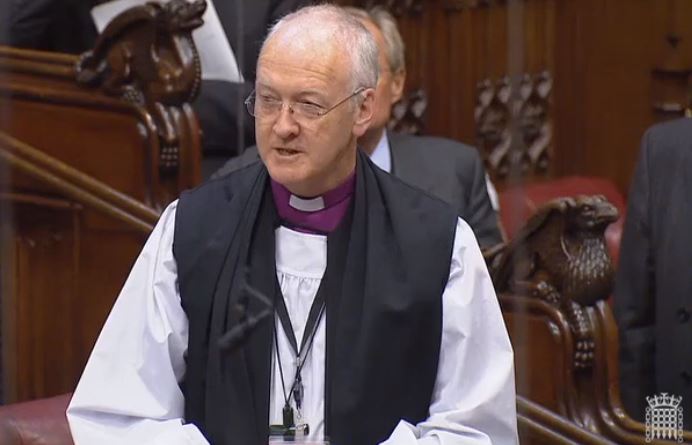
The Bishop of Coventry asked a question on acceptance of T-Levels by higher education institutions on 24th February 2022:
The Lord Bishop of Coventry: To ask Her Majesty’s Government what assessment they have made of the acceptance of T Levels by Higher Education institutions for candidates for admission to universities via the Universities and Colleges Admissions Service (UCAS) in the current application cycle.
Baroness Barran (Con): My Lords, we recently published a list of higher education providers that will accept T-levels. Some 118 higher education providers, of which 78 are English universities, have so far agreed to accept applications from T-level students. This overall figure has increased from 75 since December last year, and we expect it to continue to grow.
On 27th January 2022 MPs asked the Second Church Estates Commissioner, Andrew Selous MP, answered questions in the House of Commons chamber:
Churches and Cathedrals: Sustainability
Jerome Mayhew (Broadland) (Con)
What assessment the Church of England has made of the steps needed to put the maintenance of churches and cathedrals on a sustainable basis. (905258)
The Second Church Estates Commissioner (Andrew Selous): The Church estimates that over the next five years at least £1.14 billion of maintenance and repairs are needed for churches and cathedrals. The Church is very grateful that 550 churches and cathedrals have already benefited from the culture recovery fund, but there remains an urgent need for predictable and sustainable sources of funding, which enable us to keep skilled builders and craft people in work.
“When people are too scared to express their genuinely held and legally protected beliefs, that is very dangerous for democracy.”
On 10th December 2021 in the House of Lords the Archbishop of Canterbury held a debate on freedom of speech. His opening and closing remarks are below, and the full debate including the contributions of Peers and the Opposition and Government response, can be read in Hansard, here.
Moved by The Archbishop of Canterbury: That this House takes note of contemporary challenges to freedom of speech, and the role of public, private and civil society sectors in upholding freedom of speech.
The Archbishop of Canterbury: My Lords, I am most grateful to the Leader of the House, the usual channels, all noble Lords who have taken the trouble to be here today and, especially, the noble Lord, Lord Parkinson, for answering on behalf of the Government in order that we may have this debate. It is a return to an Advent tradition, interrupted in recent years by elections and pandemics. Should your Lordships worry that I am infectious in some way, I have been tested to the limits of testing. I have my granddaughter’s cold, for which I would like to record my grateful thanks.
We on these Benches have our critics—I have a large number—but for all our present failings you would be hard-pressed to find a more disastrous move by the Lords spiritual than when, in 1831, 21 of them lined up behind the Duke of Wellington and opposed the Great Reform Bill. Had they voted the other way, it would have passed. The people, denied their rights, responded with riots, and bishops were particularly targeted, some with violence. In Bristol, the Bishop’s Palace was burned down. A dead cat was thrown at my predecessor Archbishop Howley, narrowly missing him but striking his chaplain in the face. “Be glad it wasn’t a live one,” Howley is reported to have responded.
I start with this dive into the past because it illustrates a present point. The grey area between, on the one hand, peaceful protest and reasoned criticism and, on the other, incitement to hatred or to violence is one that we are still trying to navigate today. The Church of England knows about that. I must start by suggesting that our society should never follow our historical example of coercion, Test Acts and punishment. There is still a prison at Lambeth Palace at the top of the Lollards’ Tower, with room for eight people. It was used for the Lollards—I have a little list.
On 3rd December 2021, Andrew Selous MP, representing the Church Commissioners, gave the following written answers to questions from an MP:
Religious Freedom
Jim Shannon MP (DUP, Strangford): To ask the Member for South West Bedfordshire, representing the Church Commissioners, what assessment the Church has made of where persecution of religion and belief is most concerning.
The Bishop of Gloucester asked a question on government efforts to help early years and childcare settings attract and retain key workers, during a debate on teachers departing education on 3rd November 2021:
The Lord Bishop of Gloucester: My Lords, in the discussion around this question there may be an assumption that we are focusing on key stages 1 and 2 and secondary schools, but, given that the most significant years of a child’s development are the early years, will the Minister say what is being done to ensure that nurseries and preschools attract, develop and retain vital key workers?
On 12th October 2021, the House of Lords debated the Skills and Post-16 Education Bill in the report stage. Votes were held on amendments to the bill, in which a Bishop took part:
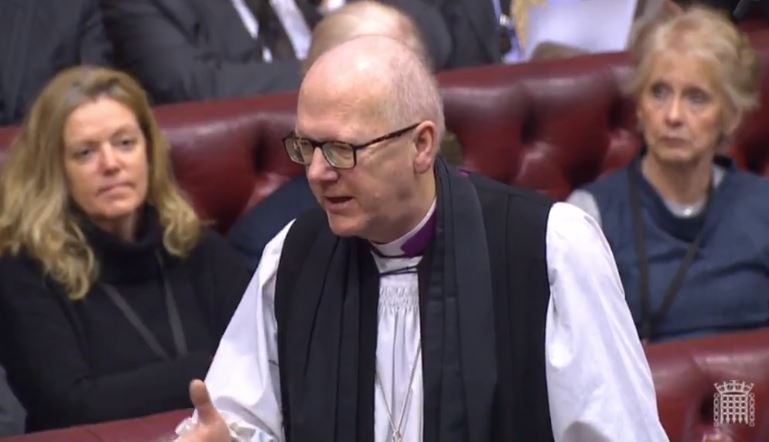
On 10th September 2021, the House of Lords debated the Education (Assemblies) Bill at its second reading. The Bishop of Oxford spoke in response to the bill, welcoming the debate on the topic, but opposing the proposed removal of the requirement for collective worship in schools:
The Lord Bishop of Oxford: My Lords, I warmly welcome this debate. As others have said, it is very timely that it is raised. I thank the noble Baroness, Lady Burt, for her careful introduction, and other noble Lords and noble Baronesses who have spoken, particularly my distinguished predecessor but one, the noble and right reverend Lord, Lord Harries, with whom I think I am about to disagree.
Worship and spirituality are a vital part of what it means to be human, and it is absolutely right, for all the reasons that have been given, that it be carefully reviewed and, possibly, that some changes should be introduced. But my reason for in conscience finding this Bill difficult goes back to my experience of leading assemblies as a local parish priest many years ago in Halifax. I put a great deal of time and energy into rehearsing the parable of the good Samaritan and the stories of Joseph and Moses, only for the otherwise extremely good and gifted head teacher of the school to reinterpret my assembly with the phrase, “Of course, what the vicar really means is don’t run in the corridors, and pick up the litter in the playground.” It is the reduction, without a serious faith tradition, of the fantastic values that are being articulated, to simple practical motifs which I fear is the danger of a Bill like this.
The Bishop of St Albans asked a question about concerns over the government’s proposal to introduce a register of home schooled children on 21st July 2021:
The Lord Bishop of St Albans: My Lords, parents often choose home schooling to escape the rigidity, values and standardisations of public education. Some people are deeply fearful that a register might seek to reimpose this. Will Her Majesty’s Government assure us that this register is for safety and quality purposes only and that parents will be able to continue to exercise their discretion and freedom of conscience over what and how best to educate their children?
The Bishop of Gloucester asked a question on prioritising children’s voices on 1st July 2021, during a debate on the effects of COVID-19 on education:
The Lord Bishop of Gloucester: Throughout the pandemic there has been a noticeable lack of briefings aimed specifically at children and a great absence of their voices. I was glad to host an event for MPs and key leaders in Gloucestershire where all the input came from young people. Can the Minister give an assurance that, in looking at the impact of Covid on the lives of children, it is they who will be asked and heard?
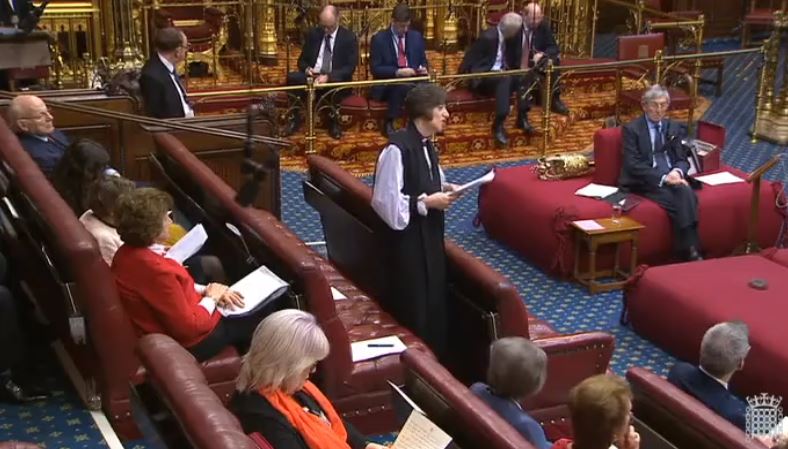
On 15th June 2021, the House of Lords debated the Skills and Post 16 Education Bill in its second reading. The Bishop of Leeds spoke in the debate, highlighting several areas of the bill for attention, including incentives for workers influenced by the pandemic:
The Lord Bishop of Leeds: My Lords, I strongly endorse the previous speech, particularly as it notes the crazy distinction between vocational and academic study. On these Benches, we welcome the commitment from the Government to the further education and skills sector as set out in the Bill. It is particularly pleasing to see that the Bill builds on the practical reforms outlined in the Skills for Jobs White Paper. In this context, I also strongly commend to the House the Church of England’s new vision for further education report, published at the end of April, which also recognises the key role that FE plays in driving individual, community and societal transformation.




You must be logged in to post a comment.