Bishop of Sheffield asks about public feedback on House of Lords sessions

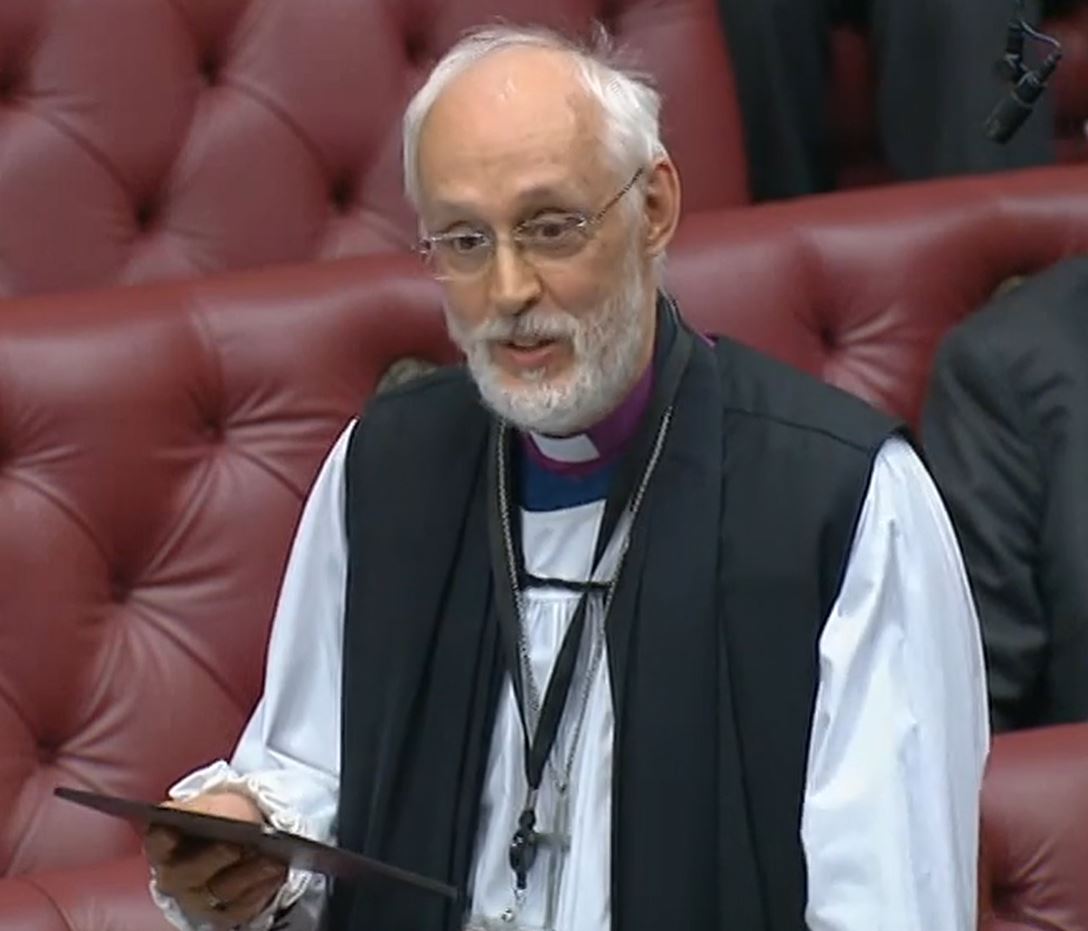
The Bishop of Sheffield asked a question on the public reception and feedback on recorded sessions of the House of Lords on 14th October 2024, during a discussion on behaviour and courtesy in the House:

The Lord Bishop of Sheffield: My Lords, it is surely a very good thing that the dealings of this Chamber are broadcast live, but it does mean that our interactions with one another are witnessed far beyond this place. Can the noble Baroness tell the House whether any attempt is made to monitor or record comments from the public in reaction to the broadcasts and, if so, what use is made of that feedback?

Continue reading “Bishop of Sheffield asks about public feedback on House of Lords sessions”

Media Bill: Bishop of Leeds supports amendments on standards and terms of reference for public service broadcasters

On 8th May 2024, the House of Lords debated the Media Bill in committee. The Bishop of Leeds spoke in support of a group of amendments on standards requirements for public service broadcasters, stressing the need for detailed terms of reference in public service broadcasting:

The Lord Bishop of Leeds: My Lords, I support the first four amendments in this group—Amendments 1 to 3 and 7—and will not repeat what has been said so far in the excellent two speeches. However, I support them for a different reason: I think that they lay the ground for later amendments, particularly Amendments 9, 13 and 32. I will make a serious point about those amendments now, partly because I may have to be on a train when the Committee gets to them.

If we take seriously the Reithian principles to inform, educate and entertain, it means doing what the inscription from George Orwell outside the BBC spells out: that people are enabled to be confronted by, or to hear and see things, that

“they do not want to hear”.

Continue reading “Media Bill: Bishop of Leeds supports amendments on standards and terms of reference for public service broadcasters”

Victims and Prisoners Bill: Bishop of Manchester supports amendment on transparency of public officials

On 26th February 2024, the House of Lords debated amendments to the Victims and Prisoners Bill. The Bishop of Manchester spoke in support of amendment 133 to the bill, which “would require public authorities, public servants and officials to act in the public interest and with transparency, candour and frankness when carrying out their duties in relation to major incidents,” arguing that introducing this statutory duty would allow for greater support for victims and survivors of major incidents and crimes:

The Lord Bishop of Manchester: My Lords, I rise to speak to this amendment to which I have added my name. I declare my interest as co-chair of the national police ethics committee.

Before turning to the amendment, I follow other noble Lords by recording the deep gratitude of both myself and many in the Church for the wisdom and friendship of Lord Cormack. On behalf of both the party he served and the Church he loved, over so many decades, Patrick wonderfully embodied that concept of “critical friend” which is so vital to the functioning of all institutions. We were all better for his wisdom and friendship, and we all learned much from his challenges. He may not have been subject to a duty of candour, but that never stopped him from being very candid in expressing his views. We will miss his contributions, here and elsewhere greatly.

The former Bishop of Liverpool advocated for a duty of candour in his report on the Hillsborough disaster, The Patronising Disposition of Unaccountable Power. That title tells its story. His report was produced over six years ago; a duty of candour was finally contained in the College of Policing’s Code of Practice for Ethical Policing in the last two months, for which I and many others are deeply grateful.

Continue reading “Victims and Prisoners Bill: Bishop of Manchester supports amendment on transparency of public officials”

Bishop of Chelmsford reiterates calls for rediscovery of standards in public life

On 11th January 2024, the Bishop of Chelmsford spoke during a debate on Parliamentary Democracy and Standards in Public Life, reiterating the Archbishop of Canterbury’s call for a rediscovery of standards:

The Lord Bishop of Chelmsford: My Lords, like others, I contribute to this discussion with a great amount of feeling, because the debate goes right to the heart of the integrity of public institutions, including both Chambers of our Parliament. After Sue Gray’s report on parties in Downing Street during lockdown, my most reverend friend the Archbishop of Canterbury described standards in public life as

“the glue that holds us together”

and called for a “rediscovery” of these standards. That was in May 2022, but since then, it can feel like little has changed.

Continue reading “Bishop of Chelmsford reiterates calls for rediscovery of standards in public life”

Bishop of Oxford asks about Centre for Data Ethics and Innovation

The Bishop of Oxford received the following written answer on 17th October 2023:

The Lord Bishop of Oxford asked His Majesty’s Government:

  •  what is the current status of the Advisory Board of the Centre for Data Ethics and Innovation.
  • what future plans there are for the Centre for Data Ethics and Innovation.
Continue reading “Bishop of Oxford asks about Centre for Data Ethics and Innovation”

Illegal Migration Bill: Archbishop of Canterbury speaks on motion to ensure scrutiny of government migration policy

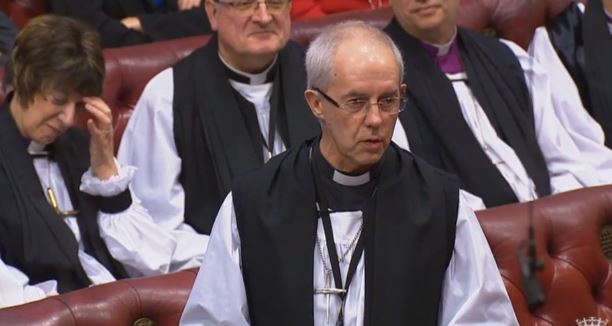
On 17th July 2023, during the final day of debate on the Illegal Migration Bill, the Archbishop of Canterbury spoke on his motion J1, which would aim to ensure that government policy on migration is considered and debated by the House of Commons and the House of Lords in the future. The motion was not taken to a vote:  

The Lord Archbishop of Canterbury: My Lords, I will speak very briefly to Motion J1. The amendment put forward under Motion J1 aims to ensure that, not only now but in the future, the Government’s policy is examined. As the Minister said, the current Government’s concentration is on international co-operation and working, although with some hesitation at times, with groups such as the UNHCR and others internationally. The amendment would ensure that that strategy—the way the Government are working—and the context in which migration is being considered are brought in front of both Houses, simply for a debate, with an analysis of the situation by the Government.

The Minister has said very clearly that he does not wish this to happen on the grounds that it is being done now, but this Bill is not about today. It will shortly be an Act, and when it is an Act it will last years—it may last many years. Who knows what will happen in elections in the future, whether they are next year, in 10 years or whenever? We cannot guarantee what kind of Government there will be at that time. That is why we have Acts of Parliament and a system of law which requires changes in the case that people wish to change the way in which this country operates.

Continue reading “Illegal Migration Bill: Archbishop of Canterbury speaks on motion to ensure scrutiny of government migration policy”

Bishop of St Albans asks about whistleblowing in the Civil Service & the Bank of England

The Bishop of St Albans received the following written answers on 21st June 2023:

The Lord Bishop of St Albans asked His Majesty’s Government how many cases of whistleblowing were (1) reported, and (2) investigated, by the Civil Service in (a) 2020, (b) 2021, (c) 2022, and (d) 2023 to date.

Baroness Neville Rolfe (Con): I refer the Noble Lord to my previous answers – HL7792 and HL8058 – provided in May 2023.

Hansard


The Lord Bishop of St Albans asked His Majesty’s Government how many instances of whistleblowing there were to the Prudential Regulation Authority in each of the past four years.

Baroness Penn (Con): I refer the Noble Lord to my answer HL8060 on 5th June.

Hansard

Bishop of St Albans asks about whistleblowing in the Civil Service

The Bishop of St Albans received the following written answer on 7th June 2023:

The Lord Bishop of St Albans asked His Majesty’s Government how many cases of whistleblowing were (1) reported, and (2) investigated, by the Civil Service in (a) 2020 (b) 2021, (c) 2022, and (d) 2023.

Baroness Neville Rolfe (Con): I refer the Noble Lord to my answer HL7792 on 25th May.

Hansard

Bishop of Manchester asks for clarification on issues relating to the ministerial code

The Bishop of Manchester asked for clarification on the issue of justice being seen to be done regarding breaches of the ministerial code, on 25th May 2023. This was in response to a government statement on how breaches of the code are managed, and a question in the House of Lords on the need for independent investigatory processes following an incident involving a potential breach of the code by the Home Secretary:

The Lord Bishop of Manchester: My Lords, I am struggling here. It seems to be a basic principle that justice should not only be done but seen to be done. These processes seem so arcane and opaque that I wonder whether the noble Baroness can assure us how this process passes that test—or does it not apply to the Ministerial Code?

Continue reading “Bishop of Manchester asks for clarification on issues relating to the ministerial code”

Bishop of St Albans asks about reported cases of whistleblowing investigated by the Civil Service in the last four years

The Bishop of St Alban received the following written answer on 25th May 2023:

The Lord Bishop of St Albans asked His Majesty’s Government how many cases of whistleblowing were reported and investigated by the Civil Service in (1) 2022, (2) 2021, (3) 2020, and (4) 2019.

Baroness Neville-Rolfe (Con, Cabinet Office): We are made aware by departments annually, who also report on behalf of their agencies, of cases raised formally through whistleblowing procedures.

Continue reading “Bishop of St Albans asks about reported cases of whistleblowing investigated by the Civil Service in the last four years”