Bishop of Chelmsford calls for action to counter fear and race hatred after EU referendum

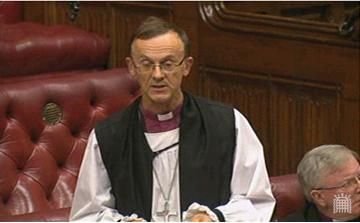
Chelmsford 251115On 27th June 2016, Baroness Stowell of Beeston repeated a statement on the result of the EU Referendum, made by the Prime Minister in the House of Commons. The Bishop of Chelmsford, Rt Revd Stephen Cottrell, asked a follow up question:


Lord Bishop of Chelmsford: My Lords, some commentators have said that the result of the referendum was a resounding victory for Brexit. I am not sure that I see it that way: 52 to 48 is, to my mind, a rather narrow victory. Where there is no overwhelming consensus, there is an overwhelming need to take account of the views of others. Nobody likes a bad winner. There has been too much hyperbole and spite in this debate. Yes, one side did win, the result is clear and we have to act on it. Those who advocated leave obviously need to take the lead in the negotiations that will take place. But we urgently need the sort of wise leadership that can build consensus. We need some sort of national Government—a coalition of good will where we can work together.

I serve the diocese of Chelmsford, which is, “east London in and Essex out”. Yesterday I spoke to a head teacher who said that the children were frightened when they went to school on Friday and that she had seen an increase in race hatred and intolerance. What plans are there to address the lack of unity in our nation and to counter the fear and race hatred that is on the rise? Can we ensure that those who lost this vote, as well as those who won, can be part of the planning going forward? Continue reading “Bishop of Chelmsford calls for action to counter fear and race hatred after EU referendum”

Bishop of Sheffield speaks on Church response to the migrant crisis

On Wednesday 15th June 2016 the House of Lords debated the Report from the European Union Committee The EU Action Plan against migrant smuggling (4th Report, Session 2015–16, HL Paper 46). The Bishop of Sheffield, Rt Revd Steven Croft, spoke in the debate:

14.03.27 Bishop of SheffieldThe Lord Bishop of Sheffield: My Lords, I welcome the two reports before us in all their complexity and I thank the members of the European Union Committee for their expertise, which is already evident in this debate. I particularly welcome the committee’s recommendation in paragraph 8 that the mandate of Operation Sophia is reviewed and renewed, along with the EU’s subsequent decisions. Clearly, this operation alone cannot be the complete answer to the challenges that we face. However, the European Union must not return to the position that it held before the Lampedusa tragedy of apparent indifference to those who seek to cross the Mediterranean in danger of their lives. Nor can we neglect the spread of people-smuggling on and across our borders. Continue reading “Bishop of Sheffield speaks on Church response to the migrant crisis”

Bishop of Leeds asks about effect of UK leaving the EU on UK nationals living abroad

BpLeeds2On the 4th, 9th & 14th March 2016 the Bishop of Leeds received written answers to questions about the implications for UK citizens overseas if the UK should decide to leave the EU.

The Lord Bishop of Leeds: To ask Her Majesty’s Government what assessment they have made of the implications of a decision by the UK to leave the EU for those UK nationals resident in other EU member states. [HL6398]

Continue reading “Bishop of Leeds asks about effect of UK leaving the EU on UK nationals living abroad”

Church Commissioner answer: contingency in event of a vote to leave EU

On 15th January 2016 the Second Church Estates Commissioner answered a written question from Tim Loughton MP on contingency plans in the event of a vote to leave the EU:

Tim Loughton (East Worthing and Shoreham): To ask the right hon. Member for Meriden, representing the Church Commissioners, what contingency arrangements the Church Commissioners have made for the eventuality of a majority leave vote in the upcoming EU referendum.

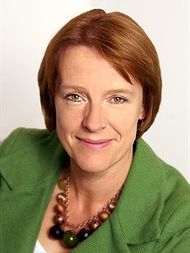
Caroline SpelmanMrs Caroline Spelman: The Church Commissioners and the Church of England Pensions Board manage their investment portfolios using high quality well diversified and long term strategies. The Church Commissioners and Pensions Board believe that they are well positioned for any market re-pricing or uncertainty that may prevail prior to or after the referendum.

(Via Parliament.UK)

Church Commissioner Questions – Syrian refugees, fossil fuel investments, hedgehogs

On the 17th December 2015 the Second Church Estates Commissioner, Rt Hon Caroline Spelman MP, answered four oral questions in the House of Commons about Syrian refugees, fossil fuel investments and the protection of hedgehogs.

Continue reading “Church Commissioner Questions – Syrian refugees, fossil fuel investments, hedgehogs”

EU Referendum Bill – speech by the Bishop of London

“There must be more to this referendum than a calculation of the temporary individual economic benefit or disbenefit of membership of the Union in its present form” – Bishop of London 13/10/15

Bp London 131015On 13th October 2015 the House of Lords debated the EU Referendum Bill at its Second Reading. The Bishop of London, Rt Rev Richard Chartres, spoke in the debate.

The Lord Bishop of London: My Lords, in a matter as grave as the future relations between Britain and the European Union, there is perhaps a case for a referendum, which one hopes would settle the direction of travel for a generation. The referendum habit has elsewhere proved contagious. They tend to be run again if those in power do not get the answer they want. There must be a very strong case to justify an exception from our settled preference for a representative democracy that permits the kinds of compromises that the art of government requires. Continue reading “EU Referendum Bill – speech by the Bishop of London”

Bishop of Worcester – Russia and Eastern Europe (Written Answers)

On 26th February 2015, the Bishop of Worcester, the Rt Revd John Inge, received answers to two written questions, on the subject of security in Russia and Eastern Europe.

WorcesterThe Lord Bishop of Worcester: To ask Her Majesty’s Government what steps they are taking, as a member of the Organisation for Security and Co-operation in Europe, to bring about renewed discussions with Russia on a possible Euro-Atlantic security community. [HL5013]  Continue reading “Bishop of Worcester – Russia and Eastern Europe (Written Answers)”

Moldova: EU and UK Relations

MoldovaOn 2nd April 2014 the Bishop of Wakefield, Rt Revd Stephen Platten, received answers to written questions on EU and UK relationships with the Republic of Moldova, which borders Ukraine. The questions focused on:

  • the EU’s Association Agreement
  • election monitoring
  • political and military assurances about territorial independence and sovereignty
  • Ministerial contact
  • EU visa waiver programme
  • Tensions between Moldova and the autonomous regions of Transnistria and Gagauzia. 

Continue reading “Moldova: EU and UK Relations”

Bishop of Wakefield calls for Government to support investment in Georgia

Lord Harries of Pentregarth asked Her Majesty’s Government what is their assessment of the current situation in Georgia

The Bishop of Wakefield asked a supplementary question:

The Lord Bishop of Wakefield: My Lords, I begin by declaring an interest as the Church of England’s lead bishop on Georgian affairs. Last year, I had the good fortune to meet the outgoing President Saakashvili and, independently, some of his associates. I then met a number of members of the present Government. The antagonism could be felt in both directions and was seriously affecting stability and development. The previous Government had done some good work on corruption, tax collection and so on. If the economy is to prosper, the next thing that needs to happen is a building up of the infrastructure. Can Her Majesty’s Government assure noble Lords that the new Government will do that?

Lord Wallace of Saltaire: My Lords, on my last visit to Tbilisi I had lunch with MPs from both the governing party and the opposition party. That would not have been possible in Armenia or Azerbaijan. One has to put these things in perspective. Yes, of course we are assisting with developing the infrastructure in Georgia. The European neighbourhood partnership is putting a lot of money into Georgia and, of course, BP and other foreign investors are also assisting with the development of the country.

(via Parliament.uk)